



R12, R13 and R14 are three different spherical seat radii. They are not three thread sizes and they are not three part numbers. The radius is a property of the wheel, it is the one dimension a nut has to match exactly, and a wrong radius still tightens to the correct torque. Here is what the designation means, what a mismatch does, and what to send us so we quote the right part.
- R12, R13 and R14 name seat radii, not sizes. The number is the radius of the spherical seat the nut carries, and the wheel chooses it. Two nuts with the same thread and the same hex can be completely different parts.
- A wrong radius still tightens. The threads engage and the wrench reaches the number on the gauge, but the nut lands on the rim of the seat rather than the face of it, so the clamp never reaches the wheel.
- The seat is what you look at. Our own published instruction for our spherical range is that you tell a conical nut and a ball seat nut apart by looking at their seats, not at the shape of the head.
- Four seat families are published. 60 degree conical, spherical, flat seat with open end, and flat seat with attached washer. Only the spherical one has a radius for R12, R13 or R14 to describe.
- The radius is not on our product pages, and that is deliberate. The radius belongs to the wheel. We publish the seat family, the hex, the thread and the height; you supply the radius from the wheel or from the OE catalogue.
What R12, R13 and R14 Actually Name
The number is the radius of the spherical seat the nut carries, and it is normally quoted in inches. Our product pages call the part a spherical, ball seat or radius lug nut. The head is hexagonal and the seat is round, and R12, R13 and R14 are three radius values in that series. Read the unit from the wheel marking, not from memory.

Three things make this the most awkward dimension. It is invisible: you cannot read a radius off a nut the way you can read the thread. It belongs to the wheel, so it is not on the nut, the label or the part number. And it does not announce itself when it is wrong. Because everything else is legible and this one is not, it is the dimension carried over from the last order out of habit.
R12, R13 and R14 are adjacent designations in one series. Dual fit wheels accept two radii, one on each side of the hub. Because a dual fit wheel is the exception, the first question for a ball seat order is whether the wheel is one radius or two.
Why the Radius Is the One Dimension You Cannot Order by Habit
Everything else on a lug nut can be measured. This cannot. The thread is legible at the end, the hex across the flats, and the height comes off a caliper in seconds. The radius lives in the concave surface underneath, where a caliper cannot reach it. Because it cannot be measured from the nut, it has to be read from the wheel.
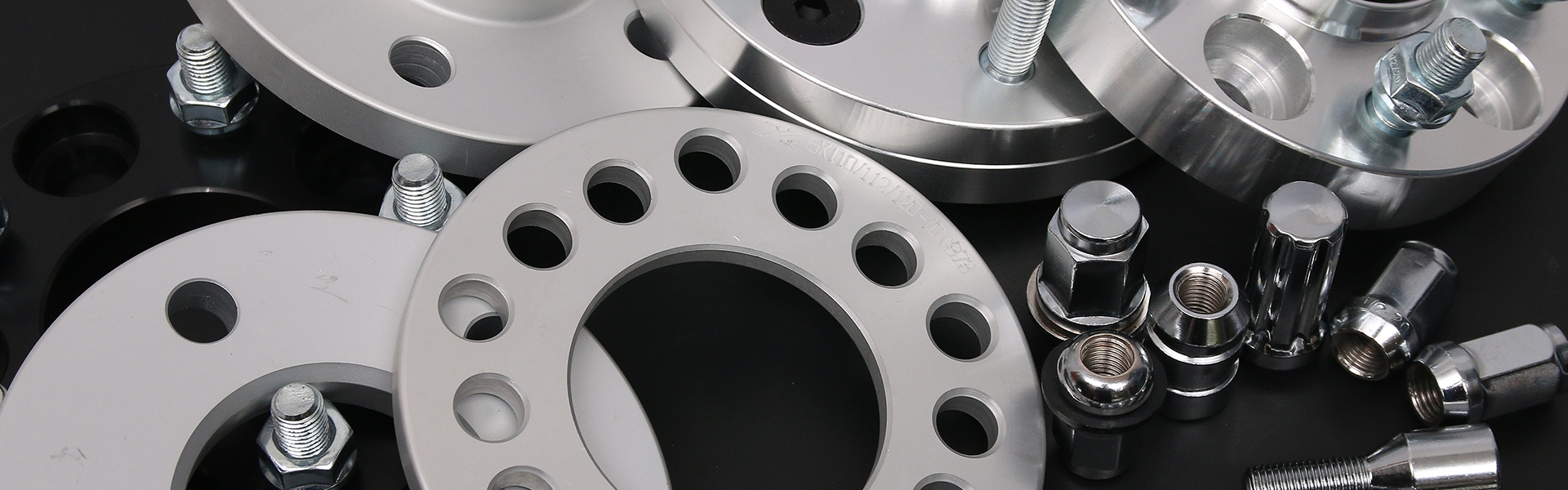
Our published range shows how the rest of the fastener works once the seat is set. The spherical family is published as a 3/4 inch hex, 0.71 inch tall, in threads 7/16, 1/2, 12 mm 1.25, 12 mm 1.50 and 14 mm 1.50. The bulge acorn bodies sit at 3/4 inch and 13/16 inch key hexes, 1.6, 0.86 and 1.26 inch tall. Because the body, the hex, the thread and the height are all published, the seat is the only input a buyer brings.
The full range is on our lug nuts page, where the open end sphere, bulge acorn, dualie acorn and attached washer styles all sit. Because the seat decides which family a vehicle takes, read the seat off the wheel first.
What a Mismatched Radius Does to the Clamping Force
A spherical seat and a ball pilot share one centre of curvature when the radii match. That is the point of the ball seat: the nut lands across the whole spherical surface and the load spreads over it. When the radii differ, the surfaces touch only along a ring near the edge of the seat, so the contact is a line at the rim instead of a face.
That is why the failure is quiet. Nothing on the outside of the wheel changes. The nut looks seated, the torque figure has been met, and the load path runs through the rim of the seat. The clamp is incomplete and the preload never arrives. Because the symptom shows up weeks later as a wheel that needs re-torquing, the cause is rarely traced back to the nut fitted first.
Our published warning on the long mag with attached washer is our consequence statement, : excessively tightened lug nuts can peel threads, damage wheels, damage brake discs, and may clip wheel bolts. Because a nut on the edge of its seat does not distribute load as intended, tightening it further is the wrong direction. On the vehicle side, the National Highway Traffic Safety Administration puts it plainly that proper tire pressure is the most important part of maintaining your tires.
The Four Seat Families We Publish
Only one of the four seat families we publish has a radius for R12, R13 or R14 to describe. Because the seat family is the first decision and the radius is only asked afterwards, this table is the order to ask them in.
| Seat family | What it mates with | What we publish |
|---|---|---|
| 60 degree conical | A stud carrying a matching 60 degree cone | The conical seat on the acorn and bulge acorn families |
| Spherical, also called ball seat or radius | A stud carrying a ball pilot of the matching radius | Open end sphere, 3/4 inch hex and 0.71 inch tall, in 7/16, 1/2, 12 mm 1.25, 12 mm 1.50 and 14 mm 1.50 |
| Flat seat, open end | A wheel with a flat lug hole | Open end bulge, in 3/4 inch and 13/16 inch hex |
| Flat seat with attached washer | A flat lug hole, with the washer spreading the load | Long mag with attached washer, 7/8 inch hex and 1.85 inch tall, 14 x 1.50 |
A conical seat and a spherical seat can sit in the same box and still be different parts. Our published guidance is that you tell them apart by looking at their seats. Because the head is not a reliable discriminator, read the seat, then the radius, then pick the body.
The Radius Does Not Settle the Rest of the Nut
A radius that is right still leaves three dimensions open, and each has its own published range. Getting the seat right and the hex wrong produces a nut that fits the wheel and cannot be fitted with the tooling. Because these three cause the returns, they belong in the same conversation as the radius.
| Dimension | What we publish | What it has to match |
|---|---|---|
| Hex across flats | 3/4 inch, 13/16 inch, 2/3 inch and 7/8 inch | The socket on the service equipment and the wrench on the yard |
| Thread | 12 x 1.25, 12 x 1.50, 12 x 1.75 and 14 x 1.50 metric; 7/16, 9/16 and 1/2 imperial | The stud on the vehicle |
| Overall height | 0.71 inch to 1.86 inch | Clearance inside the wheel and against the brake disc |
The height is the one buyers forget, and the one that stops the wheel going on. Our range runs from 0.71 inch on the open end sphere to 1.86 inch on the tall attached washer body. Because the ball seat has to contact the pilot and the seat has to clear the disc, the height is a clearance number as much as a shape.
How to Establish the Radius Before You Order
Seven steps, and the first is about the wheel rather than the nut. This is the order we ask for, because every later step depends on the first answer.
- Read the wheel before you read any catalogue. The radius is a wheel property, and a fastener range cannot tell you what the wheel needs.
- Get the wheel part number from the wheel’s own paperwork. It carries the seat and the stud pattern, and it ties a radius to a vehicle instead of to a guess.
- Confirm the seat family by looking at the hole. A dome shaped hole is a ball seat and needs a radius. A 60 degree cone needs a conical seat. A flat face needs a flat seat.
- Check whether the wheel is dual fit. If it carries two radii on opposite sides of the hub, order two parts and write down which side each goes on.
- Read the hex, the thread and the height off the nut you are removing. A radius match settles none of the three, and the nut on the vehicle is the best evidence for all of them.
- Take the torque from the vehicle, and read the over-torque warning. The torque figure belongs to the stud and the wheel, not to the nut, and our published warning is explicit that over-tightening damages wheels, discs and bolts.
- Send it as one line. Wheel, seat family, radius, hex, thread, height, quantity and market. Send a photograph of the stamping if there is any doubt, and we will confirm the fitment against our published ranges.
One photograph of the wheel stamping settles more than a page of description. Because the radius is the only dimension that cannot be taken off the nut, the evidence has to travel with the enquiry.
What We Publish, and What We Do Not
We publish the seat families, the hex range, the thread range, the height range and the part numbers, and we do not publish a vehicle list. That is not an omission: the same model can carry different studs and wheels across markets, so a list we cannot trace sends the wrong nut somewhere. Because the radius is a wheel property in the same way, we do not publish a radius per wheel either. You give us the radius and we give you the family, hex, thread and height that go with it.
The company behind that position was founded in 1996 and manufactures to ISO/TS16949 accreditation, with over thirty engineers and a published process that inspects each product before a shipment leaves. Warehouses and offices in North America have been set up since 2014, and the products go to OEM and aftermarket customers across the Americas, Europe, Japan, Asia and Oceania. Because the European dimensional standards for rims sit with the European Tyre & Rim Technical Organisation, which has been standardising tyres, rims and valves for more than fifty years, a European order is checked against those seat conventions as well.
Frequently Asked Questions
What does ball seat radius mean, and is R12 the same as a 12 mm thread?
No, and they are easy to confuse because both are numbers on the same part. The R value is the radius of the spherical seat, and the wheel chooses it. A 12 mm thread is the diameter and pitch of the stud, and the vehicle chooses that. Each thread we publish can sit on a different radius.
Can an R13 nut be used on an R12 wheel?
Not as a substitute. The two seats are sized to different ball pilots, so an R13 nut on an R12 wheel cannot seat on the spherical surface, and contact is made at the rim instead. It will still tighten and the wrench will still reach the value on the gauge. The exception is a dual fit wheel.
What is the difference between a ball seat nut and a conical seat nut?
The shape of the seat. A conical seat mates with a 60 degree cone on the stud, and a ball seat mates with a spherical pilot. Our published guidance is that you tell them apart by looking at their seats, not the head. Spherical nuts appear on wheels with dome shaped lug holes.
How do I find the ball seat radius of a wheel?
From the wheel, not from the nut. The radius is normally stamped or cast on the wheel or hub and is carried in the wheel part number, so the wheel documentation or the OE catalogue is the source. Send a photograph if you cannot read it and we will confirm it against our published families.
Does the ball seat radius change the torque value?
No. The torque figure belongs to the vehicle and the stud, not to the nut, so it does not change with the seat or the thread. Take it from the vehicle service manual. What the radius changes is whether the clamp is real, because a nut on the edge of its seat never develops the assumed preload.
Do you supply R12, R13 and R14 lug nuts?
We supply the spherical family, which is the family a radius describes, and we publish the hex, the thread and the height for it. The radius is not a field on our product pages, because it belongs to the wheel. Send us the radius and we will quote the matching body and thread.
Bobby
Manager, Ningbo Fortune Auto Parts Manufacture Co., Ltd.
Founded in 1996, Fortune is now one of the leading professional manufacturers of wheel balance weights, tire valves, and tool accessories. Most of what reaches my desk is a fitment question from a distributor who already knows the thread and the hex and needs one more number confirmed, so this guide is built from the seat families, thread sizes, hex sizes and heights published on our own pages. If a radius is not traceable to a wheel, I would rather say so.
Published 20 November 2026 · Last verified 20 November 2026 · Seat families, thread sizes, hex sizes, heights and part numbers verified against the Fortune lug nuts and open end sphere pages on 20 November 2026. The R12, R13 and R14 designations are matched against the wheel, so confirm the value against the wheel stamping or the OE catalogue before ordering.
Post time: Nov-20-2026