


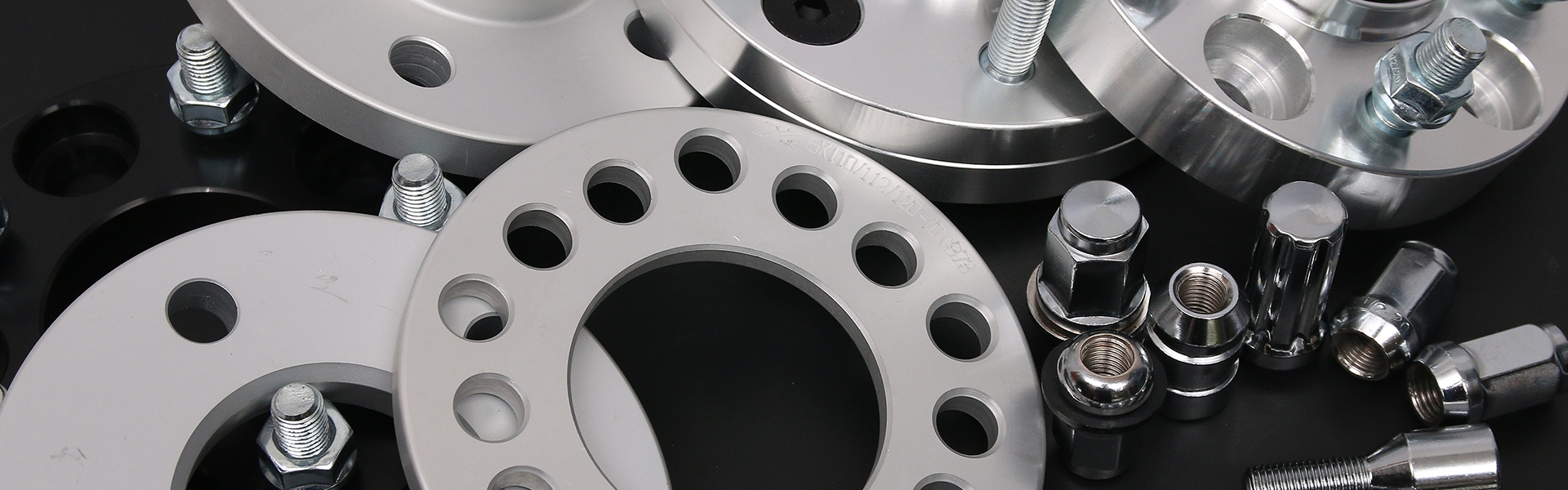

- Conical lug nuts have a straight tapered seat, while ball seat lug nuts have a curved spherical seat.
- Choose a conical nut for a wheel that specifies its taper angle, commonly 60°, and a ball seat nut for a wheel that specifies its radius.
- Matching the stud thread only establishes that the nut can screw on. The seat, usable engagement, and clearances determine whether it can clamp the wheel correctly.
- For bulk orders, approve a drawing and a sample against the exact wheel before committing to a part number.
The seat is the bearing surface under the nut that presses against the recess in the wheel. Conical and ball seat lug nuts are application-specific. Fit a cone to the specified tapered recess and a ball seat to the specified spherical recess, even when the two nuts share the same thread and hex size. Start with the wheel part number and its hardware specification. Then match the nut to the vehicle stud and check how much usable thread it engages with the wheel in place.
What changes between a conical seat and a ball seat?
A conical seat has straight sides in cross-section and is specified by an included angle. A ball seat has a curved cross-section and is specified by a radius. The included angle is the angle between opposite sides of the cone. A ball seat’s radius describes the curvature of the mating surface. An R12 drawing, for example, calls for a 12 mm radius when the drawing dimensions are in millimeters.
A matching taper can guide the nut into its tapered recess as the parts come together. A correctly matched spherical nut follows the curvature of its wheel recess and bears on the intended seat. Both arrangements depend on compatible contact geometry. A hex head tells you what size tool fits, and a closed end tells you the nut has a cap. Use the surface around the threaded opening to identify the seat family, then use the drawing to confirm its dimensions. H&R illustrates 60° taper-head screws and R12, R13, and R14 round-head screws in its wheel fastener range.
| Decision factor | Conical seat | Ball seat |
|---|---|---|
| Bearing profile | Straight taper in section. | Convex spherical profile in section. |
| Drawing callout | Included angle. Fortune’s illustrated nut is 60°. | Spherical radius. R12, R13, and R14 are documented examples in H&R’s wheel screw range. |
| Mating wheel recess | A taper that matches the approved angle and contact dimensions. | A curved pocket that matches the approved radius and contact dimensions. |
| Fortune M12 × 1.5 catalog example | 1007-19H, one-piece acorn, 1.38 in overall, 3/4 in hex. | SR1107M, open-end sphere, 0.71 in overall, 3/4 in hex. Obtain its radius from the part drawing. |
| Packaging and clearance checks | Check socket access and, for a closed nut, usable depth to the cap. | Check socket access, thread engagement, and clearance for any stud protrusion with an open nut. |
| Tightening specification | Use the approved procedure and torque for the assembled application. | Use the approved procedure and torque for the assembled application. |
The two Fortune examples are listed in the Fortune lug nuts catalog. The one-piece acorn specifications and open-end sphere specifications show why a purchase order that says only “M12 × 1.5, 3/4-inch hex” can describe two different parts. The illustration shows the cone angle on the one-piece acorn. The published 1.38-inch and 0.71-inch dimensions are overall heights. Verify usable thread length from a drawing or sample.

When should you choose each seat?
Choose conical lug nuts when the exact wheel specifies a tapered pocket and the proposed nut matches the angle and bearing dimensions. This is a practical route for a documented 60° aftermarket wheel. Wheel Pros, for example, specifies 60° conical hardware for its wheels and also checks the style and length of any reused factory hardware. Confirm the recess dimensions and socket clearance before choosing between standard acorn, bulge acorn, or narrow-access hardware. Wheel Pros guidance on factory hardware.
Choose ball seat lug nuts when the wheel specifies a spherical pocket and the nut matches its specified radius and contact dimensions. This retains the intended mating profile when servicing an original wheel designed for radius-seat hardware. If a listing says only “ball seat,” obtain the dimensioned drawing before approving the part. Two spherical profiles can look alike on a product page and still have different curvatures.
On a vehicle that uses lug bolts, match a lug bolt to the wheel seat, hub thread, and required thread reach. A lug nut threads onto a stud, while a lug bolt threads into the hub. Radius and taper designations appear on both kinds of hardware. Keep any original spare wheel in the fitment review, especially when an aftermarket road wheel specifies different hardware from the spare.
Record the wheel configuration when hardware changes
Changing from a factory ball seat wheel to a 60° cone seat wheel can change the lug nut even when the vehicle and studs stay the same. Consider a service kit for a vehicle with factory radius-seat road wheels and a matching spare. If the replacement road wheel specifies a 60° cone, build the new road-wheel kit around the cone hardware and identify the approved fasteners for the spare in the service instructions. Keep the application information with the vehicle so a roadside wheel change uses the correct hardware.
Why can the wrong lug nut still reach torque?
A wheel lug nut can reach the torque setting before the wheel is properly clamped when the seat is wrong or the fastener bottoms out. Clamp load is the force that presses the wheel against the hub. A torque wrench measures twisting force at the nut. Friction and unintended interference can contribute to that reading. McGard describes checking the bearing surface during sample fitment to identify possible bottoming. McGard fitment and installation guidance.
When a cone and a ball seat meet, their mismatched profiles can concentrate the load in a narrow band. Local deformation or settling at that contact can reduce the initial clamp load. That explains how a fastener can feel tight at installation and later loosen. If you find fresh gouging, uneven witness marks, or repeated loosening, stop using the assembly and have the wheel, studs, and fasteners inspected before returning it to service. Tightening the same hardware again leaves the underlying contact geometry unresolved. Wheel & Tire Council installation guidance hosted by NHTSA.
A closed-end lug nut can contact the stud tip before its seat clamps the wheel when the stud extends beyond the nut’s usable depth. An open-end design provides a path for the stud to extend through the nut where the assembly permits it. Check the amount of usable thread engagement and the available space under the wheel cover. A short open nut and a tall capped nut can have very different usable dimensions from their published heights.
How do you verify fitment before approving a bulk order?
Approve a wheel lug nut against the exact wheel and stud combination, using the part drawing and a physical fit sample. Thread diameter and pitch are separate dimensions. In M12 × 1.5, 12 mm is the nominal diameter and 1.5 mm is the axial distance between adjacent threads. Two M12 nuts with different pitches belong on different studs. Record the diameter and pitch explicitly on every order line.
- Identify the wheel by manufacturer and part number. Obtain the approved fastener type, seat profile, specified cone angle or ball radius, and any bearing or recess dimensions that limit part choice.
- Match the stud diameter and pitch, then verify the application’s required thread engagement with the wheel seated. Compare usable engagement at the front and rear if the wheel or stud assemblies differ. Start the sample nut by hand and investigate any binding before proceeding.
- Check the nut and tool envelope. A socket that touches the pocket wall before it fully grips the hex can make service difficult even when the nut fits the stud. Check cap depth on closed nuts and protrusion on open nuts, including clearance under center caps.
- Have a qualified installer verify the approved sample on the actual assembly. Use a calibrated torque wrench, the specified tightening sequence and thread condition, and the documented torque for that wheel and vehicle. Follow the application instructions for any torque recheck.
- Release the order against the approved part number and drawing revision. Label bins and kits with the seat profile and dimensions as well as the thread. Keep the approved sample available for receiving inspection and flag substitutions for a new fitment review.
For a wheel distributor, seat geometry is a purchasing attribute that belongs on the SKU and carton label. Matching thread or hex alone can cause cross-picks between cone and sphere stock. A receiving check can compare the supplied drawing and lot label with the purchase order, verify pitch with a gauge, and measure the specified seat geometry using the approved inspection method. Agree on the material, finish, packaging and traceability requirements at quotation, and request the evidence relevant to that exact part.
Use separate checks for thread, seat, and tool access
A thread gauge can verify lug nut pitch, while a seat profile check verifies the bearing geometry and a trial fit verifies tool access. Keep the checks separate in the inspection plan. For a cone, compare the angle and the specified bearing diameters to the drawing. For a sphere, check the curve over the specified portion of the seat. A single across-seat diameter can be shared by different profiles, so the receiving rule needs to identify the feature and the measuring method.
Apply the same drawing discipline to wheel locks. The lock may use a larger key envelope than the regular nut even if both share the same seat and thread. Trial-fit the lock and its actual key in the deepest wheel pocket in the kit. Record the lock part number along with the regular nuts so a replacement order preserves the fit of both parts.
When an approved lug nut changes finish, construction, or supplier, review the revision before treating it as a direct substitute. Check the dimensions that control seating, engagement, and access, and verify that the installation instructions cover the supplied hardware. For a mixed order, tie each approved wheel application to the correct carton label and preserve that mapping in the replenishment record.
Frequently asked questions
Can I use conical lug nuts on a ball seat wheel?
Use a ball seat nut with the approved radius on a ball seat wheel. A cone can thread onto the stud and still bear on the wrong area of the recess, which can damage the wheel seat or reduce clamp load.
How can I tell whether my lug nut has a ball seat?
Look at the bearing surface beside the threaded opening. A ball seat has a curved profile, while a conical seat has a straight taper. Verify the radius against the fastener drawing and wheel specification before ordering.
Are R12 and R14 ball seat lug nuts interchangeable?
Use the radius specified for the wheel. In metric drawings, R12 and R14 label different radii. A nut with the wrong curvature changes the area that carries the clamp load even when the thread fits.
Do all conical lug nuts have a 60° seat?
Many applications use a 60° included angle, including the illustrated Fortune one-piece acorn. Order the angle on the approved wheel and fastener drawings and check the seat dimensions for the proposed part number.
Can I reuse factory lug nuts on aftermarket wheels?
Reuse them only if the aftermarket wheel’s approved hardware specification allows the original seat geometry, thread engagement, and clearances. Verify the spare wheel separately if it will remain in service with the vehicle.
Does ball seat hardware require a different torque?
Use the torque and tightening procedure specified for the actual wheel, vehicle, and hardware combination. The seat family alone cannot establish a torque value, and a correct wrench reading cannot validate incompatible hardware.
Request a quote for the confirmed fitment
Send the wheel part number, seat drawing or approved hardware reference, stud thread, required dimensions, quantity and packing needs to Fortune Wheel Parts. Ask for a drawing tied to the quoted SKU and a fit sample, including confirmation of the seat radius for any spherical part. If you service several wheel models on the same vehicle platform, list each wheel separately so the quote can identify the correct fastener for each assembly.
Post time: Nov-23-2026