



Vehicle lightweighting demands careful consideration for every component. The selection of high-strength steel or aluminum lug bolts represents a critical decision. This choice, often guided by Materials Science principles, balances significant weight reduction against strength, durability, and cost. Experts in the field analyze these options, assessing the overall Cost-Benefit Balance for optimal vehicle performance.
Key Takeaways
- Steel lug bolts are strong and cheap. They are good for most cars. They add more weight to a car.
- Aluminum lug bolts are light. They make cars faster and save gas. They cost more money and need careful care.
- Choosing lug bolts means picking between low cost and light weight. Both types must be safe for the car.
The Lightweighting Imperative: Why Lug Bolts Matter
Unsprung Weight and Rotational Mass Impact
Lug bolts, though small, significantly influence a vehicle’s performance. They contribute to both unsprung weight and rotational mass. Unsprung weight refers to the mass not supported by the suspension, like wheels, tires, and brakes. Reducing this weight improves handling, ride comfort, and steering response. Rotational mass, the weight that spins, requires more energy to accelerate and decelerate. Lighter lug bolts decrease this mass, making wheels easier to spin up and slow down. This directly impacts a vehicle’s agility.
Contribution to Fuel Efficiency and Performance
Every gram saved contributes to overall vehicle lightweighting. Lighter lug bolts reduce the total vehicle mass. A lighter vehicle requires less energy to move. This translates directly into improved fuel efficiency. For performance vehicles, reduced weight also enhances acceleration and braking capabilities. Engineers meticulously analyze each component’s weight to achieve these gains. The cumulative effect of many small weight reductions becomes substantial.
The Core Dilemma: Weight Savings vs. Other Factors
The pursuit of weight savings introduces a fundamental challenge. Manufacturers must balance the benefits of reduced mass against other critical factors. These factors include strength, durability, and cost. A lighter component might offer performance advantages but could compromise safety or longevity. The decision to use high-strength steel or aluminum lug bolts exemplifies this dilemma. Engineers constantly weigh the advantages of weight reduction against the need for robust, reliable components that meet stringent safety standards.
High-Strength Steel Lug Bolts: The Established Standard in Materials Science
Strength and Fatigue Resistance
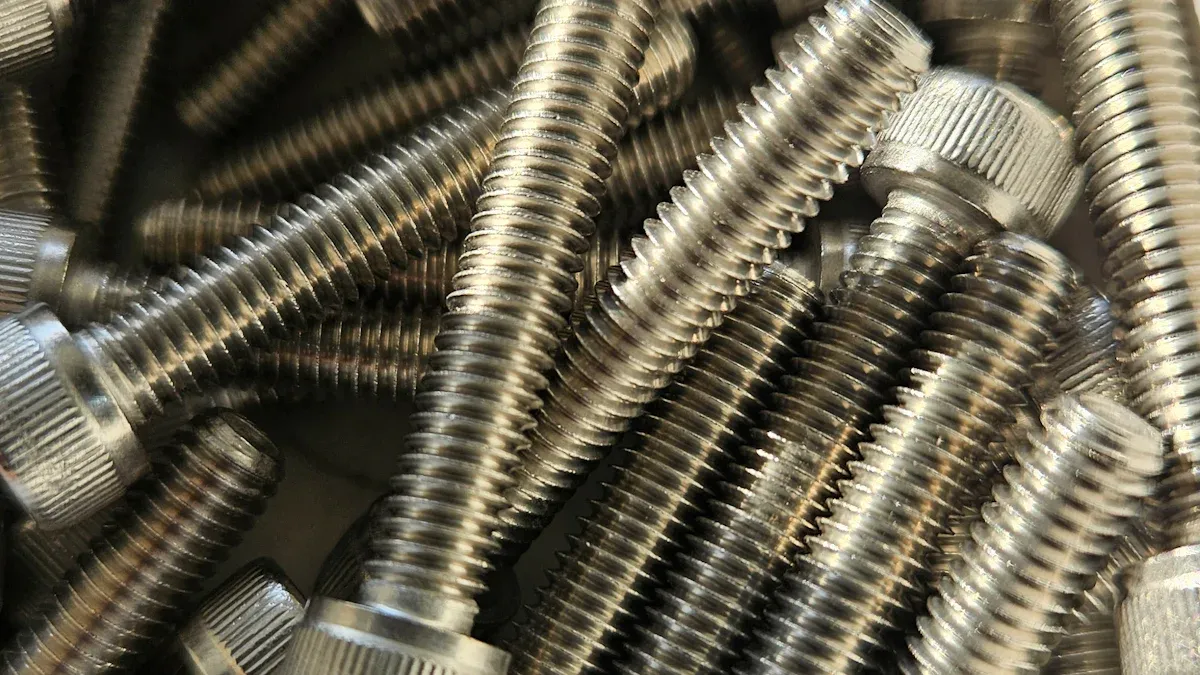
High-strength steel lug bolts represent a cornerstone in Materials Science. They possess remarkable tensile strength. This strength allows them to securely fasten wheels under extreme loads. Steel also exhibits excellent fatigue resistance. It withstands countless cycles of stress from vehicle operation. This inherent property ensures the bolts maintain their structural integrity over time, preventing unexpected failures.
Corrosion Resistance and Durability
Steel lug bolts often receive protective coatings. These treatments, such as zinc plating or black oxide, significantly enhance corrosion resistance. They shield the metal from rust and environmental degradation. This durability ensures the bolts remain functional and safe for the vehicle’s lifespan. Their robust nature makes them a reliable choice for various driving conditions.
Manufacturing and Material Cost Advantages
The production of steel lug bolts benefits from mature manufacturing processes. Steel itself is an abundant and relatively inexpensive material. These factors contribute to a lower overall manufacturing cost. This economic advantage often tips the Cost-Benefit Balance in favor of steel for many automotive applications. It provides a reliable solution without significant financial outlay.
Weight Contribution to Vehicle Mass
While strong and durable, steel is denser than aluminum. Consequently, steel lug bolts add more weight to the vehicle. This increased mass directly impacts lightweighting goals. For manufacturers prioritizing maximum weight reduction, this aspect presents a challenge. However, for many standard vehicles, the superior strength and lower cost of steel offer a compelling Cost-Benefit Balance, making it the preferred choice despite the weight. The principles of Materials Science guide these trade-offs.
Aluminum Lug Bolts: The Lightweight Challenger

Significant Weight Reduction Potential
Aluminum lug bolts offer substantial weight savings. Aluminum is approximately one-third the density of steel. This material difference directly translates into lighter components. Reducing the mass of each lug bolt contributes significantly to overall vehicle lightweighting. This weight reduction particularly benefits unsprung mass, improving vehicle dynamics and responsiveness.
Material Properties and Thermal Conductivity
Aluminum possesses distinct material properties. It exhibits excellent thermal conductivity. This means aluminum can dissipate heat more efficiently than steel. While beneficial in some applications, lug bolts primarily require strength and resistance to wear. Aluminum’s inherent softness compared to steel presents specific challenges. Engineers must account for these characteristics in design.
Performance Considerations: Strength and Galling
Aluminum lug bolts generally have lower tensile strength than high-strength steel counterparts. This requires careful engineering to ensure adequate clamping force and safety. A common issue with aluminum threads is galling. Galling occurs when two metal surfaces slide against each other under pressure, causing material transfer and seizing. Proper lubrication and installation techniques are crucial to prevent this.
Higher Material and Manufacturing Costs
Aluminum lug bolts typically incur higher costs. The raw material itself is more expensive than steel. Furthermore, manufacturing processes for aluminum bolts can be more complex. This includes specialized machining and surface treatments to enhance durability and prevent issues like galling. These factors contribute to a higher price point for aluminum lug bolts compared to steel options.
Direct Comparison: Cost-Benefit Balance in Lug Bolt Selection
Quantifying Cost Per Gram Saved
Manufacturers meticulously analyze the cost of saving weight. They calculate the “cost per gram saved” for various components. For lug bolts, this involves comparing the price difference between steel and aluminum bolts against their weight difference. Aluminum bolts are significantly lighter, but they also cost more. This calculation helps determine if the weight reduction justifies the increased expense. For example, a vehicle designer might find that saving 100 grams with aluminum lug bolts costs an extra $50. This translates to $0.50 per gram saved. This metric is crucial for assessing the overall Cost-Benefit Balance in vehicle design.
Strength, Durability, and Weight Compromises
The choice between steel and aluminum lug bolts involves inherent compromises. High-strength steel offers superior tensile strength and fatigue resistance. It withstands high clamping forces and repeated stress cycles without issue. However, steel is denser, adding more weight to the vehicle. Aluminum provides substantial weight savings due to its lower density. Yet, aluminum generally possesses lower inherent strength and can be more susceptible to thread damage or galling. Engineers must carefully consider these Materials Science properties. They balance the desire for lightweighting against the need for robust, long-lasting components. A compromise often involves specific aluminum alloys or surface treatments to enhance durability, which can further impact cost.
Maintenance, Longevity, and Service Life
Maintenance practices and expected service life also differ between the two materials. Steel lug bolts are generally more forgiving. They tolerate minor over-torquing better and resist thread damage more effectively. Their corrosion resistance, especially with proper coatings, ensures a long service life under various environmental conditions. Aluminum lug bolts require more precise handling. Technicians must adhere strictly to torque specifications to prevent stretching or stripping threads. Proper lubrication is essential to prevent galling. While aluminum can offer a long service life, it often demands more careful installation and maintenance procedures. This impacts the long-term Cost-Benefit Balance for vehicle owners.
Application Suitability: OEM vs. Aftermarket
The suitability of steel versus aluminum lug bolts often depends on the application. Original Equipment Manufacturers (OEMs) typically prioritize a balance of cost, durability, and performance for mass-produced vehicles. They often choose high-strength steel due to its proven reliability and lower cost. This provides a robust solution for the average consumer. In the aftermarket, especially for performance enthusiasts or racing applications, the focus shifts. Here, every gram counts. Aftermarket suppliers offer aluminum lug bolts for those willing to pay a premium for maximum weight reduction. These users often understand the specific maintenance requirements and accept the trade-offs for enhanced performance.
Performance and Safety: Beyond the Scale
Clamping Force and Torque Requirements
Lug bolts play a critical role in maintaining wheel security. They generate clamping force, which holds the wheel firmly against the hub. Achieving the correct clamping force requires precise torque application. High-strength steel bolts possess superior tensile strength. This allows them to withstand higher torque values without yielding. They maintain consistent clamping force over time. Aluminum bolts, while lighter, generally have lower tensile strength. Manufacturers must design them carefully to meet clamping force requirements. This often involves larger diameters or specific thread designs. Technicians must adhere strictly to torque specifications for aluminum bolts. Over-torquing can stretch or damage aluminum threads, compromising safety. Under-torquing can lead to loose wheels.
Susceptibility to Damage and Wear
The material choice significantly impacts a lug bolt’s resistance to damage and wear. Steel bolts are inherently more robust. They resist thread stripping and cross-threading effectively. Their hardness makes them less susceptible to impact damage from tools or road debris. Protective coatings further enhance their resistance to corrosion and abrasion. Aluminum bolts are softer. They are more prone to thread damage if mishandled during installation or removal. Galling, a form of adhesive wear, can occur between aluminum threads and steel studs or nuts. This requires careful lubrication and precise installation. Environmental factors like road salt can also accelerate wear on aluminum if not properly protected.
Impact on Vehicle Handling and Acceleration
The weight of lug bolts directly influences vehicle dynamics. Lighter aluminum lug bolts reduce unsprung weight. This improves suspension response and allows tires to maintain better contact with the road. Drivers experience enhanced handling, especially over uneven surfaces. Reduced rotational mass also contributes to quicker acceleration and more efficient braking. The engine expends less energy to spin up lighter wheels. This translates to a more responsive feel. While the individual weight saving per bolt seems small, the cumulative effect across all wheels is noticeable. This is particularly true in performance-oriented vehicles where every gram matters for optimal agility and speed.
Reliability in Extreme Conditions
Vehicle components must perform reliably under diverse and extreme conditions. High-strength steel lug bolts exhibit excellent performance across a wide temperature range. Their material properties remain stable under high thermal loads generated during heavy braking or prolonged driving. They also resist deformation under extreme G-forces encountered in aggressive driving. Aluminum’s material properties can be more sensitive to temperature fluctuations. While modern alloys are robust, extreme heat can affect their strength over time. Additionally, aluminum can be more susceptible to stress corrosion cracking in harsh environments, such as those with heavy salt exposure. Engineers must select specific aluminum alloys and apply appropriate surface treatments to ensure reliability in such demanding applications.
Making the Right Choice: Factors for Consideration
Vehicle Type and Intended Use
The vehicle’s purpose heavily influences lug bolt selection. A daily commuter car prioritizes durability and cost-effectiveness. High-strength steel bolts often serve this need well. Performance vehicles, like race cars or sports cars, seek every possible weight reduction. They often choose aluminum bolts to minimize unsprung and rotational mass. Heavy-duty trucks or off-road vehicles demand maximum strength and resilience. Steel bolts typically provide the necessary robustness for these applications.
Budget Constraints and Long-Term Value
Budget plays a significant role in the decision. Steel lug bolts offer a lower initial cost. They provide a reliable solution without a large investment. Aluminum bolts come with a higher price tag. Buyers must weigh the performance benefits against this increased expense. Consider the long-term value. This includes potential fuel savings from lightweighting or enhanced performance. The overall Cost-Benefit Balance helps determine the best financial choice for the owner.
Safety, Reliability, and Installation Practices
Safety remains paramount. Both steel and aluminum lug bolts must provide secure wheel attachment. Steel bolts generally offer greater tolerance for installation errors. Aluminum bolts require precise torque specifications and careful handling. Improper installation can compromise their integrity. Technicians must follow best practices for both materials. Understanding the Materials Science behind each bolt ensures reliable performance. Regular inspection also contributes to long-term safety.
Regulatory and Industry Standards
All lug bolts must meet stringent safety and quality standards. Regulatory bodies establish these requirements to ensure vehicle safety. Original Equipment Manufacturers (OEMs) adhere to these standards strictly. Aftermarket manufacturers also design their products to comply. Consumers should always choose lug bolts that meet or exceed these industry benchmarks. This ensures the bolts perform as expected under various driving conditions.
The optimal lug bolt choice hinges on specific priorities. Steel offers a robust, cost-effective solution with proven durability. Aluminum provides significant weight savings at a higher cost. It also presents different performance considerations. Aluminum is ideal for applications where every gram counts and specific maintenance is adhered to.
FAQ
What is the main benefit of choosing aluminum lug bolts?
Aluminum lug bolts significantly reduce vehicle weight. This improves handling and fuel efficiency. Steel bolts offer superior strength and durability for general use.
Do aluminum lug bolts cost more than steel lug bolts?
Yes, aluminum lug bolts generally have a higher price. Their material and manufacturing processes are more expensive. Steel bolts provide a more economical choice.
Do aluminum lug bolts need special care during installation?
Indeed, aluminum lug bolts require precise torque. Technicians must also use proper lubrication. This prevents thread damage and ensures secure wheel attachment.
Post time: Nov-10-2025
