



Private Label Wheel Weights: How to Launch Your Own Brand With an OEM Factory
For tire shops, distributors, and automotive aftermarket brands, private label wheel weights are one of the smartest entry products to build recurring B2B sales. They are small, essential, and tied directly to one of the most frequent service jobs in the industry: tire balancing. When you work with an OEM wheel weights factory, you can launch your own branded line faster, control specifications, and create a product catalog that fits your market’s packaging, compliance, and inventory needs.
At Fortune Wheel Parts, wheel weights are part of a broader portfolio of tire service products that also includes TPMS service kits, tire repair materials, tire valve tools, and shop equipment. This matters because B2B buyers often prefer suppliers who can support multiple wheel-end categories with consistent quality, clear SKU structures, and export-ready packaging.
Why private label wheel weights are a strong aftermarket product
Wheel weights are a critical consumable in tire balancing. Their core function is to correct uneven mass distribution in the wheel and tire assembly, reducing vibration, steering shake, irregular wear, and customer complaints. Because balancing is part of routine tire service, demand for wheel weights is steady across passenger cars, light trucks, and fleet maintenance.
For brands, this creates three advantages:
- Repeat demand: wheel weights are used every day in tire shops and service bays.
- Simple branding: packaging, labeling, and SKU organization can quickly make the product line look professional.
- Cross-sell potential: wheel weights pair naturally with balancing machines, tire changers, tire repair materials, and valve service products.
What wheel weight types should your private label line include?
A complete custom wheel weight branding program usually starts with the main fitment categories used in the field. The right product mix depends on your target customers, vehicle mix, and regional preferences.
1. Clip-on wheel weights for steel wheels
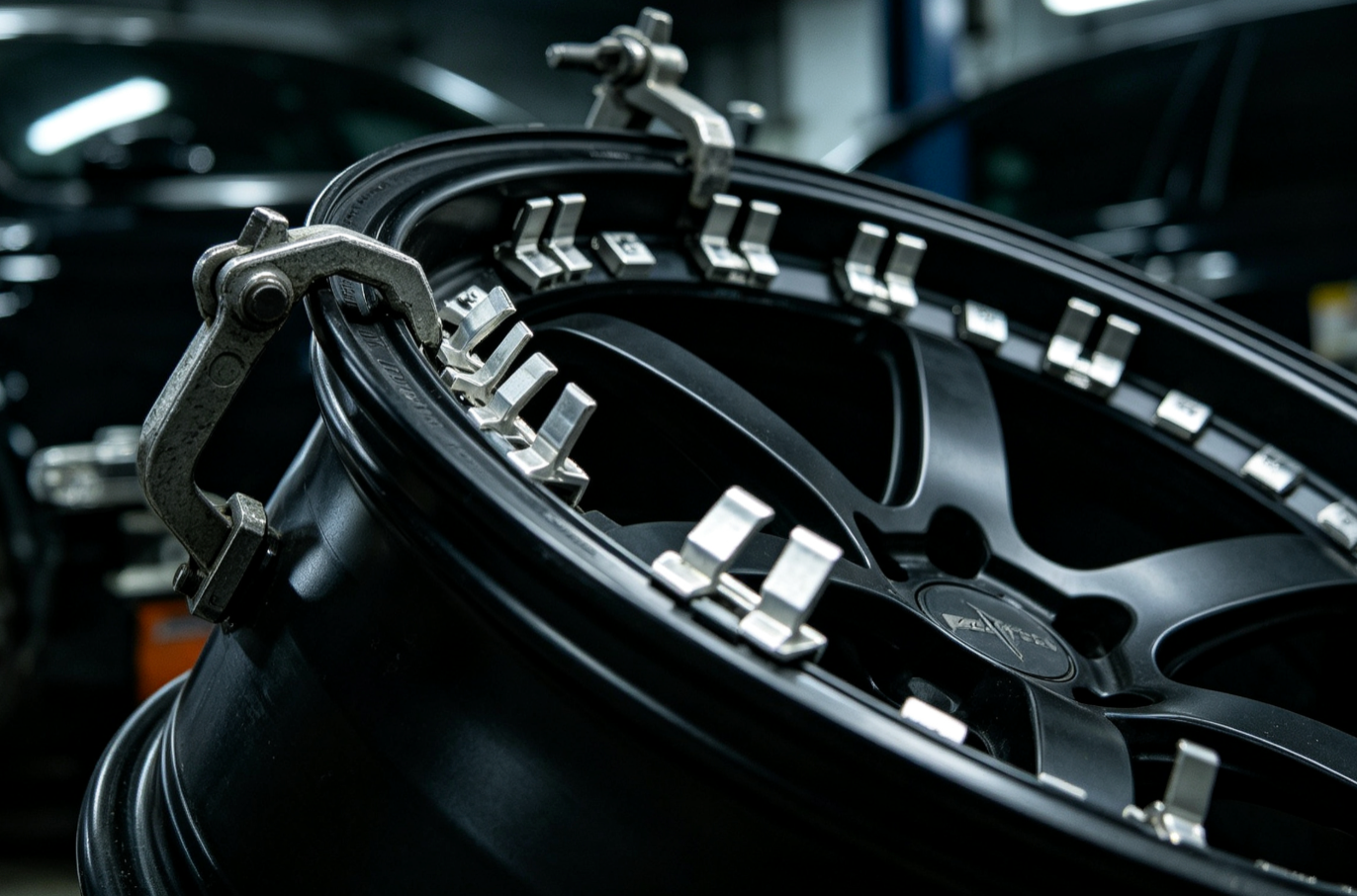
Clip-on or snap-on wheel weights are commonly used on steel rims. They rely on the edge structure of the wheel for installation, which makes them fast to apply in busy shops. These are often a high-volume item for tire dealers and repair chains handling everyday passenger and light truck service.
Key selling points:
- Designed for steel wheel rim edges
- Fast installation and removal
- Available in multiple segment weights for balancing precision
2. Adhesive wheel weights for aluminum wheels
Stick-on or adhesive wheel weights are widely used on the inner side of aluminum wheels. They are especially popular where appearance matters or where the wheel design does not suit clip-on installation. For many modern vehicles, adhesive products are the standard balancing choice.
Key selling points:
- Ideal for alloy and aluminum rims
- Low-visibility installation on wheel interior
- Strong tape adhesion and stable coating are essential for performance
3. Zinc alloy wheel weights as a lead-free option
Zinc alloy wheel weights are often positioned as a lead-free alternative for environmentally sensitive or regulation-driven markets. If your customers care about compliance, sustainability, or public procurement requirements, this category can be an important part of your product strategy.
Why buyers choose zinc alloy:
- Useful in markets with lead restrictions or preference for non-lead solutions
- Suitable for modern aftermarket compliance expectations
- Supports environmentally conscious brand positioning
4. Lead wheel weights for traditional service channels
Lead wheel weights still have a strong presence in traditional repair systems. They remain a practical solution where established shop workflows, cost targets, and installed service habits matter. In this category, product stability is critical: consistent sizing, reliable tape performance, and durable coating all affect shop satisfaction.
Important production points:
- Stable segment weight accuracy
- Durable tape and coating
- Clean finish for easy handling and inventory control
What makes OEM wheel weights different from generic sourcing?
Choosing an OEM wheel weights factory is not just about getting a lower unit price. It is about building a product that fits your market and your brand. OEM production allows you to control the practical details that matter most to B2B buyers.
Specification control
Wheel weights are sold and used by the segment. The division of weight segments affects balancing precision and installation flexibility. A well-designed product line should include the most common segment combinations for the target market, whether the customer prefers small incremental adjustment or fewer, larger pieces.
Packaging and SKU standardization
Aftermarket channels care deeply about SKU clarity, packaging size, and inventory turnover. If your private label line is difficult to organize, it will be harder for distributors and tire shops to stock it. A strong OEM program should provide clear part numbers, weight values, packaging counts, and carton configurations.
Branding support
Private label success depends on recognition at the shelf and trust at the counter. Custom logos, color schemes, barcodes, and product descriptions help your brand look professional and make reordering easier for customers.
How to launch your own wheel weight brand step by step
Launching a private label program is easier when you treat it like a product development project. Here is a practical roadmap.
Step 1: Define your target customer
Start with the buyer type. North American demand is often concentrated in tire shops, auto repair chains, distributors, and fleet maintenance operations. Each segment values different things:
- Tire shops: fast installation, common sizes, reliable adhesion
- Distributors: clean SKU system, carton efficiency, stable supply
- Fleet maintenance: durability, consistency, cost control
Step 2: Choose the right product mix
A balanced launch line might include:
- Clip-on wheel weights for steel rims
- Adhesive wheel weights for aluminum wheels
- Zinc alloy wheel weights for lead-free markets
- Lead wheel weights for traditional channels
This gives you coverage across common vehicle and wheel types while keeping your catalog manageable.
Step 3: Lock in technical details
Ask your OEM supplier to confirm the following:
- Material composition
- Segment weight design
- Surface coating or finish
- Tape performance for adhesive styles
- Fitment profile for clip-on styles
- Packaging quantity and carton size
Step 4: Build your brand assets
Your custom wheel weight branding package should include product name, logo placement, barcode labels, and usage description. For B2B buyers, add practical information such as model, purpose, fitment notes, and installation suggestions. This makes the product page and the box both more useful and more searchable.
Step 5: Plan compliant packaging and market positioning
If you sell in markets with environmental or regulatory sensitivity, be clear about material type and intended use. Zinc alloy may be better suited for lead-free messaging, while lead products may remain appropriate in legacy service channels where accepted.
What B2B buyers want to see on a wheel weight product page
Because aftermarket purchasing is highly practical, product pages should not just describe the item. They should help buyers match the product to the job.
A strong product page should include:
- Product name: clip-on, adhesive, zinc alloy, or lead wheel weight
- Application: tire balancing, wheel balancing, service repair
- Fitment: steel wheels, aluminum wheels, specific rim styles
- Material: zinc alloy, lead, steel clip, adhesive backing
- Packaging: box count, carton count, label style
- Installation notes: recommended surface prep or mounting position
This format is not only useful for customers, but also strong for search engines because it combines product name, use case, fitment, material, and buying context into a clear long-tail structure.
How wheel weights fit into a broader wheel-end product strategy
Wheel weights are often sold alongside other essential wheel service products. If you are building a private label portfolio, consider expanding into adjacent categories that share the same buyer base.
TPMS valve stems and service kits
Tire valve stems are safety-critical components. Aging, cracking, or seal failure can lead to slow leaks or sudden pressure loss. TPMS valve stems must also maintain sensor compatibility and sealing performance. A TPMS service kit typically includes valve stems, seals, grommets, nuts, and related consumables, and different sensors or vehicle platforms may require specific kits.
Tire repair materials
Repair consumables such as patches, patch-plugs, and insert-type repair solutions are another high-demand category. Their success depends on sealing performance, flexibility, and material compatibility. Many tire shops prefer to source these products from the same supplier that provides wheel-end consumables.
Tire tools and service equipment
Balancing machines, tire changers, tire pressure gauges, jacks, and jack stands are foundational shop tools. These products support installation workflow, safety, and service consistency. If your brand can extend into these adjacent categories, you can strengthen distributor relationships and improve basket value.
Winter service products
In cold-weather markets, tire stud products are often purchased during seasonal peaks tied to winter tire changeover. That same seasonal rhythm can create opportunities to bundle wheel weights with other tire service consumables during high-volume periods.
Quality considerations when sourcing from an OEM factory
To protect your brand reputation, pay attention to manufacturing consistency. Wheel weights may look simple, but performance failures show up quickly in the shop.
- Weight accuracy: segment consistency supports proper balancing
- Adhesive reliability: critical for stick-on products
- Surface finish: important for handling and corrosion resistance
- Clip fit: must match wheel edge geometry for secure installation
- Packaging integrity: needed for shelf life and distribution
Reliable OEM production helps reduce returns, installation complaints, and brand damage.
Why Fortune Wheel Parts is a practical partner for private label programs
If you are looking to launch a branded wheel weight line, working with a supplier that understands aftermarket channel requirements is essential. Fortune Wheel Parts serves customers who need export-ready product structures, clear fitment information, and stable supply for B2B distribution. That is especially important in North American-style channels where inventory turnover, SKU clarity, and packaging consistency drive purchasing decisions.
A good OEM partner should support:
- Private label and brand customization
- Material and finish options
- Packaging and carton configuration support
- Product line expansion across wheel-end categories
FAQ: Private label wheel weights
What are private label wheel weights?
Private label wheel weights are wheel balancing products manufactured by an OEM factory and sold under your own brand name. You control the branding, packaging, and often the product specification.
What is the difference between OEM wheel weights and generic wheel weights?
OEM wheel weights are produced according to your brand and specification requirements. Generic wheel weights are usually sold without customization and may offer less control over packaging, labeling, and market positioning.
Which type of wheel weight should I include first?
Most brands start with the highest-demand categories: clip-on wheel weights for steel wheels and adhesive wheel weights for aluminum wheels. Zinc alloy and lead options can be added based on market demand and compliance needs.
Are zinc alloy wheel weights better for environmentally sensitive markets?
Yes. Zinc alloy wheel weights are often used as a lead-free alternative and are a strong choice where environmental rules, public procurement standards, or customer preferences favor non-lead solutions.
Why does segment weight design matter?
Segment design affects balancing precision and installation flexibility. The right segment structure helps technicians make accurate adjustments and fit the product efficiently during service.
What should I ask an OEM factory before launching my brand?
Ask about material options, fitment compatibility, tape quality, clip design, packaging format, carton quantity, label support, and whether they can provide product pages or SKU structures for B2B buyers.
Can wheel weights be bundled with other products?
Yes. They are often bundled with tire repair materials, TPMS service kits, tire valves, balancing tools, and other shop consumables to increase order value and simplify sourcing.
Final thoughts
Launching a private label wheel weight line is a practical way to enter or expand in the automotive aftermarket. The product is essential, repeat-purchased, and easy to align with the needs of tire shops, distributors, and fleet service customers. By working with an experienced OEM factory, you can create a branded catalog that covers clip-on, adhesive, zinc alloy, and lead options while maintaining strong packaging, reliable quality, and clear market positioning.
If your goal is to build a recognizable and profitable wheel-end product brand, wheel weights are a strong place to start.
Post time: Oct-01-2026