



Zinc wheel weights cost more than their raw material price alone. The full wheel weight manufacturing cost includes zinc input, tooling, casting or forming, trimming, coating, inspection, packaging, labor, compliance, logistics, inventory, and rejected parts. Buyers should compare total cost of ownership, not only the quoted unit price.
- Raw zinc is only one component of zinc weight production cost.
- Tooling, yield, coating, packaging, and freight can materially change the delivered price.
- Wheel design, weight segmentation, rim compatibility, and regulatory requirements affect manufacturing complexity.
- Supplier quality controls reduce hidden costs caused by poor fit, corrosion, rework, and warranty claims.
Manufacturing zinc wheel weights is a cost-engineering exercise rather than a simple metal-purchasing decision. The available market forecast places the global wheel weight market at USD 726.9 million in 2026 and USD 823.8 million in 2035, with a reported CAGR of 1.4%, although buyers should verify the methodology before using that forecast for planning. This guide explains the cost structure, production stages, comparison methods, and questions to ask before selecting a zinc weight supplier.
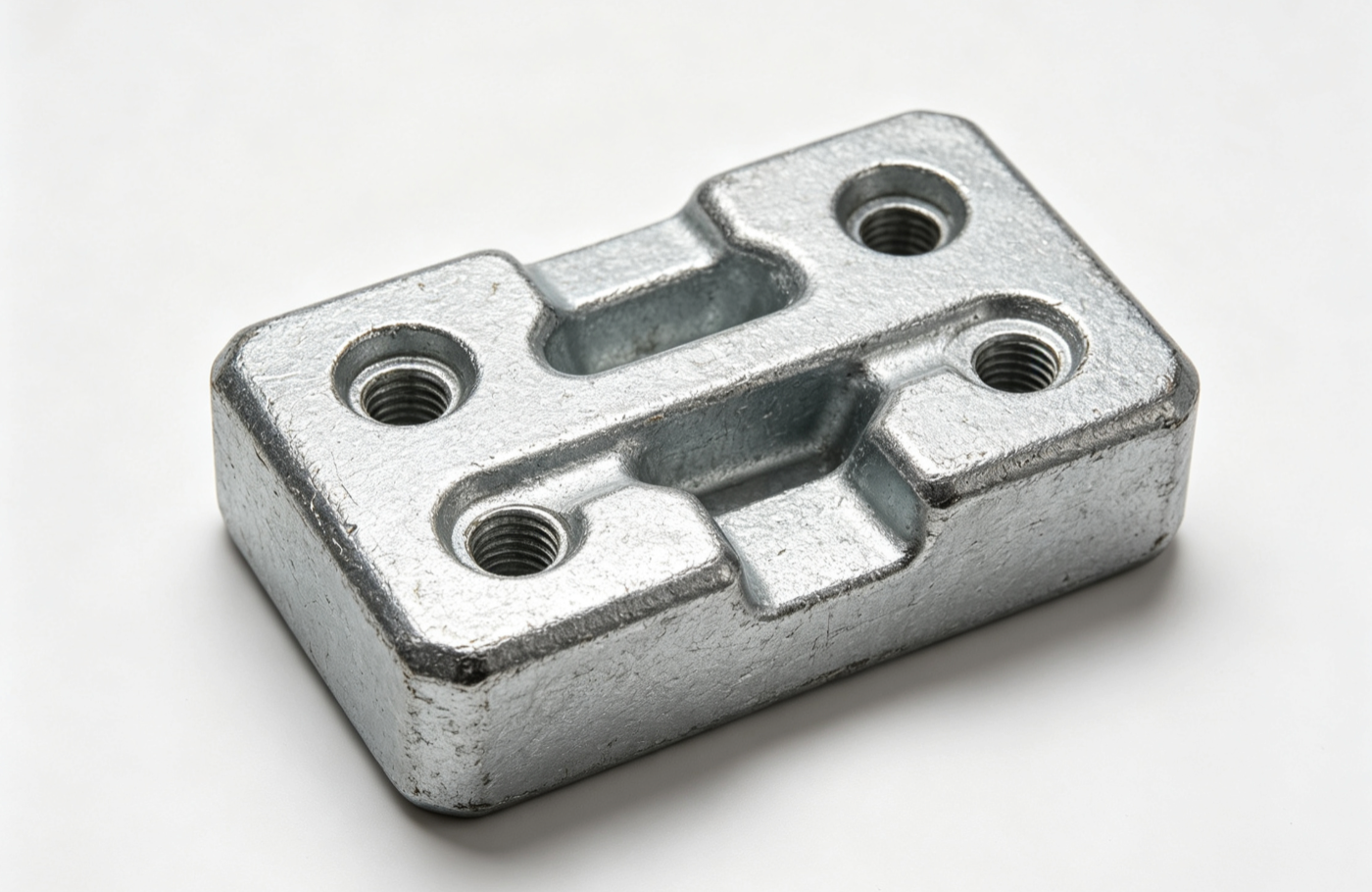
What Determines Wheel Weight Manufacturing Cost?
The most important conclusion is that delivered cost is created by several linked cost centers, not by zinc price alone. A practical quotation should separate material, conversion, quality, packing, and logistics assumptions so that buyers can compare suppliers fairly.
| Cost center | What it includes | Primary cost driver | Buyer review point |
|---|---|---|---|
| Material | Zinc alloy, master material, and process loss | Metal price and yield | Ask whether scrap return is included |
| Tooling | Molds, dies, fixtures, and engineering setup | Design complexity and volume | Confirm ownership and amortization |
| Conversion | Forming, trimming, finishing, coating, and assembly | Cycle time and labor content | Request process and finish details |
| Quality | Dimensional checks, coating checks, sampling, and records | Inspection level and traceability | Define acceptance criteria |
| Commercial | Packaging, freight, duties, inventory, and administration | Order size and destination | Compare landed cost, not EXW price |
Material cost and metal utilization
Material utilization is the first manufacturing lever because every kilogram purchased does not necessarily become saleable product. Zinc weight production may generate runners, gates, trimming scrap, setup scrap, or rejected castings, and the economic effect depends on whether material is recovered and returned to the process.
The quoted part weight also matters because a heavier design consumes more metal per unit, while a lighter design may require tighter control of geometry and balance increments. Buyers should request the net product weight, gross process consumption, expected yield basis, and the treatment of recyclable process scrap rather than comparing alloy prices in isolation.
Tooling and engineering allocation
Tooling is usually a fixed or semi-fixed cost that becomes less significant per unit as order volume increases. A custom clip profile, special adhesive recess, new segment geometry, or vehicle-specific fit may require dedicated tooling, engineering review, and first-article approval.
Tooling amortization should be stated explicitly because two suppliers can quote different unit prices while using the same underlying economics. Confirm whether the mold is included, charged separately, maintained by the supplier, or transferred to the buyer after a volume commitment.
How the Production Process Adds Cost
Process sequence directly affects cost because each additional operation adds machine time, labor, handling, inspection, or energy use. A typical route includes material preparation, forming, trimming, surface treatment, marking, inspection, packaging, and shipment preparation.
- Design review: Check the required mass increments, clip geometry, adhesive surface, rim clearance, and application range.
- Tool preparation: Build or adjust dies, molds, fixtures, and gauges for the approved design.
- Forming: Produce the zinc body with controlled dimensions and repeatable mass.
- Finishing: Remove flash, trim excess material, and apply the specified protective or cosmetic finish.
- Inspection: Verify weight, dimensions, appearance, fit, packaging, and sampling records.
- Packing: Separate segments, protect surfaces, label cartons, and prepare export documentation.
Finishing and inspection can be small line items individually but significant at scale. A powder-coated or otherwise protected zinc weight may cost more than an untreated item, yet the finish can support appearance, handling, and corrosion-resistance requirements. The correct comparison is therefore performance against the required environment, not finish price alone.
Why Design and Application Change the Price
Application compatibility is a cost variable because a weight that does not fit the wheel can create returns, rework, and installation delays. Clip-on weights depend on the rim flange profile, while adhesive weights are commonly installed on the inner surface of alloy wheels; both require correct geometry and installation practice.
| Design factor | Cost effect | Operational risk if wrong | Verification method |
|---|---|---|---|
| Mass segment | Changes tooling and packing configuration | Less balancing flexibility | Approve the mass range and increment |
| Clip profile | May require vehicle or rim-specific tooling | Loose fit or rim damage | Check flange compatibility |
| Adhesive interface | Adds tape selection and surface preparation | Weight detachment | Define tape, liner, and application conditions |
| Surface finish | Adds coating, curing, and inspection steps | Corrosion or appearance complaints | Specify finish and acceptance standard |
| Packaging format | Changes labor, carton size, and freight utilization | Mixed stock or damaged parts | Approve labels and pack quantity |
Segment design affects both production economics and service efficiency. The Fortune product reference identifies zinc weight sizes from 5 g to 60 g for one application range, illustrating why buyers should compare the complete size ladder rather than a single nominal part.
Regulation can also alter the business case. California states that it is illegal to sell, manufacture, or install lead wheel weights, as explained by the California Department of Toxic Substances Control. That type of rule can make a lead-free zinc option commercially necessary even when its initial purchase price is higher.
Comparing Zinc With Lead and Steel
Material selection should be based on legal fit, application performance, and total ownership cost rather than a universal claim that one material is always cheapest. Zinc is commonly considered a lead-free alternative, while lead remains present in traditional service systems and steel can offer another non-lead option with different density and forming characteristics.
| Comparison area | Zinc | Lead | Steel |
|---|---|---|---|
| Regulatory position | Useful where lead-free supply is required | Restricted in some markets | Generally considered a non-lead route |
| Design implication | Requires approved geometry and mass range | Legacy profiles may be widely available | May require different volume and shape |
| Cost question | Check material, coating, and tooling | Check legal availability and handling | Check forming and application compatibility |
| Procurement risk | Supplier qualification and fit validation | Market-specific compliance exposure | Vehicle and rim-specific fit validation |
The Brake and Frontend technical feature describes zinc and steel alternatives as becoming more cost-aligned with traditional lead products, but alignment should not be treated as a universal price promise. Actual economics vary by alloy, order volume, tooling status, finish, destination, and regulatory market.
Hidden Costs That Distort a Low Unit Price
The lowest quoted unit price can become the highest operational cost when quality, documentation, or supply reliability is weak. A useful sourcing review should calculate expected cost across the full purchasing cycle.
- Nonconformance: Incorrect clips, mass variation, burrs, coating defects, or damaged packaging can create sorting and replacement work.
- Installation loss: Poor fit or weak adhesion can cause rebalancing, repeat service, and customer complaints.
- Inventory burden: Too many application-specific SKUs can increase obsolete stock and reduce warehouse velocity.
- Freight inefficiency: Low-density packing, excess cartons, or small emergency shipments can raise landed cost.
- Compliance exposure: Incomplete material declarations or market restrictions can delay sales and import release.
Total cost of ownership is the correct decision framework because procurement price, quality cost, inventory cost, and service cost interact. The wheel weight procurement cost guide similarly emphasizes controlling total cost rather than selecting the lowest unit price.
How Buyers Can Build a Reliable Cost Model
A reliable cost model begins with a common specification and ends with a landed, usable part cost. Use the following sequence when requesting quotations.
- Define rim material, rim edge or inner mounting location, target applications, and required mass segments.
- State whether the product must be zinc, lead-free, coated, adhesive-backed, or clip-on.
- Request net part weight, packing quantity, carton dimensions, gross weight, and minimum order quantity.
- Separate one-time tooling and sampling charges from recurring unit price.
- Ask for inspection scope, traceability, corrective-action process, and replacement terms.
- Compare freight, duties, payment terms, lead time, and replenishment reliability at the same delivery term.
A supplier should also provide application guidance because the correct wheel weight depends on rim structure, vehicle coverage, and balancing requirements. Fortune publishes separate product categories for wheel weight products, tire valves, wheel accessories, and wheel lug nuts and bolts, which can help buyers organize related wheel-service sourcing without assuming that all products share the same specifications.
Practical Example: Two Quotes With Different Economics
The following example is a comparison method, not a price quotation. Quote A may show a lower unit price but exclude tooling, premium packaging, inspection, or delivery. Quote B may show a higher unit price while including those items. The correct choice depends on the total delivered and usable cost.
| Line item | Quote A treatment | Quote B treatment | Question to resolve |
|---|---|---|---|
| Unit product price | Included | Included | Are both based on the same net weight? |
| Tooling | Separate charge | Amortized | What volume is assumed? |
| Inspection | Basic sampling | Documented inspection | Which defects are accepted? |
| Packaging | Standard carton | Application-labeled carton | Will warehouse handling differ? |
| Freight | Buyer arranged | Supplier arranged | Are delivery terms identical? |
The best purchasing decision is the quote that delivers consistent, compliant, installable parts at the lowest predictable total cost. Buyers should not treat an attractive first-order price as proof of long-term competitiveness until repeatability, lead time, and defect handling have been validated.
Frequently Asked Questions
1. Are zinc wheel weights more expensive than lead?
They can have a higher initial price in some applications, but the comparison depends on material availability, tooling, finish, regulation, order volume, and freight. A landed-cost analysis is more meaningful than a material-only comparison.
2. What is included in wheel weight manufacturing cost?
Typical categories include material, process loss, tooling, forming, trimming, coating, inspection, packaging, labor, logistics, inventory, and quality-related costs.
3. Why does the weight segment range matter?
Segment range affects balancing flexibility, tooling, packaging, SKU count, and service efficiency. A complete range should be matched to the buyer’s vehicle and rim applications.
4. Are zinc weights suitable for aluminum wheels?
Some zinc products are designed for specific aluminum or alloy wheel applications, but compatibility depends on the clip or adhesive design and the wheel structure. Always verify the application guide and installation method.
5. What should a zinc weight supplier disclose?
Ask for material description, part and segment weights, application coverage, finish, packaging, tooling terms, inspection method, lead time, delivery terms, and corrective-action policy.
6. How can a buyer reduce production cost without reducing quality?
Standardize proven designs, consolidate compatible SKUs, improve carton utilization, forecast seasonal demand, validate tooling early, and compare suppliers using the same specification and delivery term.
7. Why is total cost of ownership important for wheel weights?
Because a low unit price can be offset by poor fit, detachment, corrosion, rework, emergency freight, excess inventory, or regulatory problems. The usable delivered part is the real purchasing unit.
About Fortune Auto Parts
Ningbo Fortune Auto Parts Manufacture Co., Ltd. states that it has manufactured wheel balance weights, tire valves, and tool accessories since 1996, with warehouses and offices in North America established in 2014 according to its company reference. Its product categories cover zinc, adhesive, and clip-on wheel weights alongside related tire-service components. Buyers can use the company’s product pages and application discussions to request a specification-based quotation.
Need help comparing zinc weight production options? Review the relevant product categories, confirm your rim and vehicle applications, and request a quotation that separates tooling, packaging, inspection, and delivery assumptions.

Post time: Nov-19-2026