



Tire Studs: Length, Head, and Shaft Selection
A practical guide for distributors, tire shops, and parts buyers
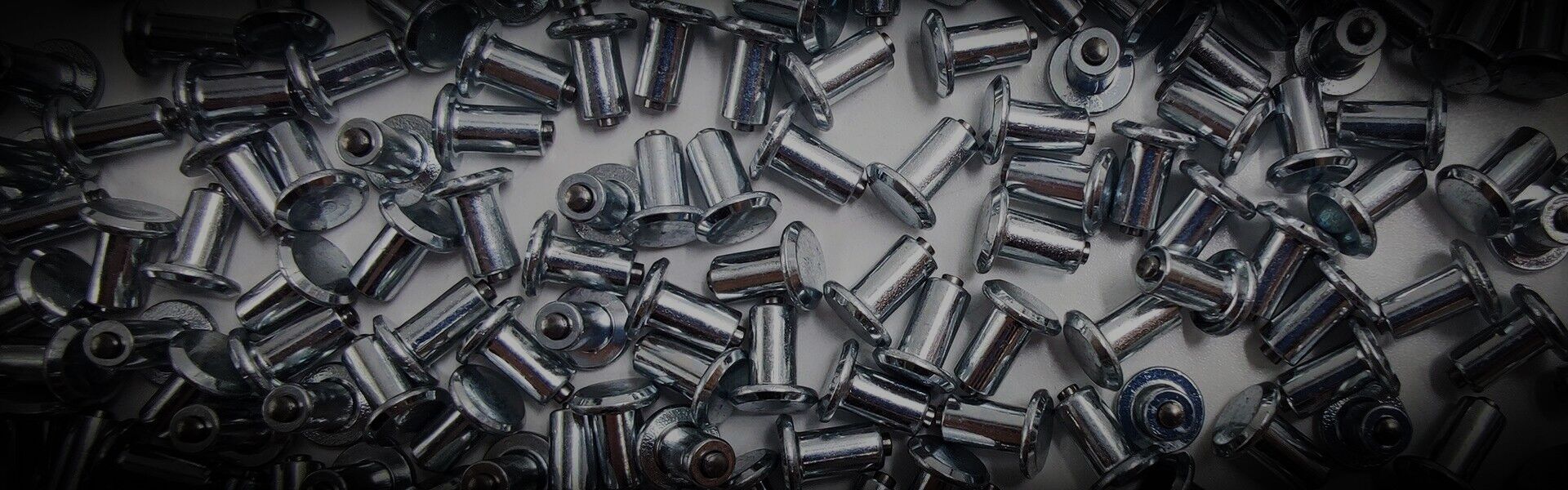
A tire stud only works in a tire that was molded to take it. The hole is already in the tread. The stud has to match that hole in length and in shaft diameter, then sit with its flange on the tread face.
Fortune catalog pages 46 and 47 cover that selection. They do not cover passenger-car valves, TPMS, or wheel fasteners, even though those products share the same catalog chapter. They also do not publish a stud count per tire, an installation torque, a speed rating, or a list of approved tire models. Those limits stay with the tire manufacturer and with the rules of the place where the tire will be used.
Match the Stud to the Molded Hole
Studdable tires are made with different tread depths. Studs are therefore made in different lengths. The catalog states the rule directly: the stud length must be matched to the depth of the holes molded in the tire.
Two names identify a size. One is the Tire Stud Manufacture Index, shown in this range as an FTS or FTA number. The other is the stud’s overall length in millimeters. A buyer who orders “an 11 mm stud” has not finished the specification. Pages 46 and 47 contain more than one 11 mm part, and those parts do not share a shaft diameter or a head diameter.
The length printed in each table is the selection length. It is not the length of the carbide pin. Every part in this range lists the same pin length, 5.2 mm. Pin length does not separate one Fortune stud from another. Overall length, head diameter, and shaft diameter do.
What the Drawing Is Checking
The insertion diagram on page 46 uses four labels: MOLDED, RIGHT, WRONG, and WRONG.
MOLDED is the empty hole formed in the tread. RIGHT shows the stud seated so the flange bears on the tread surface and the pin projects beyond that surface. One WRONG shows the stud standing proud, with the flange above the tread. The other WRONG shows the stud sunk too deep, with the flange below the tread face.
That diagram is a fit check, not a torque procedure. The catalog does not say how hard to drive the stud, which tool to use, or how many studs a tire should carry. If the flange cannot land on the tread without forcing the stud above or below the face, the length or the hole is wrong. Driving it anyway does not correct the match.
FTS8 Series
The FTS8 group is four parts: FTS-A, FTS-B, FTS-C, and FTS-D. All four are silver and zinc coated. None of them states a body material. Do not read the zinc coating as a statement that the body is steel, aluminum, or any other metal. The page simply does not say.
Packaging is the same for every stud in this article: 100 pieces per bag, 10 bags per case.
| Part | Length | Head diameter | Shaft diameter | Pin length | Weight | Color | Surface |
|---|---|---|---|---|---|---|---|
| FTS-A | 10 mm | 8 mm | 5.3 mm | 5.2 mm | 1.7 g | Silver | Zinc coated |
| FTS-B | 11 mm | 8 mm | 5.3 mm | 5.2 mm | 1.8 g | Silver | Zinc coated |
| FTS-C | 10 mm | 8 mm | 6.5 mm | 5.2 mm | 1.8 g | Silver | Zinc coated |
| FTS-D | 11 mm | 8 mm | 5.3 mm | 5.2 mm | 1.9 g | Silver | Zinc coated |
FTS-A and FTS-B are the same head and shaft, one millimeter apart in length. Weight moves from 1.7 g to 1.8 g. FTS-D is another 11 mm part on the same 5.3 mm shaft, at 1.9 g. It is not a duplicate of FTS-B. Order the printed part number.
FTS-C is the shaft change inside this group. Length is 10 mm, like FTS-A, but the shaft is 6.5 mm rather than 5.3 mm. Head diameter stays 8 mm. A wider shaft in a narrower hole is not a tighter fit. It is the wrong stud. A 5.3 mm shaft in a hole molded for 6.5 mm is the same class of error in the other direction.
FTS8.8 Series
The FTS8.8 group uses a larger head, 8.8 mm, and a smaller shaft, 4.8 mm. Pin length remains 5.2 mm. Surface remains zinc coated. The catalog does not print a body material for this group either.
The printed parts are FTS11, FTS12, FTS13, FTS15, FTS16, and FTS17. There is no FTS14 on these pages. Do not invent one to fill the number sequence.
| Part | Length | Head diameter | Shaft diameter | Pin length | Weight | Color | Surface |
|---|---|---|---|---|---|---|---|
| FTS11 | 10 mm | 8.8 mm | 4.8 mm | 5.2 mm | 2.02 g | Silver | Zinc coated |
| FTS12 | 11 mm | 8.8 mm | 4.8 mm | 5.2 mm | 2.02 g | Silver | Zinc coated |
| FTS13 | 12 mm | 8.8 mm | 4.8 mm | 5.2 mm | 2.03 g | Gold | Zinc coated |
| FTS15 | 13 mm | 8.8 mm | 4.8 mm | 5.2 mm | 2.19 g | Blue | Zinc coated |
| FTS16 | 15 mm | 8.8 mm | 4.8 mm | 5.2 mm | 2.44 g | Blue | Zinc coated |
| FTS17 | 16 mm | 8.8 mm | 4.8 mm | 5.2 mm | 2.58 g | Gold | Zinc coated |
FTS11 and FTS12 are both printed at 2.02 g. The lengths are 10 mm and 11 mm. That repeated weight is what the page shows. It is not a reason to treat the two parts as interchangeable, and it is not a number this guide will “correct.”
Color is not a size code. Gold appears on the 12 mm FTS13 and again on the 16 mm FTS17. Blue appears on the 13 mm FTS15 and the 15 mm FTS16. Silver appears on both 10 mm and 11 mm parts. Use the part number and the length. Use color only to confirm that the piece in the bag matches the line that was ordered.
An FTS8.8 stud is not a longer FTS8 stud. The head is 0.8 mm larger and the shaft is 0.5 mm smaller than FTS-A. Those differences decide whether the flange can sit on the tread and whether the shaft fits the molded hole. Length alone does not move a part from one series into the other.
FTA Series: The Aluminum Parts
FTA08, FTA09, FTA10, and FTA11 are the only studs on these pages that state a body material. The material is aluminum. Color is silver white. They do not use the zinc-coated line that the FTS tables use.
| Part | Length | Head diameter | Shaft diameter | Pin length | Weight | Color | Material |
|---|---|---|---|---|---|---|---|
| FTA08 | 10 mm | 8 mm | 5.3 mm | 5.2 mm | 0.78 g | Silver white | Aluminum |
| FTA09 | 11 mm | 8 mm | 5.3 mm | 5.2 mm | 0.82 g | Silver white | Aluminum |
| FTA10 | 10 mm | 8 mm | 6.4 mm | 5.2 mm | 0.85 g | Silver white | Aluminum |
| FTA11 | 11 mm | 8 mm | 6.4 mm | 5.2 mm | 0.9 g | Silver white | Aluminum |
The weights are the obvious difference. FTA08 is 0.78 g. FTS-A, the same 10 mm length, 8 mm head, and 5.3 mm shaft in the FTS8 table, is 1.7 g. Similar envelope, different published mass, and a stated aluminum body on the FTA side only. Do not substitute one for the other because the millimeter columns look alike.
Inside the FTA group, FTA08 and FTA09 share the 5.3 mm shaft and step from 10 mm to 11 mm. FTA10 and FTA11 share a 6.4 mm shaft and make the same length step. The 6.4 mm FTA shaft is not the 6.5 mm shaft printed for FTS-C. One tenth of a millimeter is still a printed difference. Quote the table that belongs to the part number.
Head diameter on every FTA part is 8 mm, the same figure used on the FTS8 head, not the 8.8 mm FTS8.8 head.
The Carbide Pin
The insertion text says the pins are tungsten carbide. It also says the studs are designed to wear at a rate similar to the tread rubber, with the carbide pins wearing a little slower than the metal housings around them. The purpose of that difference is printed on the page: the pin can continue to chip into the ice as the tire wears.
Page 46 also prints a property block:
| Property | Printed value |
|---|---|
| Density | 12.5 g/cm³ |
| TRS | 1800 N/mm² |
| Hardness | 90.1 HRA |
| Porosity | (ISO) A02B02 |
| Free carbon and graphite phase | C02 |
The block has no caption that ties those values to one part number, and it does not name tungsten carbide in the table itself. This guide treats the block as catalog data for the pin material discussed beside it. It does not treat 12.5 g/cm³ or 90.1 HRA as the density or hardness of a complete FTS or FTA stud. A finished stud includes the housing, and the FTA housing is aluminum. Those are different objects.
No test method, sample size, or temperature is printed beside the block. The figures are not a mileage, braking, or wear-life claim.
Wear and the 5/32-Inch Point
The same paragraph that describes carbide wear gives a service limit. Once studded tires wear down to approximately 5/32 inch of remaining tread depth, they lose effectiveness in deep snow. If deep snow driving is still expected, the catalog says a new set of tires should be installed.
That sentence is about the tire, not about pulling the studs and continuing on a bald tread. Studs do not replace tread depth. The 5/32-inch figure is the catalog’s deep-snow effectiveness point. It is not a Fortune legal tread limit, and it does not cancel a stricter removal point from the tire manufacturer or from local law. Measure remaining tread before the season.
A pin that still looks sharp is not proof that the tire is serviceable. Check the tread depth, and check that the flange is still on the tread face.
A Selection Order That Matches the Tables
Use the tire first, then the catalog.
| 1 | Confirm the tire has molded stud holes. A winter tire without them is not a candidate. |
| 2 | Take hole depth and hole diameter from the tire maker, or measure a new molded hole only if that maker says to. Do not treat a worn or previously studded hole as the design size. |
| 3 | Match overall length to that depth. The flange must sit on the tread, not above it and not below it. |
| 4 | Match the shaft. The printed shafts are 4.8 mm, 5.3 mm, 6.4 mm, and 6.5 mm. They are not a tolerance band. |
| 5 | Match the head, 8 mm or 8.8 mm. That head is the flange in the installation diagram. |
| 6 | Keep zinc-coated FTS parts and aluminum FTA parts on their own lines. Do not cross them to save weight or to match a color. |
| 7 | Do not select on pin length. It is 5.2 mm on every line. |
| 8 | Order the printed code. FTS-A is not FTS11, FTS12 is not FTS-B, and FTA10 is not FTS-C. |
If another index is specified, map it only when length, head, and shaft all agree. A shared length is not a map.
What the Catalog Does Not Let a Buyer Assume
Pages 46 and 47 leave several commercial questions open, and they should stay open.
They do not name the tires that accept these studs. A studdable marking from the tire manufacturer outranks the catalog chapter title. They do not give a stud count, a pattern, or an ice-braking claim. Filling holes that were never molded, or leaving a random share of molded holes empty, is outside this catalog.
They do not give installation force, air pressure, or a tool model. Follow the tire maker and the studding equipment. The RIGHT and WRONG drawings are the check after the stud is seated, not a torque spec.
They do not give a speed rating, a temperature range, or a mileage life. Wear is described only as similar to the tread, with the pin a little slower than the housing. They also do not make studs legal in every market or every month. Some regions limit them by season, vehicle, or road, and some prohibit them. The catalog is a parts list, not a permit.
A stud is not a tire repair, a tread restoration, or a substitute for chains or a winter compound.
Common Mismatches
Ordering by length only. Ten millimeters appears on FTS-A, FTS-C, FTS11, FTA08, and FTA10. Eleven millimeters appears on FTS-B, FTS-D, FTS12, FTA09, and FTA11. Each of those clusters still splits by shaft, head, or material.
Crossing the 8 mm and 8.8 mm heads. FTS8 and FTA use an 8 mm head. FTS8.8 uses 8.8 mm. The flange that sits proud or sinks is often a length error, but the wrong head does not become right because the length matched.
Treating 6.4 mm and 6.5 mm as the same shaft. FTA10 and FTA11 are 6.4 mm. FTS-C is 6.5 mm. Print both numbers as printed.
Using color as the part number. Blue does not mean one length. Gold does not mean one length. Silver does not even stay inside one series.
Swapping FTA and FTS because the millimeters match. FTA08 and FTS-A can be described with the same length, head, and shaft. One table says aluminum and 0.78 g. The other says zinc coated and 1.7 g, and does not name the body metal. That is not one part with two codes.
Filling an unmolded tire. The diagram starts from a molded hole. There is no catalog instruction for drilling a standard tread and calling it a stud hole.
Reading a sharp pin as a good tire. At about 5/32 inch of remaining tread, the catalog expects the tire to come out of deep-snow service even if the carbide is still there.
Smoothing a bad seat with more force. If the flange is above the tread or buried in it, the drawing already calls that installation wrong. Force is not a fifth column in the table.
Questions Buyers and Shops Actually Ask
Can any winter tire take these studs? Only a tire manufactured with molded stud holes, and only when the tire maker allows studs in that tire. The Fortune pages do not convert an ordinary winter tire into a studdable tire.
Which number do I order, the FTS code or the length? Order the code. Use length, head, and shaft to prove the code fits the hole. The catalog treats the FTS index and the overall length as identifiers, but the tables show why length alone is incomplete.
Are the FTS bodies steel? Not stated. FTS lines give a zinc coating and a color. Only the FTA tables say aluminum.
Why is every pin 5.2 mm? That is the printed pin length on every line in this range. Overall length and shaft diameter are the selectors.
FTS11 and FTS12 weigh the same. Is one a misprint? Both lines print 2.02 g. Keep both. One is 10 mm and the other is 11 mm.
Is there an FTS14? Not on these pages. The FTS8.8 list goes from FTS13 to FTS15.
Can the density and hardness numbers describe the whole stud? No. They are not captioned as properties of a finished part. Do not attach them to one SKU, and do not apply them to an aluminum housing.
What installation torque is specified? None. Follow the tire manufacturer and the studding equipment. The flange should then match the RIGHT drawing.
When should studded tires be replaced? For deep snow, the catalog points to about 5/32 inch of remaining tread. The tire maker or local law may require an earlier change. A sharp carbide tip is not the inspection.
Do these studs replace chains or a winter tire? No. They are inserts for tires built to accept them. They do not add tread depth.
What to Tell the Next Buyer
A correct stud from these pages is one printed line: FTS-A through FTS-D, an FTS8.8 part from FTS11 to FTS17 except the missing FTS14, or FTA08 through FTA11. That line fixes length, head, shaft, the shared 5.2 mm pin, weight, color, and either a zinc-coated surface or an aluminum body.
The tire fixes the hole. When the two agree, the flange can sit on the tread. When they do not, the stud can still be forced in and still be wrong. Quote the part number and only the material statement the page actually prints. Leave torque, stud count, speed, and local legality to the sources that own them.
Safety Note
Stud installation and winter use can affect braking, road surface, and whether a vehicle is legal on a given road. Follow the tire manufacturer, the studding equipment manufacturer, and the rules in force where the tire will be driven. The 5/32-inch point in the Fortune catalog is an effectiveness warning for deep snow, not a complete inspection procedure and not a legal tread standard. Do not stud a tire that has no molded stud holes. Do not keep a worn studded tire in deep-snow service because the carbide pin still looks intact.
Post time: Oct-26-2026