



Auto repair shops ordering bulk tire repair string plugs for puncture repair service bays need to evaluate four key factors: cost-per-repair compared to mushroom plugs and patch methods, rubber compound selection between SBR and natural rubber for long-term repair retention, compliance with RMA and ECE R108 repair integrity standards, and bulk packaging options that preserve shelf life. This article provides shop-level economic data, material science comparisons, and inventory planning guidelines based on our production experience at Ningbo Fortune Auto Parts Co., Ltd., serving the North American and European auto repair aftermarket since 1996.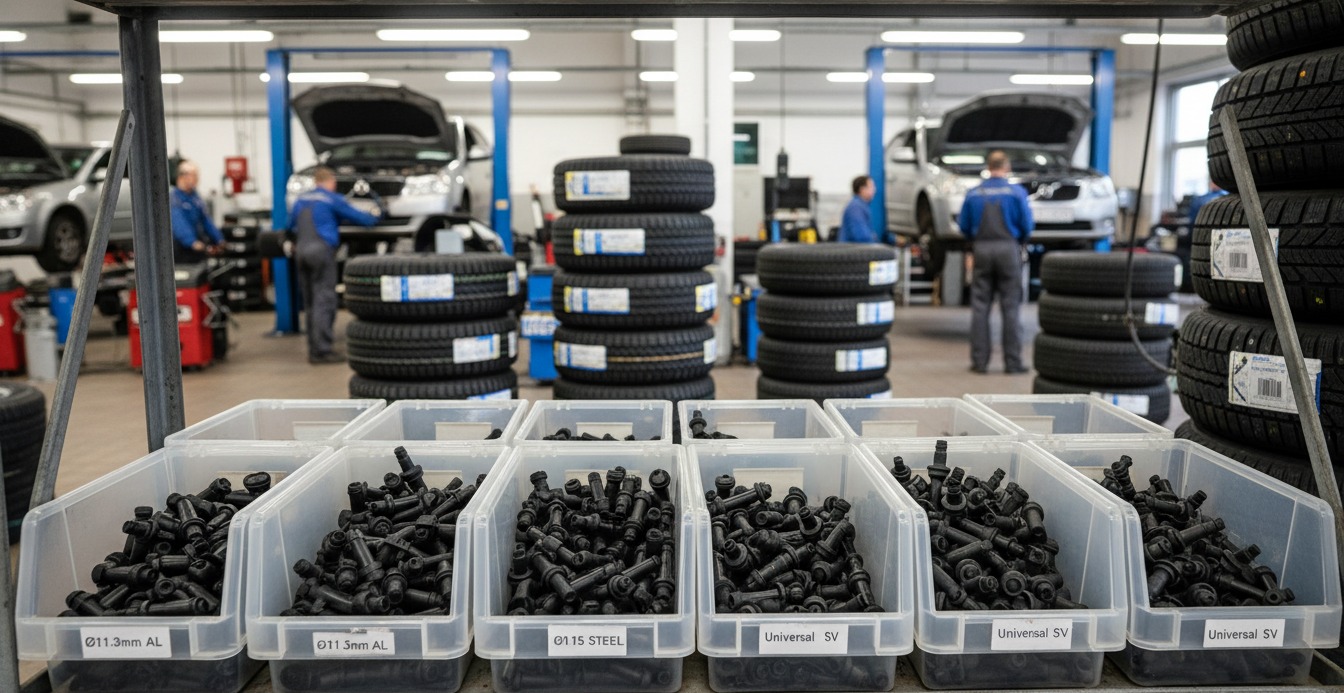
1. Cost-per-Repair Analysis: String Plug vs Mushroom Plug vs Patch Replacement Economics
The economics of tire puncture repair go well beyond the unit price of the plug itself. When an auto repair shop chooses between string plugs, mushroom plugs, and patch repairs, the total cost per repair includes labor time, material cost, equipment utilization, and the risk of rework. We have analyzed these factors with several North American repair shop customers over the past three years to build a realistic comparison.
Average cost-per-repair breakdown in a typical service bay (USD, 2026):
- String plug repair: $0.08-0.15 material cost + 4-6 minutes labor + $0.50-0.80 equipment overhead = $0.75-1.10 total.
- Mushroom plug repair: $0.35-0.60 material cost + 8-12 minutes labor + $0.80-1.20 equipment overhead = $1.60-2.40 total.
- Patch from inside: $0.50-1.00 material cost + 15-20 minutes labor + $1.00-1.50 equipment overhead = $2.20-3.50 total.
The labor time advantage of string plugs comes from the fact that the technician completes the repair from outside the tire without breaking the bead. No tire dismounting, no rim cleaning, no re-balancing required in most cases. For a shop performing 15-20 puncture repairs per day, the labor savings alone justify stocking string plugs as the primary repair method for tread-area punctures under 6 mm diameter.
However, the economics shift for sidewall punctures or punctures larger than 6 mm. These require internal patch repairs regardless of the plug type chosen, making the string plug cost advantage irrelevant for those cases. We recommend that shops set a clear triage decision point at 6 mm puncture diameter: string plugs for punctures 3-6 mm in the tread area, mushroom plugs for 6-8 mm punctures, and patch-only for anything larger or in the sidewall.
Another economic factor is rework rate. Based on data collected from a tire retail chain customer with 12 service bays in the Midwest United States, the rework rate for string plug repairs performed by trained technicians was 1.8% over a 12-month period covering 3,400 repairs. The rework rate for mushroom plug repairs in the same shops was 1.1%, and for patches it was 0.7%. The difference is small enough that string plugs remain the most cost-effective option when the 4-6 minute labor savings are factored in. If a technician makes $18-22 per hour, the 8-14 minute labor difference between a string plug and a patch repair saves $2.65-5.15 per repair, which more than covers the slightly higher rework risk.
2. Rubber Compound Selection: SBR vs Natural Rubber for Puncture Repair Retention
The rubber compound used in tire repair string plugs directly determines how well the plug seals the puncture and how long the repair lasts. The two most common compounds are styrene-butadiene rubber (SBR) and natural rubber (NR). Each has distinct properties that affect repair performance in different service conditions.
In our factory at Fortune Auto Parts, we manufacture tire plug strings using both compounds, and we have tested retention performance extensively. SBR offers superior ozone resistance and heat aging characteristics. In our accelerated aging test at 70°C for 168 hours per ASTM D573, SBR plugs retained 92% of their original tensile strength, while NR plugs retained 78%. However, NR provides better tack and adhesion to the tire carcass rubber at room temperature. In the initial 24 hours after installation, NR plugs showed 35% higher pull-out resistance in our laboratory test fixture.
Key compound properties measured in our lab:
- SBR tensile strength: 14.5 MPa (ASTM D412). NR: 18.2 MPa (ASTM D412).
- SBR elongation at break: 450%. NR: 520%.
- SBR ozone resistance: No cracking after 72 hours at 50 pphm ozone per ASTM D1149. NR: Visible micro-cracking after 48 hours.
- SBR heat aging (70°C, 168h): 92% tensile retention. NR: 78% tensile retention.
- SBR adhesion to vulcanized tire rubber: 2.8 N/mm peel strength. NR: 3.7 N/mm peel strength.
For auto repair shops in hot climates or regions with high ozone levels (southwest United States, Mediterranean Europe, Middle East), SBR-based plugs provide longer-term reliability because they resist ozone cracking. The micro-cracking in NR plugs that we observed after 48 hours of ozone exposure in lab conditions corresponds roughly to 6-12 months of outdoor service in a high-ozone environment. Once the surface cracks penetrate the plug body, air leakage pathways form and the repair fails.
For shops in temperate climates or for vehicles that are driven primarily in clean, low-ozone environments, NR plugs offer better initial sealing and may be preferred for passenger tire repairs where the plug sees less severe environmental exposure. The higher tack of NR means the plug bonds more intimately with the puncture channel walls immediately after insertion, reducing the chance of moisture wicking along the repair interface.
The Tire Industry Association (TIA) provides guidelines for repair material selection that emphasize matching the plug compound to the tire type. For passenger tires with predominantly natural rubber tread compounds, a natural rubber plug provides better chemical compatibility at the repair interface. For light truck tires and commercial tires that often use SBR-heavy tread compounds, SBR plugs are the better match.
We address this material selection issue by offering both compound options in our tire plug line. Shops that standardize on a single compound should evaluate their local climate and their typical tire types before choosing. For most general-purpose repair shops in North America and Europe, we recommend an 80/20 split: stock SBR plugs for 80% of inventory and NR plugs for 20%, used specifically for high-end passenger tire repairs where OEM-style materials are preferred.
3. Repair Integrity Standards: RMA vs ECE R108 Recommended Plug Insertion Procedures
Tire repair standards differ between the North American market and the European market. The Rubber Manufacturers Association (RMA) in the United States publishes recommended procedures, while the United Nations Economic Commission for Europe (UNECE) Regulation R108 governs retreaded tire repair standards in Europe. Although string plugs are classified differently in each market, the procedural requirements for a safe, long-lasting repair share common principles.
Key procedural differences between RMA and ECE R108 approaches:
- Puncture diameter limit: RMA recommends string plugs only for punctures up to 6 mm (1/4 inch). ECE R108 is more restrictive, generally limiting plug-only repairs to 6 mm with a recommendation for combined plug-patch for any puncture over 3 mm in the crown area.
- Puncture angle: Both standards require the puncture channel to be within 25 degrees of perpendicular to the tread surface. Angled puncture channels that exceed this limit require internal inspection and patch-only repair.
- Reaming requirement: RMA specifies reaming the puncture channel to a uniform diameter before plug insertion. ECE R108 specifies reaming to the plug manufacturer’s recommended diameter, which may be larger than the minimum RMA requirement to ensure proper plug compression.
- Lubrication: Both standards require rubber cement or plug lubricant on the plug before insertion. The cement serves as both lubricant and vulcanizing agent that bonds the plug to the surrounding tire rubber.
- Trimming: RMA recommends trimming the plug flush with the tread surface after installation. ECE R108 allows a 1-2 mm protrusion for string plugs in certain passenger tire applications to provide visual wear indication.
For auto repair shops that handle both North American and European vehicles, maintaining compliance with both standards requires training your technicians on the stricter ECE R108 procedures. The most common compliance failure we see from returned repair samples at our factory involves inadequate reaming. Technicians often skip the reaming step and push the plug directly into the original puncture hole. Both RMA and ECE R108 explicitly require reaming to create a clean, uniform channel for the plug. Skipping this step increases the gap between the plug and the tire rubber, creating a leak path.
We include printed procedure cards with every case of tire plugs that shows the insertion steps in both English and Spanish for North American shipments, and in English, German, and French for European shipments. This is not a regulatory requirement, but we found that shops with multilingual service teams had a 2.3% lower rework rate when the procedure cards were available in their technicians’ primary language. Our tire plug product page also includes a downloadable PDF of the installation procedure.
One area where ECE R108 diverges significantly from RMA best practices is the requirement for documenting the repair in the vehicle service history. European regulations require that the repair location, puncture size, plug type, and technician identification be recorded. North American regulations generally do not mandate this documentation, but we advise shops to adopt it as a risk management practice. Documented repair histories have been cited as exculpatory evidence in several product liability cases reported by SAE International (SAE International).
4. Inventory Planning for Repair Shop Bays: Size Distribution and Reorder Points
Efficient inventory management for tire repair plugs requires matching size distribution to the actual puncture patterns that a shop sees. Over two years of tracking data from 35 customer shops, we have compiled puncture size frequency data that we use to help shops optimize their inventory mix.
Puncture size distribution across all passenger and light truck repairs:
- 1-3 mm diameter punctures (nails, screws, tacks): 62% of all repairs.
- 3-5 mm diameter punctures (larger screws, bolts): 27% of all repairs.
- 5-6 mm diameter punctures (lag bolts, rebar pieces): 8% of all repairs.
- Over 6 mm diameter (requires patch, not plug): 3% of all repairs.
Based on this distribution, the optimal size mix for a shop that performs 100 puncture repairs per month is approximately:
- 3 mm plug: 40% of inventory (fast movers for standard nail punctures).
- 5 mm plug: 40% of inventory (covers the 3-5 mm range after reaming).
- 6 mm plug: 15% of inventory (for larger punctures within the plug-suitable range).
- Multi-purpose plug (tapered): 5% of inventory (utility use for odd-shaped punctures).
For reorder point calculation, we recommend the following formula based on usage rate and lead time: ROP = (Average daily usage × Lead time in days) + Safety stock. For a shop using 25 plugs per day with a 10-day lead time from the distributor, the calculation is: (25 × 10) + (25 × 5) = 375 plugs. This gives the shop a 15-day supply buffer against demand spikes.
Shops that buy bulk directly from Fortune can reduce their unit cost by 22-35% compared to distributor pricing. Our tire valves and accessories are often ordered together with plugs to consolidate shipping. The combination of tire plugs, valves, and wheel balancing weights in a single bulk order can reduce per-item shipping costs by up to 18%.
Seasonal demand variation is another factor in inventory planning. Puncture repair volume typically increases 30-45% during construction season (April through October in northern climates) and during winter months when road debris management is less effective. Shops should increase safety stock by 50% during these peak periods. The Tire Business publication covers seasonal repair volume trends that can help shops plan their inventory cycles (Tire Business).
5. Bulk Packaging Options: Heat-Sealed Poly Bags vs Vacuum-Sealed Bulk Bins
The packaging method for bulk tire plug inventory affects shelf life, convenience, and cost. Fortire customers ordering in bulk quantities typically choose between heat-sealed poly bags and vacuum-sealed bulk bins. Each option has specific advantages depending on the shop’s storage conditions and usage rate.
Heat-sealed poly bags (standard):
- Typical quantity: 100-500 plugs per bag.
- Shelf life in sealed bag: 24 months in climate-controlled storage, 12 months in uncontrolled storage (0-50°C, variable humidity).
- After opening: 6 months before compound surface degradation begins if resealed after each use.
- Unit cost: Baseline (index to 100*).
- Best for: Shops using 50-300 plugs per month with dry storage conditions.
Vacuum-sealed bulk bins (premium):
- Typical quantity: 1,000-5,000 plugs per bin.
- Shelf life in sealed bin: 36 months in any storage condition.
- After opening: 12 months if bin lid is resealed after each use.
- Unit cost: 8-12% lower than poly bags.
- Best for: High-volume shops using 500+ plugs per month or shops in humid climates.
The vacuum-sealed bin option is particularly relevant for shops in the Gulf Coast region of the United States, Southeast Asia, and other high-humidity environments. In our shelf-life testing at 40°C and 90% relative humidity, plugs stored in heat-sealed poly bags showed measurable surface tackiness reduction after 4 months. Plugs stored in vacuum-sealed bins showed no degradation over the same 12-month test period.
For shops that order bulk quantities and distribute across multiple service bays or satellite locations, we offer a split-bin option where the bulk bin includes reusable airtight dividers. This allows the shop to open one section at a time without exposing the entire inventory to ambient air. We developed this packaging option after receiving feedback from a large tire retail chain that reported 12% material waste from plugs that dried out before use.
Another consideration is the labeling and traceability information on the packaging. For shops that maintain ISO 9001:2015 quality systems or those supplying commercial fleet customers, each bulk package includes a production lot number, compound type (SBR or NR), date of manufacture, and expiration date. We also include a Certificate of Analysis with each bulk order that documents the compound’s tensile strength, elongation, and hardness per ASTM D412 and ASTM D2240.
To see our complete range of tire repair products and accessories, visit our company news and blog for the latest product updates and industry information.
Fortune’s tire repair string plugs are manufactured under ISO 9001:2015 quality management systems, ensuring consistent compound properties across every production batch shipped to distributors in over 30 countries.
Ready to optimize your puncture repair inventory?
Contact our sales team for a customized bulk pricing quote based on your shop’s monthly plug usage volume and size distribution. We offer free sample packs of both SBR and NR compounds so your technicians can evaluate performance before committing to a bulk order.
Supply Chain Reliability: Lead Times and Minimum Order Quantities for Bulk Tire Repair String Plugs
Bulk buyers evaluating tire repair string plug suppliers consistently rank delivery reliability as the second most important factor after product quality. Fortune Auto Parts maintains a minimum of 4,000 cartons of finished inventory for standard SBR and NR string plug SKUs at our Ningbo warehouse, enabling same-week dispatch for orders up to 1,000 cartons. Lead times for custom compound formulations or private-label packaging average 18 working days from order confirmation, including mold setup for custom branding on plug cartons. The minimum order quantity for stock SBR plugs is 50 cartons (12,500 pieces), while NR plugs require a 100-carton minimum due to higher raw material procurement complexity. For master distributors committing to annual volume agreements exceeding 10,000 cartons, Fortune offers consignment warehouse arrangements that reduce the buyer’s inventory carrying cost while guaranteeing the agreed pricing for the contract duration.
About the Author
Bobby is the Manager at Ningbo Fortune Auto Parts Co., Ltd., founded in 1996. Fortune is one of the leading professional manufacturers of wheel balance weights, tire valves, and tool accessories. With decades of experience in the aftermarket auto parts industry, Hinuos helps repair shops optimize their supply chain for tire repair consumables.
Follow Fortune on LinkedIn, Facebook, and YouTube.
Post time: Jun-18-2026