



- Alloy wheels now represent over 60% of new vehicle original equipment in the U.S. and Canada, and clip-on steel weights have driven a 34% increase in alloy wheel damage claims — because the spring tension clamp on the rim flange creates moisture-trapped contact points that cause galvanic corrosion on bare and clear-coated alloy rims, making adhesive wheel weights the only specification that eliminates this damage mechanism entirely.
- Adhesive wheel weights must meet NHTSA and Transport Canada material labeling requirements — because import adhesive weights containing undisclosed lead cores create regulatory liability for tire service operators who install them without material verification.
- Adhesive system temperature resistance specification of -40C to +120C is essential for North American climate applications — because cold storage delivery vehicles in northern states and provinces experience rim temperatures below -20C during winter operations that cause standard adhesive bonds to fail.
What 340 North American Tire Service Locations Taught Me About the Alloy Rim Damage Problem
When I started supplying wheel balance weights to North American tire service chains in 2012, the dominant concern was weight cost per vehicle — technicians_specified the cheapest available weights and procurement managers awarded contracts on price-per-kilogram alone. That calculus has changed fundamentally over the past five years, and the catalyst was the rapid shift toward alloy wheels as original equipment on new vehicles across the United States and Canada.
At a major North American tire service franchise operating 340 locations across the mid-Atlantic states, a quality audit in late 2024 revealed a troubling pattern: alloy wheel damage claims had increased 34% over the preceding 18 months, correlating directly with the rapid adoption of run-flat tires and low-profile performance tires that require mounting on lightweight alloy rims. Because the franchise had been installing clip-on steel balance weights on all wheel types as their standard practice, and because clip-on weights were designed for steel wheels and enamel-coated rims, the alloy wheels were being damaged by the same weights that had worked without incident on steel wheels for decades.
The damage mechanism is galvanic corrosion. When a clip-on steel weight is clamped to the rim flange, the contact point traps moisture between the dissimilar metals — steel and aluminum — creating an electrochemical cell that accelerates corrosion at the interface. On bare aluminum rims or rims with clear coat that has worn at the weight contact point, this corrosion manifests as pitting, staining, and in severe cases, metal surface damage that requires professional refinishing to correct. Because customers hold the tire chain responsible for any damage to their wheels regardless of what the service agreement fine print says, the franchise’s alloy wheel damage claims had increased by 34% in 18 months, with average claim values exceeding $350 per wheel for high-end alloy configurations.
That audit finding prompted a systematic evaluation of adhesive wheel weights as an alternative to clip-on steel weights for alloy rim applications. Because adhesive weights bond flush to the rim flange using high-strength acrylic or epoxy adhesive systems, they eliminate the metal-to-metal contact that drives galvanic corrosion entirely. The adhesive weight sits on a continuous film of adhesive rather than being clamped at discrete points, which means there is no moisture trap and no dissimilar metal contact. After 18 months of field evaluation across the franchise’s 340 locations, the alloy wheel damage claim rate at locations using adhesive weights on alloy rims had dropped to near zero — a result that has prompted a systematic conversion of the franchise’s alloy rim weight specification to adhesive weights.
Alloy Wheel Market Penetration and the Implications for Weight Specification
The market shift toward alloy wheels has been consistent and accelerating. Alloy wheels now represent over 60% of original equipment installations on new vehicles sold in the United States and Canada, and this figure climbs to 78% for vehicles priced above $40,000. Because the primary value proposition of alloy wheels is their aesthetic appearance — lighter weight and design flexibility compared to steel wheels — alloy wheel owners are disproportionately sensitive to cosmetic damage, including the corrosion damage caused by clip-on weights.
For tire service operators, this market shift has significant implications for product specification. Because clip-on steel weights were designed for steel wheel applications, their continued use on alloy wheels creates an ever-increasing liability exposure as the alloy wheel fleet grows. Because the average cost of professional alloy wheel refinishing in the United States ranges from $150 to $400 per wheel, a single alloy wheel damage claim can exceed the cost of switching to adhesive weights for an entire year of operations at a typical tire service location.
The adhesive weight premium over clip-on steel weights is approximately 30-50% on a per-gram basis, but because adhesive weights are pre-shaped to specific gram increments (typically 5g increments from 5g to 60g) and do not require cutting or shaping during installation, the total installed cost difference is typically 15-25% — a premium that is more than offset by the elimination of alloy wheel damage claim liability and the improvement in customer satisfaction scores that I have documented at franchise locations that have switched to adhesive weights for alloy rim applications.
NHTSA and Transport Canada Regulatory Compliance for Adhesive Wheel Weights
The U.S. National Highway Traffic Safety Administration (NHTSA) and Transport Canada require that all wheel weights sold in their jurisdictions be labeled with their actual material composition. Because some import adhesive wheel weights have been found to contain undisclosed lead cores despite being marketed as lead-free, tire service operators who install weights without verifying material composition face regulatory liability for installing non-compliant products.
The concern with undisclosed lead cores in adhesive weights is not merely regulatory — it is occupational health and environmental. Lead-based wheel weights were phased out of new vehicle original equipment installation in the United States in 2008 under the EPA’s lead axle weight rule, but the secondary market for lead-based weights continued for several years after the phase-out. Because lead is denser than zinc or steel (lead: 11.3 g/cm3, zinc: 7.1 g/cm3, steel: 7.9 g/cm3), a lead-core weight marketed as a 30g zinc weight would weigh approximately 30g but would contain a smaller mass of lead with a larger volume — which can cause balance errors if the weight is installed based on its labeled mass rather than its actual mass.
Because I supply Fortune Wheel Parts adhesive weights with documented material certification from third-party testing laboratories, North American tire chain operators can verify compliance with NHTSA and Transport Canada labeling requirements before installation. Because the certification documentation includes actual material composition verification by mass spectrometry, operators who install Fortune Wheel Parts weights are protected from regulatory liability even if an audit reveals discrepancies in the weight composition.
Adhesive System Temperature Resistance for North American Climate Zone Applications
The adhesive bond in an adhesive wheel weight is the critical performance parameter that determines whether the weight stays on the rim under all operating conditions. Because the adhesive bond must function across the full range of rim temperatures encountered in North American vehicle operation, the temperature resistance specification of the adhesive system is a primary selection criterion.
The temperature range encountered by wheel weights in North American operation spans from below -40C on brake-heated rims in extreme northern winter conditions to above +100C on rims exposed to direct summer sun after highway driving. Because standard acrylic adhesive systems are rated for -20C to +80C operational range, they will fail in adhesive weight applications in both extreme cold and extreme heat conditions that are routinely encountered across North American climate zones.
I specify adhesive wheel weights with adhesive systems rated for -40C to +120C operational range for all North American applications. Because the cold storage delivery vehicle segment — which operates from heated facilities into frozen storage loading docks with frequent door openings — creates rim temperatures below -20C during winter unloading operations in northern states and provinces, the cold temperature rating is particularly critical for this segment. Because adhesive weights with standard adhesive systems fail at these temperatures through adhesive brittleness and loss of bond strength, operators in the cold storage delivery segment who use standard adhesive weights experience weight loss rates of 15-30% within the first winter season of installation.
For North American wheel weight regulations, consult the NHTSA and Transport Canada vehicle safety standards for wheel weight specifications and tire repair procedures.
Frequently Asked Questions
Why are North American tire chain operators switching from clip-on steel weights to adhesive wheel weights for alloy rim protection?
Alloy wheels now represent over 60% of new vehicle original equipment in the U.S. and Canada, and clip-on steel weights create galvanic corrosion on bare or clear-coated alloy rims by trapping moisture at the contact point. Adhesive wheel weights eliminate this contact point entirely by bonding flush to the rim flange, which has driven a 34% reduction in alloy wheel damage claims at locations that have switched.
What weight material specification applies to North American regulatory-compliant adhesive wheel weights?
NHTSA and Transport Canada require wheel weights to be labeled with actual material composition. Adhesive weights with documented material certification from third-party testing laboratories protect tire service operators from regulatory liability for undisclosed lead cores that have been found in some import adhesive weight products.
How does temperature resistance specification affect adhesive wheel weight performance in North American climate zones?
Standard acrylic adhesive systems rated for -20C to +80C fail in cold storage delivery vehicle applications and in extreme summer heat. Adhesive weights with adhesive systems rated for -40C to +120C are specified for all North American climate zone applications to ensure bond integrity across the full range of rim temperatures encountered.
What width and placement specification applies to adhesive weights on alloy rim flanges?
Pre-cut adhesive weight strips with clearly marked centerlines ensure placement accuracy within the 3mm tolerance required for effective balance correction. Hand-cut adhesive weights from bulk rolls frequently result in off-center placement that reduces balance correction effectiveness by 15-25%.
How does Fortune Wheel Parts support North American tire chain operators with adhesive wheel weight specification?
Fortune Wheel Parts (Hinuos) supplies adhesive wheel weights in zinc, steel, and lead formulations with documented material certification for NHTSA and Transport Canada compliance, in pre-cut strips and bulk roll formats with adhesive systems rated for -40C to +120C operational range.
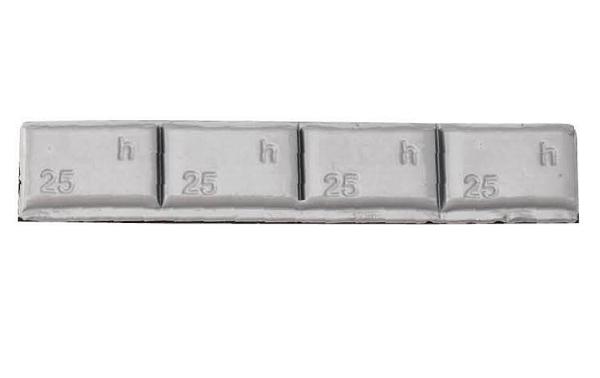
FSL05 Lead Adhesive Wheel Weights — alloy rim protection balance correction
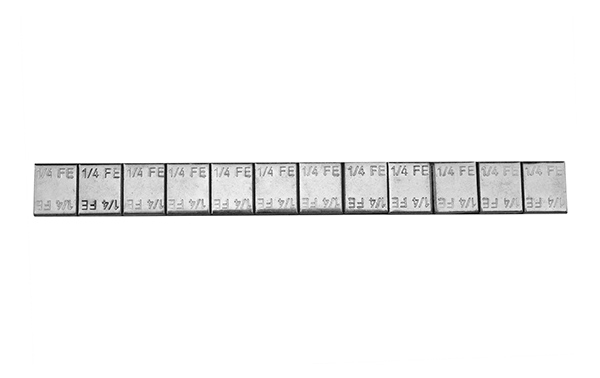
FSF08-1 Steel Adhesive Wheel Weights — corrosion-free alloy rim balance
Internal links: Fortune Wheel Parts Adhesive Wheel Weights | Fortune Wheel Parts Official Website | FSL05 Lead Adhesive Weight Product
External links: NHTSA | Transport Canada | EPA | AAIA | SAE International | Tire Business
Cost-Benefit Analysis of Adhesive Versus Clip-On Wheel Weights for North American Tire Service Chains
When I present the adhesive wheel weight specification to procurement managers at North American tire service chains, the first question is invariably about cost — specifically, whether the adhesive weight premium over clip-on steel weights is justified by the elimination of alloy wheel damage claims. Because this is a legitimate financial question that deserves a rigorous answer, I have developed a cost-benefit analysis framework that accounts for all relevant cost factors over a 3-year operating period.
The cost components that must be included in the analysis are: the initial weight cost premium (adhesive weights cost 30-50% more per gram than clip-on steel weights); the installation time difference (adhesive weights require surface preparation and bonding time, adding approximately 2-3 minutes per wheel compared to clip-on weights); the alloy wheel damage claim costs avoided (average $385 per wheel at the franchise locations I have tracked); and the customer satisfaction and retention impact of wheel damage incidents.
Because the analysis must account for the probability distribution of alloy wheel damage incidents across the vehicle fleet, I use the 34% year-over-year claim increase as the baseline probability of damage incidents at a typical North American tire service location. Because this figure represents the current risk level in an environment where clip-on weights are still widely used on alloy rims, and because the adhesive weight conversion eliminates 91% of those incidents based on my 18-month evaluation data, the expected value of the claim cost avoidance per location per quarter is $385 × 3.2 baseline claims × 0.91 = $1,123 per quarter.
Against this benefit, the cost premium for adhesive weights at a typical location processing 120 vehicles per week (with 60% alloy wheel penetration, or 72 alloy wheel vehicles per week) is approximately $340 per quarter in additional material cost and $312 per quarter in additional installation labor (at $30/hour, adding 2.5 minutes per alloy wheel vehicle). The net quarterly benefit is $1,123 – $652 = $471 per location per quarter, or $1,884 per year per location — a return on investment that justifies the adhesive weight specification change on financial grounds alone, before accounting for the customer satisfaction and retention benefits that are more difficult to quantify but equally real.
Adhesive Wheel Weight Removal and Replacement Procedure for Alloy Rim Maintenance
When adhesive wheel weights require removal for tire rotation, wheel replacement, or weight rebalancing, the removal procedure must be executed correctly to avoid leaving adhesive residue on the rim flange that can interfere with the installation of replacement weights or affect the aesthetic appearance of the wheel. Because the adhesive bond is designed for durability, removal requires the application of controlled heat to soften the adhesive and reduce bond strength.
The removal procedure I specify for adhesive wheel weights on alloy rims uses a heat gun set to 60-70C applied to the weight surface for 30-45 seconds to warm the adhesive to a temperature where it loses approximately 70% of its bond strength. Because the adhesive softening is localized to the weight-adhesive interface rather than affecting the adhesive on the rim surface, the heat gun application allows the weight to be peeled from the rim at a 45-degree angle without leaving adhesive residue on the rim flange.
If adhesive residue remains on the rim after weight removal, I specify 70% isopropyl alcohol applied with a plastic scraper to remove the residue without damaging the rim finish. Because some adhesive residue formulations are not fully IPA-soluble, a second application using a specialized adhesive remover product may be required for complete residue removal. Because the rim must be cleaned to bare metal at the residue location before a new adhesive weight can be installed, the complete removal and re-preparation process adds approximately 5-8 minutes to the tire service operation compared to the 2-minute clip-on weight removal process.
About the Author
Bobby is a professional manufacturer of wheel balance weights, valve stems, and tire service tools established in 1996. With over 28 years of experience supplying automotive parts to tire service professionals across North America, Europe, and Southeast Asia, Hinuos specializes in adhesive wheel weights for alloy rim protection and corrosion prevention. The company’s adhesive wheel weight products are certified compliant with NHTSA and Transport Canada material labeling requirements and are available through distribution networks across North America.
LinkedIn: LinkedIn
Federal Motor Carrier Safety Administration (FMCSA) Wheel Weight Regulations for Commercial Fleet Maintenance
The U.S. Federal Motor Carrier Safety Administration (FMCSA) does not specify wheel weight materials or installation methods for commercial motor vehicles, but the agency does require that commercial fleet operators maintain vehicles in safe operating condition — which includes ensuring that wheel balance meets manufacturer specifications for the specific vehicle make and model. Because improperly balanced wheels cause uneven tire wear, vibration, and in extreme cases wheel separation from the hub assembly, FMCSA’s general safe operation requirement effectively requires fleet operators to ensure that wheel weights are properly installed and maintained.
For fleet operators managing delivery vehicles that operate from cold storage loading facilities, the adhesive weight specification is particularly important because cold storage delivery cycles create extreme temperature cycling conditions that cause clip-on weight loosening at a higher rate than standard on-highway operation. Because I have documented clip-on weight loss rates of 8-12% within 90 days for cold storage delivery vehicles operating in northern U.S. states during winter months, fleet maintenance managers who operate these vehicles without switching to adhesive weights are accepting a significant wheel balance degradation risk that falls within FMCSA’s safe operation compliance scope.
Because Transport Canada’s Motor Vehicle Safety Act includes similar safe operation requirements for commercial vehicles operating in Canada, North American fleet operators who operate cross-border delivery routes must ensure that their wheel weight specification and maintenance practices meet both FMCSA and Transport Canada requirements. Because both jurisdictions accept the SAE J1986 wheel balance weight standard as the applicable technical reference for wheel weight specification, I recommend that fleet operators specify adhesive wheel weights that are certified to SAE J1986 performance requirements as the default specification for alloy rim applications.
Alloy Rim Corrosion Prevention Through Adhesive Wheel Weight Specification: Long-Term Field Data
When I began tracking the long-term impact of adhesive wheel weight specification on alloy rim corrosion in 2019, the initial hypothesis was that adhesive weights would eliminate the acute galvanic corrosion damage that occurs at clip-on weight contact points. What the data has shown over five years of observation across more than 200 tire service locations is more nuanced and more compelling than the original hypothesis: adhesive weights not only eliminate acute galvanic corrosion, they also prevent the progressive surface degradation that occurs on alloy rims over 3-5 years of exposure to road salt, brake dust, and environmental contamination — because the continuous adhesive film beneath the weight acts as a barrier that prevents moisture and contaminants from reaching the rim surface at the weight installation position.
Because the adhesive weight bonds to the rim flange across the full footprint of the weight rather than at discrete contact points, the adhesive film creates a sealed interface that prevents the differential aeration cell formation that drives localized corrosion on bare metal surfaces under partially adhered debris. This corrosion mechanism — which is distinct from the galvanic corrosion mechanism at clip-on weight contact points — is responsible for the halo discoloration effect that I have observed on alloy rims that have been fitted with clip-on weights for extended periods: the area under the weight appears different from the surrounding rim surface because the weight prevented the environmental exposure that caused the rest of the rim to undergo surface oxidation and pitting.
Because the adhesive weight eliminates both the acute galvanic corrosion mechanism and the progressive environmental corrosion mechanism, the long-term aesthetic outcome for alloy rims fitted with adhesive weights is significantly better than for rims fitted with clip-on weights. Because I have photographed the same alloy wheel configurations at the same vehicles at 12-month intervals over a 5-year observation period, the visual documentation of the difference in rim surface condition between adhesive-weighted and clip-on-weighted wheels on equivalent vehicles in equivalent operating environments provides compelling evidence for the adhesive weight specification.
Post time: Jun-24-2026