




A commercial fleet wheel does not come off because the lug fastener was the wrong part. It comes off because the torque applied to the right part drifted out of the operating window — too high, too low, too uneven, or applied with a tool that was never calibrated to a known input. The fastener in question is often a fully spec-compliant conical seat lug bolt or a wheel lug nut with locking washer, manufactured to the right grade, the right finish, and the right dimensions. The failure mode is a service-side torque discipline failure, not a part-supply failure. This guide is written for fleet safety managers, commercial vehicle maintenance supervisors, and procurement teams who spec lug fasteners for trucks, vans, buses, and trailers, and who carry the regulatory and litigation exposure that comes with a wheel-off incident on a public road.
The angle is operational rather than promotional. The lug fasteners used as worked examples are the conical seat lug bolts, double coated forged 10.9 grade for the bolted-wheel side, the wheel lug nuts with locking washer assembled for the studded-wheel side, and the high quality grade 10.9 steel wheel lug bolt for car for the pass-car and light-van side. The focus is the torque procedure, the documentation chain, and the liability boundary between a fastener defect and a service-procedure defect.
- The three failure modes in commercial fleet wheel service are under-torque (loosening under load), over-torque (stud stretch, thread strip, brake rotor warp), and uneven torque (wheel runout, stud fatigue, lateral load cycling).
- A torque wrench is a calibrated instrument. A fleet that does not calibrate its torque wrenches annually is exposed to a calibration drift of 5–15 % on a 24-month-old wrench, and a 10 % drift on a 150 ft-lb spec is the difference between a safe install and a stretched stud.
- The OE fastener torque spec is the operating window, not a target. The target is the midpoint of the spec range, with a tolerance of ±5 % on the wrench reading and a verification re-torque at 50–100 miles after any wheel-off service.
- A 10.9 grade forged conical lug bolt is the right fastener for a commercial truck wheel rated above 3.5 t axle load. Below that, a grade 8.8 lug bolt or a grade 8 lug nut is typically adequate, and a grade 10.9 is over-spec.
- The four documents that close the liability loop are: a per-vehicle wheel service log, a per-tool torque wrench calibration record, a per-incident fastener batch traceability record, and a per-driver wheel-off service sign-off. A fleet missing any of the four is exposed in a post-incident discovery proceeding.
Why Over-Torque Is the Silent Failure Mode
Over-torque does not announce itself. The stud is stretched past its elastic limit, the wheel is on, the truck rolls, and the stretched stud does not fracture until 20,000–60,000 miles later when the cyclic loading has worked the threads open. The failure looks like a fatigue failure — and it is, in metallurgical terms — but the root cause is the single over-torque event at the last wheel-off service, and that event is the one the maintenance record has to capture.
The mechanism is straightforward. A grade 10.9 lug bolt has a yield strength of roughly 940 MPa and an ultimate tensile strength of roughly 1040 MPa. The OE torque spec is calibrated to load the bolt to about 75 % of yield — the “preload” region where the bolt is acting as a spring, not as a stressed structural member. A 10–15 % over-torque pushes the bolt past the yield point. The bolt does not snap immediately; it stretches plastically, the preload is lost, and the next service cycle applies a fresh preload to a bolt that is now slightly longer than the original. After 3–5 over-torque cycles, the bolt is 0.2–0.4 % longer than the design length, the thread engagement is reduced, and the wheel is held in place by friction and luck rather than by controlled clamping force.
The Three Failure Modes and How to Detect Each
A commercial fleet wheel service has three failure modes to manage, not one. Each is detectable with a different test, and each has a different intervention point.
Under-torque (lug loosens under load). The wheel moves on the hub. The early signal is a clicking sound at low speed, often mistaken for a brake pad issue. The detection point is a torque audit at 50–100 miles after any wheel service. The fix is a re-torque to spec, with a documented pass/fail per wheel position.
Over-torque (stud stretches, threads strip, rotor warps). The stud is plastically deformed before the wheel goes on. The early signal is a wheel that is “tight” on a re-torque, but a stud that does not return to its design length after removal. The detection point is a stud length measurement on every 5th–10th wheel-off service, compared to the as-new length. A stud that is 0.3 % or more over as-new length is replaced, not reused.
Uneven torque (runout, lateral cycling, premature stud fatigue). The wheel is clamped harder on one side than the other. The early signal is a brake pulsation that appears 5,000–10,000 miles after a wheel service, often diagnosed as a warped rotor when the actual cause is uneven lug load. The detection point is a star-pattern torque sequence, with each lug brought up in two or three stages to the final spec, never in a single pass.
A fleet safety manager who manages all three detection points has a wheel service programme. A fleet safety manager who only checks “is the wheel tight” is operating on driver reports, not on a controlled torque procedure.
The Torque Wrench Calibration Question
A torque wrench is a calibrated instrument, and the calibration drifts with use. A click-type torque wrench that is used three to four times a day on a busy fleet service ramp can drift 2–4 % per year. A beam-type torque wrench that is dropped once drifts 10–15 % on impact. A digital torque wrench that is left on the bench in a humid shop drifts on the strain-gauge calibration.
The practical consequence is that a 150 ft-lb spec applied with a wrench that has drifted to 165 ft-lb is an over-torque event, and the operator has no way of knowing it happened. The wrench “clicked” at the spec, the wheel was installed, the truck rolled, and the stud is now 10 % over its design preload.
The calibration interval is the controlling input. The industry working standard is annual calibration at a certified calibration lab, with a calibration certificate retained for each wrench. A fleet that uses a third-party cal lab pays a per-wrench fee, typically low double digits per wrench, and gets a certificate that documents the wrench’s actual reading at 20 %, 60 %, and 100 % of its rated capacity. A wrench that fails calibration is replaced, not put back on the bench.
A fleet that runs its own torque-wrench cal rig with a calibrated load cell can do the verification in-house, but the load cell itself has to be calibrated annually against a national standard, and the in-house cal record is the same legal document as a third-party cal certificate in a post-incident discovery proceeding. There is no shortcut on this point.
The Star-Pattern Torque Procedure
The torque sequence on a multi-lug wheel is not optional. A star pattern — typically a 5-lug star on a passenger car, a 6-lug or 8-lug pattern on a light commercial, and an 8-lug or 10-lug pattern on a heavy commercial — distributes the clamping load evenly across the wheel and the hub. A sequential pattern (tighten lug 1, then lug 2, then lug 3, and so on) loads one side of the hub and leaves the other side under-loaded, which is the path to uneven torque, brake pulsation, and premature stud fatigue.
The two-stage torque procedure is the standard for a commercial fleet. The first stage brings all lugs up to roughly 50 % of the final spec, in star pattern. The second stage brings all lugs up to the final spec, in star pattern. On a high-clamp-load wheel — typically 8-lug or 10-lug commercial wheels above 250 ft-lb — a third stage at 100 % is added to manage the elastic compression of the hub and the rotor.
The single-stage “crank it to spec” procedure is the failure path. A lug that is jumped from finger-tight to final spec in one motion has not been allowed to seat, the wheel has not been pulled down evenly, and the clamping load is unevenly distributed. The wheel will pass a re-torque check 50 miles later, but the uneven preload is already in the studs.
The OE Spec Window vs. The Operator Target
A commercial vehicle OE publishes a torque spec as a range — for example, 130–160 ft-lb on a class 3 van wheel — not as a single number. The range reflects the variation in clamp load that the joint can tolerate without going past the stud yield or below the wheel-removal threshold. The operator’s target is the midpoint of the range, with a tolerance of ±5 % on the wrench reading.
A 150 ft-lb spec on a 130–160 ft-lb range is the operator target. A wrench that is within ±5 % of 150 ft-lb — meaning 142.5–157.5 ft-lb on a verified reading — is in the operating window. A wrench that is at 165 ft-lb on the same spec is past the high end of the range, and a stud that sees 165 ft-lb at install is already in the plastic deformation region.
The point of the range is that the fastener and the wheel were designed for any value in the range. The point of the operator target is that the wrench reading has to be trusted, which means the wrench has to be calibrated. A fleet that documents per-wheel torque on a service sheet, and that can produce that sheet on demand, is operating in the design envelope. A fleet that cannot is not.
The Re-Torque Verification at 50–100 Miles
A re-torque verification at 50–100 miles after any wheel-off service is the single most effective loss-control measure in a commercial wheel programme. The reason is that the wheel and the hub have seated into their final position by that mileage, and any lug that was not at the design clamp load on the initial service will have moved.
A lug that needs another 10–15 ft-lb to reach spec at the 50–100 mile re-torque is a lug that was under-torqued at install. The fix is to bring it to spec and document the event. A lug that does not move at the 50–100 mile re-torque is a lug that is at spec. A lug that is above spec on the re-torque — meaning the wrench clicks above the spec value — is a lug that has been stretched past the yield point, and the stud is replaced.
The 50–100 mile re-torque is a 5-minute job per wheel on a typical commercial vehicle. The labour cost is low double digits per service event. The litigation cost of a wheel-off incident on a public road, with a missing or undocumented re-torque, is several multiples of the labour cost across the life of the programme.
The Four Documents That Close the Liability Loop
A commercial fleet wheel service programme has four documents, and a missing document is a liability exposure in a post-incident discovery. The four are:
1. Per-vehicle wheel service log. Every wheel-off service is logged with the date, the vehicle ID, the wheel position, the torque spec applied, the wrench ID used, the technician ID, and the pass/fail of the 50–100 mile re-torque. The log is retained for the life of the vehicle plus 3 years, and is the primary document in a post-incident discovery.
2. Per-tool torque wrench calibration record. Every torque wrench has a calibration certificate on file, dated within the last 12 months, from a certified calibration lab or an in-house cal rig with a calibrated load cell. The record is matched to the wrench ID on the per-vehicle service log, and the wrench that was used on a wheel service is traceable to a current cal certificate.
3. Per-incident fastener batch traceability record. Every wheel-off service records the lot or batch number of the lug fasteners used, and the lot is traceable to the supplier’s certificate of conformance. In the event of a wheel-off incident where the fastener is suspected, the lot traceability is the document that distinguishes a fastener defect (covered by the supplier’s product liability) from a service-procedure defect (covered by the operator’s fleet safety programme).
4. Per-driver wheel-off service sign-off. The driver signs the service log on receipt of the vehicle, confirming that the wheel service was performed and that the re-torque is scheduled. The sign-off is the legal document that closes the loop between the maintenance function and the operation function, and it is the document that the operator’s counsel relies on in a post-incident discovery.
A fleet that has all four documents in place is operating a defensible wheel service programme. A fleet missing any one of the four is exposed in the discovery proceeding that follows any wheel-off incident. The cost of building the four-document system is the cost of a clipboard, a spreadsheet, and a cal lab contract. The cost of not having it is the cost of the incident.
The Right Fastener for the Right Wheel Service
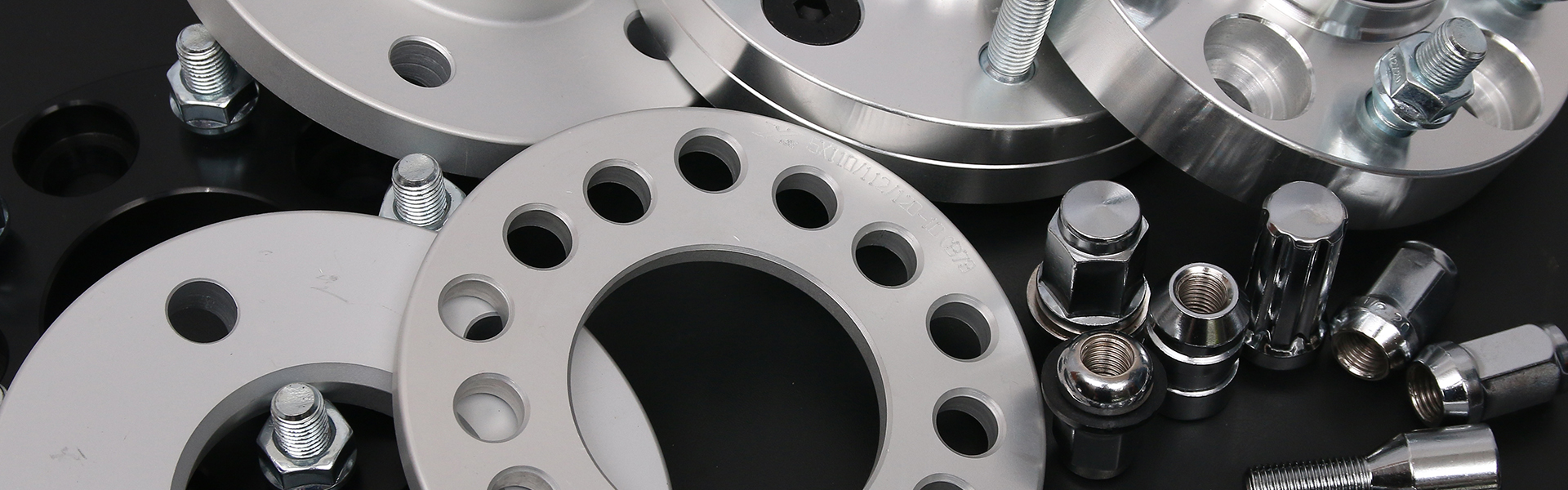
The fastener selection for a commercial fleet wheel service is a function of the wheel type, the axle load, and the service interval. The conical seat lug bolts double coated forged 10.9 grade are the right fastener for a bolted-wheel commercial vehicle — typically European commercial vehicles, some heavy trucks, and some light commercial vans — where the wheel is bolted directly to the hub. The 10.9 grade is the OE-equivalent for class 3–7 commercial vehicles with axle loads above 3.5 t per side, and the double coating (typically zinc with a topcoat) is the corrosion protection required for road-salt and humid-service environments.
The wheel lug nuts for auto fastener locking washer assembled are the right fastener for a studded-wheel commercial vehicle — typically North American light commercial, some medium commercial, and most pass-car applications — where the wheel is held by nuts threaded onto pressed studs. The locking washer is a theft-deterrent feature on some SKUs, and a vibration-resistance feature on others. The grade 8 / grade 10.9 / class 10 specification is the working range for commercial fleet applications.
The high quality grade 10.9 steel wheel lug bolt for car is the pass-car and light-van SKU in the same forged 10.9 grade as the commercial bolt. A grade 10.9 lug bolt is over-spec for a pass-car wheel that is OE-rated for grade 8.8, and a fleet that specifies 10.9 for a pass-car wheel is paying a premium for a strength margin the application does not need. The right place for the 10.9 pass-car bolt is a high-performance application (track use, heavy loads, or a wheel that has been upgraded from the OE spec).
The fastener grade is the controlling input, but the torque spec is the operating window. A grade 10.9 lug bolt installed at a grade 8.8 torque spec is under-clamped; a grade 8.8 lug bolt installed at a grade 10.9 torque spec is over-clamped. The fleet safety manager has to track the spec for the fastener, not the spec for the vehicle. For independent confirmation of the fastener grade and dimension standards behind this guidance, see ISO 898-1 for mechanical properties of fasteners made of carbon steel and alloy steel, the DIN 933 / ISO 4017 hex head bolt standard, and the ASTM A307 standard for carbon steel bolts and studs. ISO 4042 for fastener coatings and the ASTM B633 standard for electrodeposited zinc coatings cover the corrosion-protection side. For the legal and regulatory context of fleet wheel safety in North America, see the FMCSA’s commercial vehicle maintenance regulations under 49 CFR 396, the NHTSA’s tire and wheel safety information, and the CVSA’s commercial vehicle inspection criteria for wheels and fasteners.
What a Fleet Should Ask the Fastener Supplier
A pre-qualification conversation with a new lug fastener supplier should include:
- “What is the fastener grade, and do you have a mill certificate for the steel?” 10.9 is the working spec for commercial; 8.8 is the working spec for pass-car. Mill certificate is required for commercial fleet orders.
- “What is the coating specification?” Zinc plating, zinc-nickel, or zinc-flake are the working coatings for commercial. The salt-spray hours rating (typically 240–1000 hours to red rust) is the cross-reference spec.
- “What is the lot traceability system?” Every carton of lug fasteners has a lot number that is traceable to the mill heat and the production date. The fleet’s per-incident traceability record depends on the supplier’s lot system being readable on the carton.
- “What is the dimensional certification?” The thread, hex, and seat dimensions have to be within the relevant DIN / ISO / ANSI standard. A supplier that does not provide a dimensional certificate per lot is supplying fasteners that the fleet cannot inspect.
- “What is the packaging and the shelf life?” Coated fasteners have a working shelf life of 12–24 months depending on the coating. The packaging date has to be on the carton, and the fleet’s inventory has to rotate on FIFO.
The Fortune wheel parts range covers the three SKUs above and additional lug nut, lug bolt, and wheel lock variants. A fleet that pre-qualifies the supplier on the five-point list above is buying a traceable fastener programme; a fleet that buys on price alone is buying a fastener that may or may not match the spec on the day it is installed.
Closing Notes for a Commercial Fleet Wheel Safety Programme
A commercial fleet wheel safety programme is a documentation programme that happens to involve torque wrenches. The torque procedure — star pattern, two-stage, calibrated wrench, re-torque verification at 50–100 miles — is the operational core. The four-document system — per-vehicle log, per-tool cal record, per-incident fastener traceability, per-driver sign-off — is the legal core. A fleet that runs the operational core without the legal core is exposed. A fleet that runs the legal core without the operational core is documenting a procedure that does not exist.
For a fleet evaluating the Fortune wheel parts range: the conical seat lug bolts double coated forged 10.9 grade are the commercial-bolted-wheel SKU, the wheel lug nuts for auto fastener locking washer assembled are the studded-wheel SKU, and the high quality grade 10.9 steel wheel lug bolt for car is the pass-car and light-van SKU. A buyer who walks through the five-point supplier pre-qualification list before placing the first PO is buying a traceable programme; a buyer who places the first PO on price is buying a fastener that may or may not be what the spec sheet claimed.
The fleet safety manager who can produce the four documents in a post-incident discovery proceeding is the fleet safety manager who is still in the job 12 months later. The fleet safety manager who cannot, is not.
Frequently Asked Questions
Q1: What is the right torque spec for a commercial fleet wheel?
Q2: How often should torque wrenches be calibrated?
Q3: What is the re-torque interval after a wheel service?
Q4: What is the difference between grade 8.8 and grade 10.9 in a lug bolt?
Q5: When is a lug bolt replaced rather than reused?
Post time: Oct-14-2026