



For European importers, choosing the right wheel weight manufacturer China is not only a price decision. It is a supply-chain decision that affects product consistency, regulatory compliance, aftermarket reputation, and long-term profitability. In the automotive aftermarket, wheel weights are small components, but they play a critical role in tire balancing, vibration reduction, and driving comfort. When quality or delivery performance slips, the impact is felt immediately by tire shops, distributors, and fleet service partners.
This guide explains how a European wheel weight importer can evaluate Chinese suppliers for stable, long-term sourcing. We will cover material options, manufacturing quality, packaging expectations, and what matters most for B2B procurement in the European aftermarket.
Why Wheel Weights Matter in the European Aftermarket
Wheel weights are consumable parts used in tire balancing. Their core function is to correct uneven mass distribution in the wheel and tire assembly, reducing vibration, wobble, and abnormal wear. In practical service operations, wheel weights are installed every day in tire shops, auto repair chains, and fleet maintenance facilities.
Because wheel weights directly influence balance accuracy and installation efficiency, importers must pay attention to both product performance and SKU structure. European customers often expect reliable fitment, stable adhesive performance, and consistent segment weight design, especially when servicing different vehicle types and wheel structures.
What European Importers Look for in a Chinese Supplier
1. Consistent Product Quality
For a long-term supply relationship, consistency is more important than a one-time low price. European buyers typically evaluate whether a China wheel weights supplier can maintain:
- Stable weight accuracy across batches
- Reliable coating and surface treatment
- Strong adhesive performance for stick-on models
- Uniform clip tension for clip-on models
- Clear segment weight design for precise balancing
2. Material Options and Market Compliance
Wheel weights are produced in different materials, and each material serves different market needs:
- Zinc alloy wheel weights are often viewed as a lead-free alternative and are suitable for environmentally sensitive or regulation-driven markets.
- Lead wheel weights remain widely used in traditional repair systems, especially where specifications, adhesive tape quality, and coating stability are trusted by service providers.
European importers generally want a supplier that can offer multiple material choices to support different customer preferences and regional compliance requirements.
3. Product Range and Application Fit
Wheel weight selection depends on wheel material, rim shape, and balancing requirements. A capable manufacturer should clearly separate products by use case, such as:
- Clip-on weights for steel wheels
- Stick-on weights for aluminum wheels
- Different segment sizes for fine-tuned balancing
This product clarity is essential for aftermarket channels that rely on SKU standardization, packaging efficiency, and fast warehouse turnover.
Key Product Factors to Evaluate Before Importing
Material Stability
For stick-on and clip-on wheel weights, material consistency affects installation and long-term performance. Importers should ask whether the manufacturer controls alloy composition, coating durability, and adhesive quality across production batches. Small variations can create balancing errors or installation failures.
Segment Weight Design
One of the most important product details is the segmented weight design. This determines balancing precision and flexibility during installation. A well-designed segment structure allows technicians to apply the correct amount of weight while minimizing waste and improving service speed.
Adhesive and Surface Treatment
For adhesive wheel weights, the tape and coating are critical. If the adhesive backing is weak or the surface treatment is inconsistent, the weights may loosen under heat, moisture, or road vibration. This can lead to comebacks, customer complaints, and warranty issues for distributors.
Clip Geometry and Fitment
Clip-on wheel weights are commonly used on steel rims, where the wheel edge structure determines mounting performance. European importers should confirm that the clip geometry matches the intended rim profiles and that the clip maintains secure retention without damaging the wheel surface.
Packaging and SKU Standardization
In automotive aftermarket supply, packaging matters as much as product performance. Buyers prefer clearly labeled packs, stable carton sizes, and item codes that simplify warehouse management. A supplier should be able to support:
- Standardized carton quantities
- Barcode and SKU labeling
- Private label options
- Retail-ready and bulk packaging formats
How Wheel Weight Products Fit Different Vehicle and Wheel Types
Different vehicles and wheel structures influence the choice of wheel weight. For example, wheel rim material, rim edge shape, and required balance correction all affect product selection. A strong supplier should help importers match products to real service scenarios, not just sell a generic catalog.
Steel Wheels
Steel wheels are typically paired with clip-on weights because the rim edge provides a suitable mounting structure. Fitment and clip retention are important here, especially for fleets and high-mileage vehicles.
Aluminum Wheels
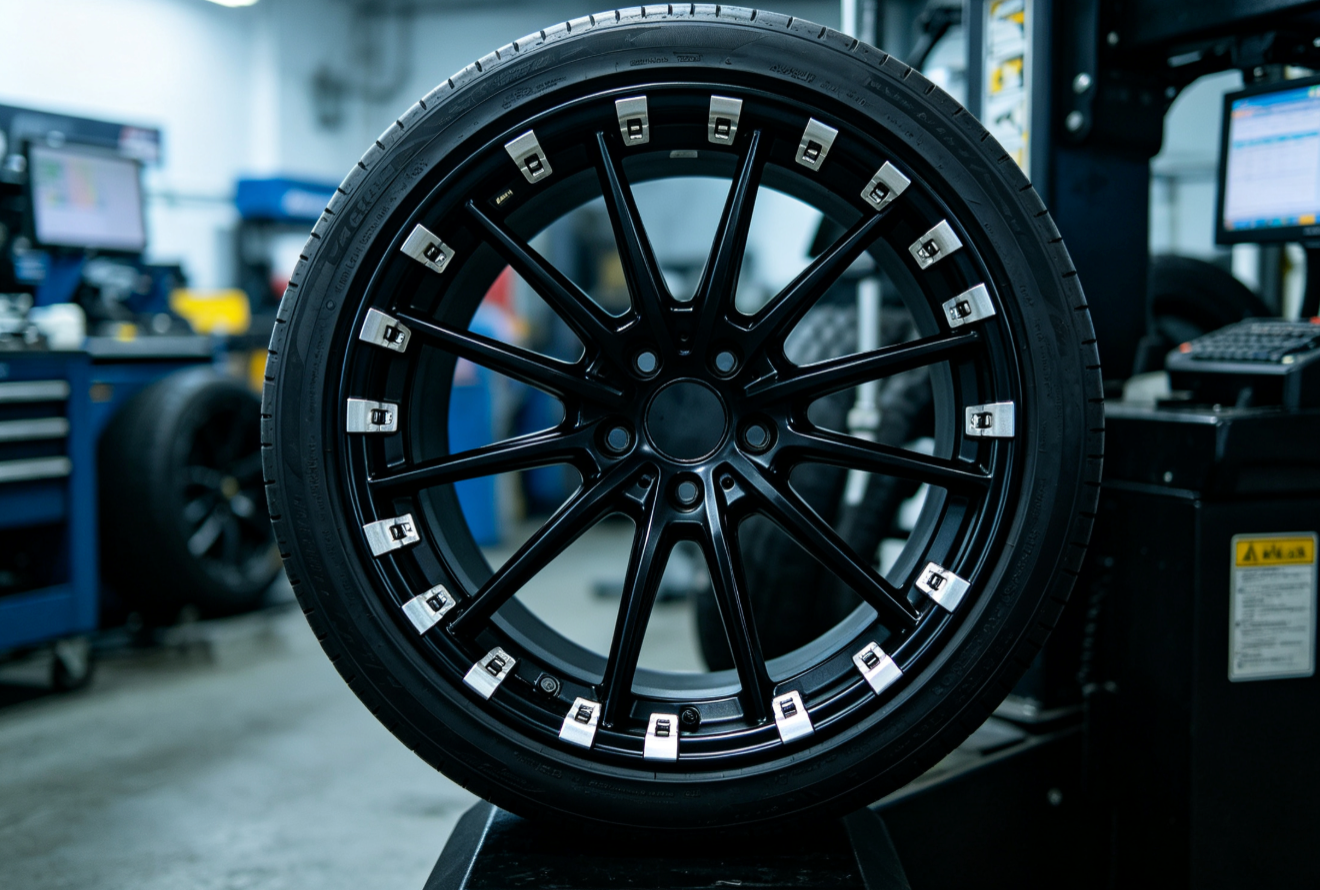
Aluminum wheels often use stick-on weights mounted on the inner surface. In this application, adhesive strength, coating quality, and clean installation are key to preventing appearance issues and loosening over time.
Performance and Precision Applications
High-precision balancing jobs demand well-defined segment weight designs. For workshops handling premium vehicles or customer-sensitive applications, accurate and easy-to-use wheel weights help reduce rework and improve service quality.
Why Long-Term Supply Requires More Than a Good Price
Many importers first contact a wheel weight manufacturer China because of competitive pricing. However, long-term success depends on a broader set of factors:
- Production stability over multiple seasons
- On-time delivery and lead-time reliability
- Consistent packaging and labeling
- Responsive communication for technical questions
- Ability to support repeat orders and new SKU development
For European distributors, a supplier that can maintain supply continuity is often more valuable than one with a slightly lower initial quote.
How to Build Confidence in a Chinese Wheel Weight Supplier
Request Samples from Multiple Batches
Sample testing should not stop at one sample. Importers should request multiple batches to confirm weight accuracy, coating quality, and adhesive performance over time.
Check Manufacturing Transparency
Reliable suppliers should clearly explain materials, production control, packaging options, and quality inspection procedures. This is especially important for B2B customers who need product pages, technical sheets, and fitment guidance.
Evaluate Communication and Technical Support
Good communication is a sign of a mature supplier. Importers should test how quickly the factory responds to questions about weight segments, application methods, and SKU matching for different wheel types.
Confirm Export Readiness
European buyers should confirm that the supplier understands export packaging, documentation, and recurring order management. A factory that already supports international aftermarket channels is usually better prepared for long-term cooperation.
Related Automotive Aftermarket Product Considerations
Wheel weights are part of a broader wheel-end and tire service ecosystem. European importers often source related items from the same supplier network to improve purchasing efficiency and reduce vendor count.
TPMS Valve Stems and Service Kits
TPMS valve stems are safety-critical components. They must ensure sealing and sensor compatibility, while OE-quality standards are especially important. TPMS service kits often include valve stems, seals, gaskets, nuts, and related consumables. Incorrect matching can cause installation failure or warning alerts.
Tire Repair Materials
Tire repair products rely on sealing performance, flexibility, and compatibility with tire body materials. Patch plugs, repair patches, and insert-style solutions are chosen based on puncture size and location. Repair workflows usually include demounting, cleaning, buffing, patching, pressing, and inspection.
Service Tools and Workshop Equipment
Wheel balancing is closely tied to workshop tools such as tire changers and balancing machines, which define service efficiency and consistency. Tire pressure gauges, jacks, and stands are also high-frequency products in the same channel. For B2B buyers, suppliers who understand the whole service workflow often provide better product matching.
Seasonal Demand and Procurement Strategy
In Europe, wheel weights often see demand peaks during seasonal tire change periods. Winter tire service creates additional purchasing pressure, and this is also when related products like tire studs may experience higher demand. Importers should plan inventory early, especially if they serve tire shops, repair chains, or fleet maintenance accounts.
What a Strong Product Page Should Include
For B2B procurement, product pages should provide everything buyers need to make a decision quickly. The most effective product content includes:
- Product name and application
- Compatible vehicle or wheel type
- Material and finish
- Packaging details
- Installation notes
- SKU structure and order options
Search engines also reward content that combines product name, use case, fitment, material, and scenario into clear long-tail phrases. This is especially useful for suppliers targeting international buyers.
Why Fortune Wheel Parts Is Relevant for Importers
For importers looking to streamline wheel-end sourcing, Fortune Wheel Parts offers a product-oriented approach that supports aftermarket purchasing needs. A supplier with a clear catalog structure, export-ready packaging, and broad wheel service coverage can help European buyers simplify procurement and improve long-term consistency.
Conclusion
Choosing a European wheel weight importer supply partner is about more than negotiating cost. The best long-term supplier is one that delivers consistent quality, clear SKU organization, suitable material choices, and dependable export support. Whether you are sourcing clip-on, stick-on, zinc alloy, or lead wheel weights, the evaluation process should focus on balance accuracy, installation reliability, and repeat-order stability.
For European buyers, the right China wheel weights partner can become a strategic source for stable aftermarket growth, better warehouse efficiency, and stronger customer satisfaction.
FAQ
What do European importers check first in a wheel weight supplier?
They usually check product consistency, material options, packaging standards, and whether the supplier can support long-term repeat orders.
Are zinc alloy wheel weights better for Europe?
Zinc alloy wheel weights are often preferred in markets sensitive to lead restrictions or environmental regulations, but the right choice depends on local customer demand and compliance requirements.
Why are clip-on and stick-on wheel weights used for different wheels?
Clip-on weights are typically used on steel wheels because they attach to the rim edge, while stick-on weights are commonly used on aluminum wheels and mounted on the inner surface.
What makes a wheel weight suitable for long-term supply?
Stable weight accuracy, durable coating, reliable adhesive or clip performance, and standardized packaging all support long-term supply success.
Why is segment weight design important?
Segment weight design affects balancing precision and installation flexibility, which is important for workshops that need fast and accurate service.
Should importers buy wheel weights and related products from the same supplier?
Often yes, especially if the supplier can also provide TPMS parts, repair materials, and workshop consumables with consistent packaging and export support.
Post time: Sep-28-2026