



When you place a bulk order for wheel weights, production capacity matters just as much as product quality. In the automotive aftermarket, wheel weight production supports tire balancing, ride comfort, reduced vibration, and improved tire wear. If a supplier cannot meet your lead time, packaging needs, or seasonal demand, even a technically good product can become a business problem.
This guide explains how to evaluate a wheel weight factory audit step by step, what documents and on-site evidence to request, and which production signals show whether a manufacturer can reliably handle your order volume. If you are sourcing for tire shops, distributors, fleet maintenance, or regional aftermarket programs, these checks can help you reduce risk before confirming a purchase.
Why Production Capacity Matters for Wheel Weight Orders
Wheel weights are essential consumables in tire balancing. Their job is to correct uneven mass distribution in the wheel and tire assembly, reducing vibration, steering shake, and uneven wear. Because they are used in high volume and often purchased repeatedly, buyers need a supplier who can deliver consistent output, stable lead times, and reliable packaging standards.
Capacity becomes especially important in seasonal peaks such as winter tire service, when demand for wheel weights rises alongside other wheel-end products like tire repair materials and TPMS service kits. A manufacturer that looks fine on paper may still struggle if its production lines, inventory planning, or quality controls cannot support large orders.
Start with a Clear Definition of Your Demand
Before you audit a supplier, define the exact order structure you expect. Production capacity is only meaningful when measured against your SKU mix, packaging format, and delivery schedule.
Map your requirements by product type
- Clip-on wheel weights for steel wheels, which depend on rim edge geometry.
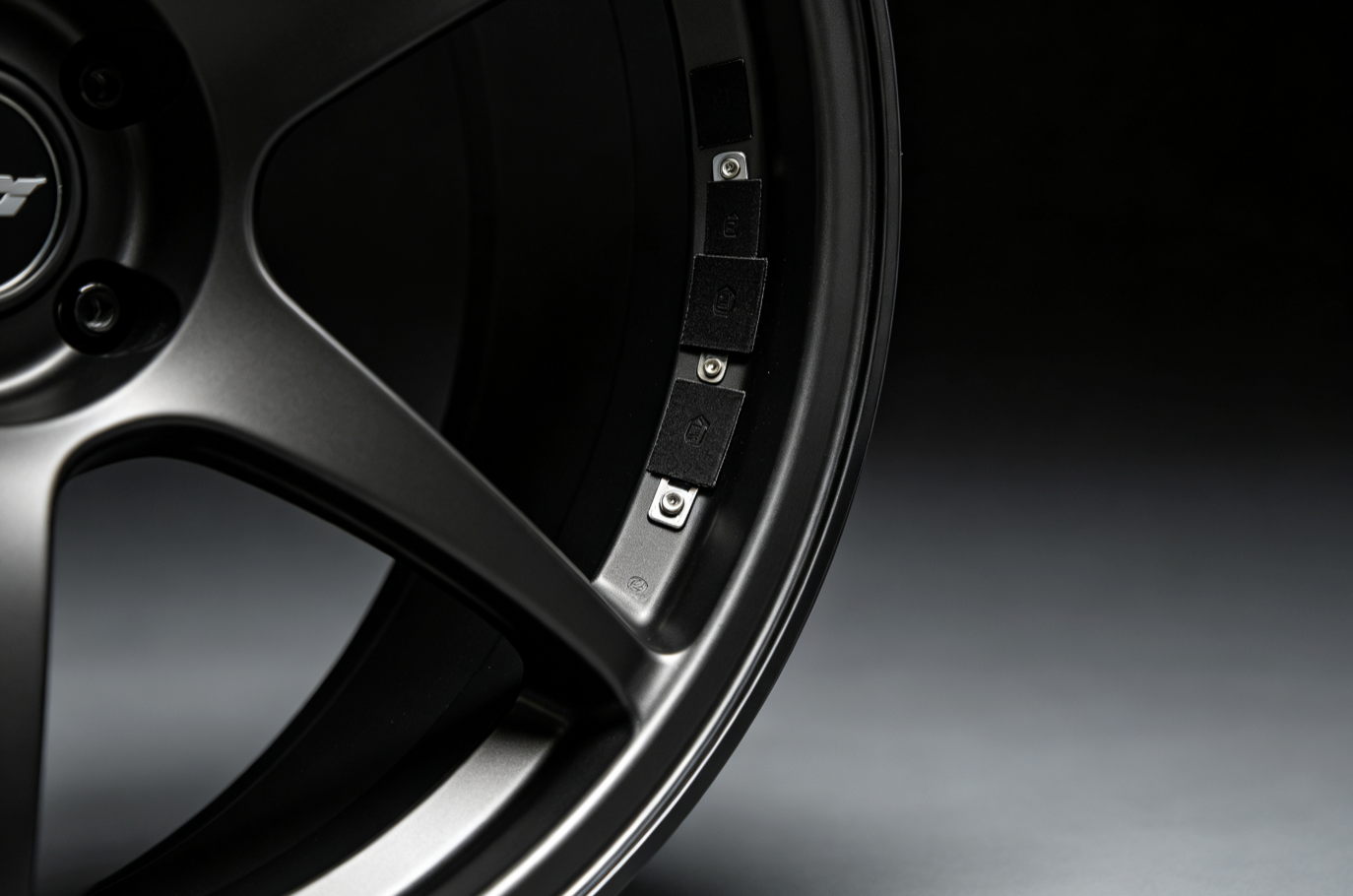
- Adhesive wheel weights for alloy wheels, usually installed on the inner barrel.
- Lead, zinc, or steel weights depending on market regulations and customer preferences.
- Segmented weight designs that support balancing precision and installation flexibility.
Different wheel types and vehicle applications influence selection. For example, rim material, flange shape, and balancing requirement all affect the ideal product specification. A capable factory should understand these variations and support multiple SKUs without confusing packaging or inconsistent output.
Quantify the order in operational terms
Ask yourself:
- How many tons, cartons, or pallets do I need per month?
- What percentage is clip-on versus adhesive?
- Do I need private label packaging?
- What is my required lead time during peak season?
- Do I need mixed-SKU consolidation or single-SKU palletization?
The more precise your forecast, the easier it is to test whether the manufacturer’s wheel weight production system is actually fit for your business.
Review the Factory’s Production System, Not Just the Sales Pitch
Many suppliers claim they can handle large orders. The real question is whether they can do it repeatedly, with consistent quality and on-time shipment. A credible manufacturer should be able to explain its production flow from raw material intake to final packaging.
Key production checkpoints to inspect
- Raw material sourcing: Ask where the base metals, adhesive tapes, and coatings come from.
- Forming and molding capacity: Confirm the number of lines, shifts, and daily output.
- Surface treatment: Check whether coating thickness and corrosion resistance are controlled.
- Segment cutting and calibration: Verify whether weight segments are consistent.
- Packaging line efficiency: Review how many cartons can be packed per hour.
For adhesive weights, you should also confirm tape performance, adhesive curing or storage control, and whether the factory maintains clean handling conditions to protect bonding quality. For clip-on weights, the forming accuracy and clamp stability are especially important.
Use a Wheel Weight Factory Audit to Verify Real Capacity
A proper wheel weight factory audit goes beyond visiting the site. It compares declared capabilities with observable evidence. Whether you audit in person or via a third-party inspector, the goal is to determine if the factory has enough machinery, labor, process control, and inventory discipline to support your order.
What to check during the audit
- Number of production lines: More lines do not always mean more output, but they do help reduce bottlenecks.
- Shift schedule: One-shift operations may not support urgent bulk orders.
- Machine age and maintenance: Old or poorly maintained equipment can create unstable throughput.
- Work-in-progress inventory: This reveals whether the factory can buffer demand spikes.
- Finished goods stock: Useful for fast-moving standard SKUs.
- Packaging flexibility: Important for B2B buyers who need custom labeling or carton specs.
Ask the factory to show actual output records for recent months, especially during busy seasons. Compare those records with the staff count, equipment count, and shipment logs to see if the numbers are realistic.
Request Documents That Prove Capacity
Good suppliers can support their claims with documents. This is one of the simplest ways to filter out unreliable vendors before you place a bulk order.
Useful documents to request
- Monthly production reports
- Equipment list and machine specifications
- Quality inspection records
- Inventory logs for finished goods and raw materials
- Order fulfillment history
- Third-party audit reports
- Export documentation or shipment summaries
Look for consistency across the documents. For example, if the factory claims large daily output but has very limited raw material inventory or inconsistent shipment records, that is a warning sign. A reliable manufacturer should be able to explain how it balances demand, stock, and production scheduling.
Evaluate Quality Control Alongside Capacity
High production volume is not useful if the products fail in the field. For wheel weights, quality affects balancing accuracy, adhesion, corrosion resistance, and installation reliability. Since these products directly impact wheel balance, even small inconsistencies can create customer complaints.
Important quality checks for wheel weights
- Weight accuracy: Confirm each segment matches the nominal spec.
- Tape adhesion: Check peel strength, heat resistance, and clean removal behavior.
- Coating stability: Ensure the surface finish resists corrosion and abrasion.
- Clip retention: For clip-on types, verify clamp fit and holding force.
- Packaging integrity: Prevent deformation and contamination during transport.
If you sell into North America, your buyers may include tire shops, repair chains, distributors, and fleet maintenance operations. These channels expect standardization, dependable quality, and packaging that supports fast inventory handling. A manufacturer that cannot keep quality consistent at scale is not a safe bulk-order partner.
Check Whether the Factory Can Handle Your SKU Structure
In the automotive aftermarket, SKU standardization matters. Buyers want clear product models, packaging units, and ordering logic. A good manufacturer should be able to manage multiple SKUs without causing confusion or mixing labels.
Questions to ask about SKU management
- How many standard wheel weight SKUs do you produce regularly?
- Can you support custom weights, finishes, and packaging sizes?
- Do you have stable stock for fast-moving models?
- Can you keep lead times consistent across different SKUs?
- How do you prevent mixed packaging or labeling errors?
If you need a supplier for multiple wheel-end products, it can also help to evaluate whether the factory or group can support related categories such as TPMS service kits, tire repair materials, or other workshop consumables. That does not replace a dedicated wheel weight audit, but it may improve sourcing efficiency.
Look for Signs of Seasonal Demand Readiness
Wheel weights often see higher demand during tire change seasons, especially when winter tire service peaks. A manufacturer with strong production capacity should be able to explain how it prepares for these surges.
Seasonal readiness indicators
- Higher raw material stock before peak periods
- Temporary labor or shift adjustments
- Pre-built inventory of common SKUs
- Clear production planning and shipment scheduling
- Fast response to forecast changes from distributors
If a supplier cannot describe its peak-season plan, that is a serious concern. Bulk buyers need predictability, especially when their own downstream customers depend on timely replenishment.
Run a Pilot Order Before Full Commitment
Even after a successful audit, a pilot order remains one of the most practical ways to verify wheel weight production capacity. A small-to-medium trial can reveal hidden issues in quality consistency, packaging, communication, and dispatch speed.
During the pilot, monitor:
- Packaging accuracy
- Label consistency
- Surface finish quality
- Segment weight uniformity
- Shipment punctuality
If the pilot order is handled professionally, it is a strong sign that the supplier can scale. If not, you have avoided a much larger risk.
How Wheel Weight Product Details Affect Capacity Planning
Not all wheel weights are identical from a manufacturing perspective. Material choice, segment design, coating, and adhesive performance all influence throughput and quality control.
Lead, zinc, and steel options
- Lead weights: Still widely used in traditional repair systems, with focus on spec stability, tape quality, and coating consistency.
- Zinc alloy weights: Often selected as a lead-free alternative for environmentally sensitive or regulation-driven markets.
- Steel weights: Common in certain markets and may require different coating and forming processes.
Your manufacturer should understand the performance expectations for each material and be able to produce them without disrupting other orders. A factory with flexible yet controlled processes is usually better suited for bulk B2B supply.
Red Flags That Suggest the Factory May Not Be Ready
Watch for these warning signs during your evaluation:
- Sales claims are vague and unsupported by records
- No clear production schedule or capacity chart
- Poor traceability in finished goods or raw materials
- Inconsistent answers about output, shifts, or machine use
- Packaging area looks disorganized or manually improvised
- Quality checks are informal or undocumented
- Lead times change dramatically without a clear reason
When these issues appear together, the supplier may be functioning as a trading company or low-capacity assembler rather than a dependable manufacturer.
Why It Helps to Work with an Established Supplier
For B2B buyers, sourcing from an established manufacturer can simplify compliance, quality control, and replenishment planning. An experienced supplier should understand aftermarket expectations such as packaging standardization, private label support, and order consistency across repeated purchases.
If you are sourcing from a company like Fortune Wheel Parts, review not only product listings but also the factory’s ability to support repeat orders, market-specific requirements, and document-based verification. A strong product page should ideally communicate model, use case, fitment, material, packaging, and installation guidance in a way that supports wholesale decision-making.
Final Checklist Before Placing a Bulk Order
- Defined your exact SKU mix and monthly demand
- Verified production lines, shifts, and machine availability
- Reviewed recent output records and shipment history
- Checked quality control for accuracy, coating, and packaging
- Confirmed seasonal readiness and lead time realism
- Completed a factory audit or third-party inspection
- Tested the supplier with a pilot order
Once these steps are complete, you can place a bulk wheel weight order with far greater confidence.
FAQ
How do I know if a wheel weight manufacturer has enough capacity?
Check their production lines, shift schedule, monthly output records, finished goods stock, and shipment history. A credible manufacturer should provide documents that match their claims.
What should I ask during a wheel weight factory audit?
Ask about raw material sourcing, daily output, equipment maintenance, quality inspection procedures, packaging capacity, and lead time for your target SKUs.
Is a pilot order necessary before a large purchase?
Yes, especially for new suppliers. A pilot order helps confirm product quality, packaging accuracy, communication speed, and delivery performance before you commit to a larger bulk order.
Which wheel weight materials are most common?
Lead, zinc alloy, and steel are common options. Lead remains widely used in traditional repair systems, while zinc is often chosen as a lead-free alternative for regulated markets.
Why are segmented wheel weights important?
Segmented designs improve balancing precision and installation flexibility. They allow technicians to match the required balance more accurately for different wheel and tire combinations.
What makes adhesive wheel weights different from clip-on weights?
Adhesive weights are commonly used on alloy wheels and install on the inner barrel, while clip-on weights are typically used on steel wheels and attach to the rim edge.
Should I only focus on capacity and ignore quality?
No. High capacity without stable quality can create more problems than it solves. Always evaluate both production throughput and product consistency before approving a bulk order.
Post time: Sep-29-2026