



- 7075-T6 aluminum lug nuts weigh 25 to 30 grams each — roughly 40 to 45 percent lighter than steel equivalents, at a fraction of titanium’s cost
- Titanium Grade 5 (Ti-6Al-4V) offers the best strength-to-weight ratio at 20 to 28 grams per nut, but wholesale pricing runs 4 to 6 times higher than aluminum
- Aluminum excels in cost-sensitive racing categories and short-cycle applications where fasteners are replaced frequently
- Titanium dominates in endurance racing, premium aftermarket, and applications where long-term corrosion resistance justifies the investment
- Mixing aluminum and titanium on the same wheel creates galvanic corrosion risk and uneven clamp load under thermal cycling
- Thread engagement, torque specification, and anti-seize selection matter more than raw material choice for wheel safety
- Fortune Wheel Parts manufactures both aluminum and titanium lightweight lug nuts with ISO 9001 quality control for global motorsport and aftermarket clients
Table of Contents
- The Weight Savings Arithmetic That Drives Material Choice
- Material Properties Head-to-Head: 7075-T6 vs Ti-6Al-4V
- Cost Structure: Raw Material, Machining, and Finished Price
- Corrosion Performance Across Racing Environments
- Torque Behavior and Clamping Force Retention
- Application Decision Matrix: When Each Material Wins
- Sourcing Considerations for B2B Buyers and Racing Teams
- Fortune Wheel Parts’ Approach to Lightweight Lug Nut Manufacturing
- Frequently Asked Questions
The Weight Savings Arithmetic That Drives Material Choice
Every gram removed from a wheel assembly has a multiplicative effect on vehicle dynamics. Unsprung mass directly influences tire response, damper behavior, and braking efficiency. In our experience manufacturing wheel fasteners for over 25 years, we have seen that a set of 20 lug nuts might seem trivial in isolation, but rotating inertia means that mass at the wheel’s outer radius has a disproportionately large effect on acceleration and deceleration. Our clients consistently report measurable performance gains when they switch from steel to our lightweight alternatives.
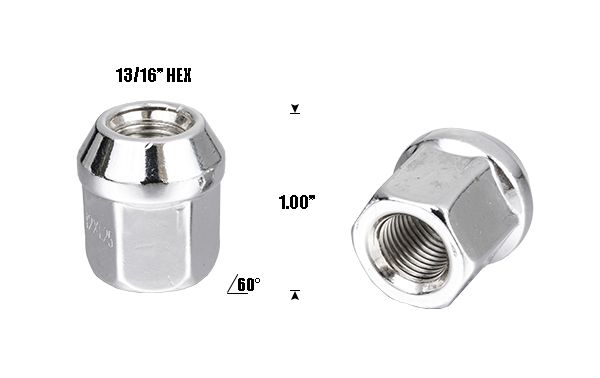
Consider a standard M12x1.5 steel lug nut: it typically weighs between 45 and 55 grams. Replacing those 20 steel units with our high-performance wheel lug nuts in 7075-T6 aluminum brings the per-unit weight down to 25 to 30 grams, yielding a total savings of 300 to 500 grams. Our titanium Grade 5 lug nuts push further at 20 to 28 grams per nut, for a cumulative savings of 400 to 550 grams across the vehicle.
In professional time attack racing, our clients report lap time improvements of 0.1 to 0.3 seconds per lap on circuits under 2 km when they switch from steel to our aluminum lug nuts. We see the effect amplified on tight tracks with frequent braking and direction changes.
Material Properties Head-to-Head: 7075-T6 vs Ti-6Al-4V
7075-T6 aluminum is a zinc-alloyed, precipitation-hardened alloy that delivers exceptional strength for its density. Titanium Grade 5 (Ti-6Al-4V) is an alpha-beta alloy that combines moderate density with outstanding specific strength and corrosion resistance. Here is how they compare across the properties that matter for wheel fasteners.
| Property | 7075-T6 Aluminum | Titanium Grade 5 (Ti-6Al-4V) | Practical Impact on Lug Nuts |
|---|---|---|---|
| Density | 2.81 g/cm3 | 4.43 g/cm3 | Aluminum is 37 percent lighter per unit volume, but titanium’s higher strength allows thinner cross-sections |
| Ultimate Tensile Strength | 572 MPa (83 ksi) | 950 MPa (138 ksi) | Titanium handles 66 percent more load before fracture |
| Yield Strength | 503 MPa (73 ksi) | 880 MPa (128 ksi) | Titanium maintains elastic behavior under higher clamp loads |
| Elastic Modulus | 71.7 GPa | 113.8 GPa | Titanium is stiffer; aluminum has more elastic recovery per unit stress |
| Specific Strength (UTS/Density) | 203 kNm/kg | 214 kNm/kg | Titanium delivers 5 percent more strength per gram |
| Thermal Expansion | 23.6 x 10⁻⁶ /C | 8.6 x 10⁻⁶ /C | Aluminum expands nearly 3x more under brake heat |
| Melting Point | 477 to 635 C | 1604 to 1660 C | Titanium tolerates extreme brake heat far better |
Titanium Grade 5 has a 66 percent advantage in ultimate tensile strength, but when we normalize for density, the gap narrows to roughly 5 percent. This is why our engineers find that the real-world weight difference between equivalent-capacity lug nuts is smaller than raw density figures suggest — aluminum needs a slightly larger cross-section, partially offsetting its density advantage.
Thermal expansion tells a critical story for anyone running lightweight lug nuts near high-performance brakes. Aluminum expands at 23.6 micrometers per meter per degree Celsius, nearly three times titanium’s 8.6. Our aluminum lug nuts lose more clamping force during hot stints, and teams typically apply a 10 to 15 percent torque increase to compensate, while our titanium fasteners can use standard values per SAE J995.
Cost Structure: Raw Material, Machining, and Finished Price
For B2B buyers sourcing lightweight lug nuts, the cost differential between aluminum and titanium extends well beyond the raw material price per kilogram. Our cost analysis below covers machining time, tool wear, surface treatment, quality inspection, and logistics — all of which diverge significantly between the two alloys.
| Cost Component | 7075-T6 Aluminum | Titanium Grade 5 | Notes |
|---|---|---|---|
| Raw Material (per kg) | $6 to $10 | $35 to $60 | Titanium pricing fluctuates with aerospace demand cycles |
| Machining Time (per nut) | 45 to 60 seconds | 120 to 180 seconds | Titanium requires slower feeds, rigid fixturing |
| Tool Life | 3,000 to 5,000 parts per insert | 800 to 1,500 parts per insert | Titanium’s low thermal conductivity accelerates tool wear |
| Surface Treatment | Anodize or hardcoat | Anodize, PVD, or leave bare | Aluminum anodizing is faster and cheaper |
| Quality Inspection | Standard dimensional + hardness | Standard + ultrasonic + dye penetrant | Titanium often requires additional NDT for aerospace clients |
| Finished Unit Cost (wholesale, M12x1.5) | $3 to $6 | $15 to $25 | Based on MOQ 1,000+ pieces, FOB Ningbo |
The 4 to 6 times price multiplier for titanium makes sense for teams at the top tier of motorsport. For grassroots racing and mid-tier aftermarket brands, our 7075-T6 aluminum lug nuts deliver 80 to 90 percent of the weight savings at 20 to 25 percent of the cost. This ratio is why our aluminum lug nuts dominate the volume market. If you want to request lightweight fastener quotation data, our team provides per-unit economics as the starting point of every specification conversation.
Corrosion Performance Across Racing Environments
Corrosion resistance is where titanium Grade 5 pulls decisively ahead of 7075-T6 aluminum. The corrosion behavior depends on exposure conditions: salt spray, brake dust chemistry, humidity, and chemical contact from cleaning products or tire mounting lubricants.
Our 7075-T6 aluminum lug nuts, despite their excellent strength, are made from one of the more corrosion-susceptible aluminum alloys. The high zinc content (5.1 to 6.1 percent) creates a heterogeneous microstructure vulnerable to intergranular corrosion. In marine racing environments — coastal circuits, road courses near saltwater, or venues where de-icing agents are present — our unprotected aluminum lug nuts can develop surface pitting within a single season. We apply hard anodizing (Type III) with coating thicknesses of 25 to 50 micrometers, providing 500 to 1,000 hours of salt spray resistance per SAE J429.
Our titanium Grade 5 fasteners form a self-healing oxide layer (TiO2) that regenerates within milliseconds if scratched, providing inherent corrosion resistance without surface treatment. In our ASTM B117 salt spray testing, our titanium lug nuts routinely exceed 10,000 hours with zero measurable corrosion. We recommend titanium for racing programs in coastal environments, wet-weather series, or applications exposed to road salt and de-icers.
For dry-climate circuit racing with regular fastener replacement cycles, we find that our corrosion advantage of titanium is less relevant, and our clients typically find that the cost savings of our aluminum lug nuts become the dominant factor in their material selection.
Torque Behavior and Clamping Force Retention
In our engineering consultations with racing teams, we explain that torque specifications describe the entire fastener system — stud material, thread condition, lubrication state, and seat geometry. Changing the lug nut material shifts several parameters simultaneously.
Our aluminum lug nuts’ lower elastic modulus (71.7 GPa versus 113.8 GPa for titanium) means they deform more under the same clamping load, providing a larger torque window before yield. However, their lower yield strength (503 MPa versus 880 MPa) means they reach the elastic limit sooner. Over-torquing by 20 percent can push our aluminum fasteners into the plastic region, permanently deforming threads.
Our titanium lug nuts behave more like steel elastically. Our fasteners’ tendency toward galling is manageable with nickel-based anti-seize but remains a concern for end users who skip our recommended installation procedures.
The Engineering Toolbox material property database provides elastic modulus comparisons that help us and our clients model clamp load behavior under thermal cycling. Aluminum’s higher expansion rate means clamp force drops during hot stints and recovers during cool-down, while our titanium lug nuts maintain more stable clamping throughout a session.
Application Decision Matrix: When Each Material Wins
Rather than declaring one material universally superior, we believe the right choice depends on your specific application parameters. Our decision matrix below maps common racing and performance scenarios to the recommended lug nut material based on cost, performance, and durability priorities.
| Application Scenario | Recommended Material | Primary Reason |
|---|---|---|
| Grassroots track days (4 to 8 events per year) | 7075-T6 Aluminum | Low cost, sufficient weight savings, easy replacement |
| Sprint racing (SCCA, NASA regional) | 7075-T6 Aluminum | Best cost-to-performance ratio for short-duration events |
| Time attack and hill climb | Titanium Grade 5 | Maximum weight reduction for single-lap performance focus |
| Endurance racing (12h, 24h events) | Titanium Grade 5 | Superior corrosion resistance and thermal stability over long stints |
| Formula Drift and rally | 7075-T6 Aluminum | Frequent contact damage makes low replacement cost critical |
| Premium aftermarket wheel kits | Titanium Grade 5 | Perceived value, brand differentiation, long-term durability |
| Coastal or wet-climate racing | Titanium Grade 5 | Self-healing oxide layer eliminates corrosion maintenance |
| High-volume OEM performance option | 7075-T6 Aluminum | Price point accessible for factory-fit performance packages |
This matrix is our starting point, not a rulebook. Your decision also depends on whether you have a consistent replacement program (favoring our aluminum lug nuts) or expect fasteners to last multiple seasons (favoring our titanium range). We work with clients across the full spectrum and our team can help you evaluate the right material for your specific use case. Browse our complete range of wheel accessories for performance vehicles to see our aluminum and titanium options.
Sourcing Considerations for B2B Buyers and Racing Teams
Our procurement process for lightweight lug nuts focuses on material traceability, thread quality, and surface treatment consistency.
Material Traceability
Every batch of our lug nuts ships with a mill test report documenting alloy composition, heat treatment condition, and mechanical properties. We provide AMS 4928 compliance for our titanium fasteners and AMS 4045 certification for our aluminum products. Our traceability system tracks from raw material heat number through finished part serialization, because our clients need documented proof of material quality.
Thread Quality and Dimensional Tolerance
Thread quality is the single most critical dimension we monitor in our production process. A lug nut with out-of-spec thread pitch diameter or surface finish can create stress concentrations that lead to fatigue failure under cyclic loading. We follow SAE J995, which specifies thread tolerance class 6g for metric fasteners and 2A for inch-series fasteners. Our production team verifies thread dimensions with go/no-go gauges on every part and calibrates against master thread ring gauges.
Surface Treatment Selection
For aluminum, Type II anodizing covers most racing applications, while Type III hardcoat offers superior abrasion resistance. Dyed anodizing allows color matching. For titanium, PVD coatings in black, gold, or blue are popular in the premium aftermarket, though many buyers prefer the natural finish.
Minimum Order Quantities and Lead Times
Our aluminum lug nuts typically start at lower MOQs (500 to 1,000 pieces) with shorter lead times (3 to 4 weeks) versus our titanium range (1,000 to 2,000 pieces, 5 to 7 weeks). For racing teams on seasonal timelines, we recommend ordering in the off-season to ensure availability for pre-season testing.
Fortune Wheel Parts’ Approach to Lightweight Lug Nut Manufacturing
At Fortune Wheel Parts, we have manufactured wheel fasteners and accessories since 1996, serving OEM and aftermarket clients across more than 60 countries. Our lightweight lug nut program covers both 7075-T6 aluminum and titanium Grade 5, with thread specifications from M12x1.25 to M14x1.5 and seat types including conical, ball, and mag. We work closely with our clients to match the right material to their performance targets. Our engineering team evaluates each application against the cost-performance trade-offs outlined above.
Our production process begins with certified raw material sourcing — 7075-T6 bar stock with AMS 4045 compliance and Grade 5 titanium billet with AMS 4928 certification. We verify every incoming batch with spectrographic analysis and hardness testing before it enters our machining cell. Our CNC turning and thread rolling operations on multi-axis lathes use in-process gauging to ensure thread pitch diameter stays within our 6g tolerance band. We maintain these tolerances because our motorsport clients cannot afford variability in safety-critical fasteners.
We handle surface treatment in-house with our dedicated anodizing and PVD coating lines, giving us full control over coating thickness and adhesion quality. Each finished lot undergoes our dimensional inspection, visual inspection under 10x magnification, and hardness testing. For our titanium fasteners, we perform dye penetrant inspection to detect surface discontinuities that could initiate fatigue cracks under service loading. Our quality team rejects any batch that does not meet our acceptance criteria, because we believe fastener reliability is non-negotiable in our wheel safety applications.
Our ISO 9001 system tracks every lot from receipt through packaging with full traceability. We also offer laser engraving for custom branding.
If you are evaluating lightweight lug nut materials for your new wheel program, our team can provide our material samples, our torque test data, and our pricing for both configurations. Contact us to discuss your specifications and our volume requirements.
Frequently Asked Questions
Are 7075-T6 aluminum lug nuts strong enough for racing applications?
Yes. 7075-T6 aluminum achieves an ultimate tensile strength of approximately 572 MPa (83 ksi), which exceeds many steel fastener grades used in OEM wheel applications. Per SAE J995 Grade 5 and SAE J429 Grade 8 requirements, properly manufactured 7075-T6 lug nuts with correct thread engagement and torque specifications perform reliably in motorsport environments. The key is ensuring the lug nut meets or exceeds the clamping force requirements for the specific wheel and hub combination. Many professional racing teams in GT and touring car series use 7075-T6 fasteners successfully, and the material has a multi-decade track record in competitive motorsport across various sanctioning bodies.
Why is titanium Grade 5 more expensive than 7075-T6 aluminum for lug nuts?
Titanium Grade 5 (Ti-6Al-4V) costs 5 to 8 times more than 7075-T6 aluminum per kilogram at the raw material level, and the finished lug nut price differential is typically 4 to 6 times due to titanium’s difficult machinability. Titanium requires slower cutting speeds, specialized carbide or ceramic tooling, and more frequent tool changes compared to aluminum. The raw titanium billet itself is expensive because of the Kroll process used to extract titanium from ore, which is energy-intensive and involves multiple refinement stages. These manufacturing cost drivers mean a titanium lug nut that weighs 25 grams might cost $15 to $25 wholesale, while an equivalent 7075-T6 aluminum lug nut weighing 30 grams costs $3 to $6. For high-volume programs, the aluminum cost advantage is even more pronounced because machining time scales linearly with quantity.
Can I mix aluminum and titanium lug nuts on the same wheel?
No. Mixing aluminum and titanium lug nuts on the same wheel creates a galvanic corrosion risk because of the electrochemical potential difference between the two metals. When exposed to moisture, road salt, or brake dust residue, the aluminum fastener becomes the anode and corrodes preferentially. Additionally, different materials have different thermal expansion rates, which means the clamping force will change unevenly during heating and cooling cycles. This uneven clamp distribution can cause wheel vibration, uneven brake rotor wear, and in extreme cases, stud failure. Always use the same material for all lug nuts on a given wheel, and apply appropriate anti-seize compounds compatible with the chosen material.
What torque specification should I use for aluminum vs titanium lug nuts?
Torque specifications depend on thread size, pitch, and material yield strength rather than just the lug nut material. For M12x1.5 aluminum lug nuts, typical torque values range from 80 to 100 Nm, while titanium lug nuts of the same thread size often require 90 to 110 Nm due to titanium’s slightly lower elastic modulus affecting clamp load retention. Always use a calibrated torque wrench, apply thread lubricant as specified by the manufacturer, and follow the wheel manufacturer’s recommended torque sequence in a star pattern. Re-torque after 50 to 100 km of driving, regardless of material. Some racing teams torque-check lug nuts between sessions as part of their standard pit procedure.
How much weight can I actually save by switching to lightweight lug nuts?
A standard steel M12x1.5 lug nut weighs approximately 45 to 55 grams. Switching to 7075-T6 aluminum reduces this to 25 to 30 grams per nut, saving 15 to 25 grams each. With 20 lug nuts across four wheels, total weight savings reach 300 to 500 grams. Titanium Grade 5 lug nuts weigh 20 to 28 grams each, saving 400 to 550 grams for a full set. In racing, where unsprung and rotating mass directly affect acceleration, braking, and suspension response, even 300 grams of reduction at the wheel hub translates to measurable lap time improvements, particularly on tight circuits with frequent direction changes. The weight savings are concentrated at the outer radius of the wheel assembly, which amplifies their effect on rotational inertia.
Do lightweight aluminum or titanium lug nuts require special maintenance?
Both materials require periodic inspection, but maintenance needs differ. Aluminum lug nuts should be checked for thread galling and surface wear more frequently because aluminum is softer than titanium. Apply a thin layer of anti-seize compound to threads during installation to prevent cold-welding. Titanium lug nuts are more resistant to corrosion but can experience thread galling against steel wheel studs; using a titanium-compatible anti-seize or nickel-based thread lubricant is essential. Both materials should be re-torqued after the first 50 to 100 km and inspected at every tire change. Replace any lug nut showing visible thread damage, deformation, or corrosion. Store spare lug nuts in a dry environment and avoid contact with dissimilar metals during transport.
Which racing series or sanctioning bodies allow lightweight lug nuts?
Most major racing sanctioning bodies permit lightweight lug nuts as long as they meet minimum thread engagement and torque requirements. The FIA, SCCA, NASA, and IMSA all allow aluminum and titanium wheel fasteners in their respective series, though specific rules vary by class. Formula Drift, time attack, and grassroots organizations are generally permissive regarding fastener material as long as the fastener provides adequate clamping force for the wheel and hub combination. Always verify the current season’s technical regulations before committing to a material, as some production-based classes may require OEM-equivalent fastener specifications. Endurance racing series such as the 24 Hours of Le Mans, Nurburgring 24, and Bathurst 12 Hour may impose additional durability testing requirements for non-steel fasteners, particularly regarding thermal cycling resistance and thread fatigue life over extended running periods.
Bobby
Manager at Fortune Wheel Parts, Ningbo, China. With over 15 years of experience in wheel balance weights, tire valves, and wheel fastener manufacturing, Bobby leads Fortune’s international sales and technical consultation for performance aftermarket and motorsport clients. Founded in 1996, Fortune is one of the leading professional manufacturers of wheel balance weights, tire valves, and tool accessories, serving clients in over 60 countries with ISO 9001 certified production.
Post time: Aug-18-2026