




If you have ever built a forged-wheel car and been told that your lug nuts are “the cheapest part of the build,” you have probably felt the impulse to skip the topic. They are also the part that sits closest to the rotational axis of the wheel, where every gram matters most. A forged-wheel buyer who spends serious money on a 7-kg wheel and a track-rated tire, then bolts it on with steel lug nuts at every corner, has left a small but real performance gain on the table. The same buyer who bolts it on with a properly specified titanium or aluminum nut has closed the loop.
This article covers why the unsprung weight argument applies specifically to lug nuts, why forged wheels are tougher on lug nuts than cast or flow-formed wheels, the difference between titanium, aluminum, and steel, the open-end vs closed-end question, what to verify on sizing and seat geometry, and the six things a serious buyer should confirm with the supplier.
By the end, you should be able to read a Fortune (or any supplier’s) spec sheet and tell at a glance whether the lug nut is suitable for a forged-wheel build.
1. What “Unsprung Weight” Means and Why Every Gram Counts
The unsprung-vs-sprung distinction is one of the more useful concepts in chassis engineering — and one of the more misquoted. The unsprung mass is everything that is not supported by the springs. In a typical car, that includes the wheels, the tires, the brake rotors, the brake calipers, the wheel bearings, the lower portion of the suspension links, and the lug nuts that hold the wheel to the hub. The sprung mass is everything else.
The distinction matters because the unsprung mass is what the suspension has to control every time the wheel hits a bump. A heavier unsprung mass takes more energy to control — the wheel is slower to respond to road surface changes, the damper has to work harder, and the contact patch spends more time out of its optimal load range. A lighter wheel-and-tire package gives the suspension authority it does not otherwise have.
Where lug nuts sit in the unsprung stack
Inside the unsprung mass stack, lug nuts are by far the smallest component. The wheel is the dominant mass, the tire the second-largest, and the brake rotor and caliper round out the top four. So why does anyone care about a few grams of lug nut?
The answer is rotational inertia. Lug nuts sit at the rotational axis of the wheel — at or very near the hub. Mass at the rotational axis contributes to rotational inertia by the square of the distance from the axis; at the axis itself, distance is near zero. The absolute gram saving is small, but the leverage on rotational inertia is maximum. This is why engineers will say “every gram at the hub counts twice” — the small absolute saving lands at the highest-leverage point.
Why it matters more for a forged-wheel build
For a forged-wheel build, the wheel itself is already significantly lighter than a cast or flow-formed wheel of the same size. The whole point of the forged wheel was to reduce the unsprung mass. Once the wheel is reduced, the relative weight of the components around it — including the lug nuts — is higher. A steel lug nut on a forged wheel is a higher percentage of the unsprung stack than the same steel lug nut would have been on a cast wheel. The marginal investment in titanium or aluminum lug nuts pays back more on a forged-wheel build than on any other configuration.
Practical takeaway
The unsprung weight argument applies to lug nuts not because they are heavy in absolute terms, but because they sit at the rotational axis of the wheel. On a forged-wheel build, the marginal gram saving is at its highest leverage. Budget the lug nut accordingly.
2. Why Forged Wheels Are Tougher on Lug Nuts Than Cast or Flow-Formed Wheels
Forged wheels are built by pressing a heated aluminium slug into a mould under high pressure, producing a denser, stronger, and lighter wheel than the equivalent cast part. The forged-wheel side has a tighter grain structure and higher tensile strength than a cast wheel of the same nominal dimensions. The same process produces a tighter lug-seat tolerance — the seat the nut presses into is more precise, the depth more consistent, and the angle more accurately held.
All three characteristics are good for performance. They are also harder on the lug nut. A tighter seat means a nut that does not match the geometry will not sit flush; a deeper seat means a nut with the wrong angle will load unevenly; a stronger wheel transmits more torque to the lug-bolt stud before any flex absorbs the load. Each adds demand on the nut’s material and design.
The lug-seat geometry
Most forged wheels use a conical (60°) or ball seat for the lug nut. A few use a flat seat with a separate washer. The seat type has to match the lug nut exactly — a conical seat takes a conical lug nut, a ball seat takes a ball-seat lug nut, and a mismatch either does not seat at all or seats unevenly. For a buyer specifying a lug nut for a forged wheel, the seat type is the first thing to confirm with the wheel manufacturer, before the material grade or the torque rating.
The torque-density demand
A forged wheel is stiffer than a cast wheel, which means the torque applied through the lug nut is delivered to the wheel face without the wheel flexing to absorb it. The lug nut therefore sees a higher peak torque during tightening, and any error in the torque value or the seating torque sequence shows up as a load on the nut itself rather than as a wheel flex. This is why most wheel manufacturers publish a specific torque value for the wheel (not a generic value), and why most specify a re-torque procedure after the first heat cycle.
Why this matters for material selection
A lug nut that is mismatched to a forged wheel — wrong seat type, wrong material grade, wrong thread pitch — will not seat flush, will load unevenly, and will eventually loosen or fail. The consequences range from a vibration at speed to a wheel separation. The right answer is to match the lug nut to the wheel on three axes (seat type, material grade, dimensions) and to apply the torque value the wheel manufacturer publishes.
Practical takeaway
Forged wheels demand more from a lug nut than cast or flow-formed wheels do. The seat type has to match, the dimensions have to match, the material grade has to be appropriate, and the torque value has to come from the wheel manufacturer. Skipping any of these four checks turns the lug nut into the weak link.
3. Titanium vs Aluminum vs Steel Lug Nuts: The Three Material Tiers
The material choice for a lug nut is driven by the build’s priorities — weight saving, cost, reusability, and corrosion behaviour. Three tiers exist: Grade-5 titanium (the premium tier), 7075-T6 aluminium (the mid tier), and forged or hardened steel (the baseline tier). Fortune’s titanium lug nut family sits at the premium tier; the company’s broader wheel lug nuts and bolts range covers the aluminium and steel tiers.
Grade-5 titanium (Ti-6Al-4V)
Grade-5 titanium is the workhorse alloy of the titanium world — roughly twice the strength of commercially pure titanium at a small weight penalty. It is the alloy of choice for aerospace, medical implants, and high-end motorsport fasteners. For lug nuts, the relevant properties are tensile strength, fatigue resistance, and corrosion resistance. Titanium is roughly 60% lighter than steel by volume, does not corrode in road-salt environments, and holds its thread geometry across many reuses.
For a buyer who wants to confirm the alloy against a recognised specification, Ti-6Al-4V bar and billet material is covered by ASTM standards (B265 for strip / sheet / plate, B348 for bar / billet).
The cost is the obvious downside: titanium is significantly more expensive than aluminium or steel, the machining is slower (titanium work-hardens during cutting), and the thread-forming requires care to avoid galling. For a buyer specifying titanium, the selection criteria are the alloy grade (Ti-6Al-4V, not the cheaper CP titanium), the thread forming method (rolled threads are stronger than cut threads), and the finish (raw, anodised for colour-coding, or PVD-coated for additional surface hardness).
7075-T6 aluminium
7075-T6 is the high-strength aerospace aluminium alloy. It is roughly 35% lighter than steel by volume and significantly cheaper than Grade-5 titanium, but it is also more prone to galvanic corrosion when mated to steel wheel studs and less fatigue-resistant. For racing applications, 7075-T6 lug nuts are widely used and offer the best balance of weight saving and cost. For road-driven cars in winter conditions, the corrosion behaviour has to be managed with anti-seize on the threads.
The weight saving vs steel is meaningful (in the range of half to two-thirds of the steel equivalent per nut); the cost is in between titanium and steel; the maintenance is closer to steel.
Forged / hardened steel
Steel lug nuts are the baseline. Heavier than titanium or aluminium, but the most forgiving of misuse — higher fatigue life, easier re-torque, no galvanic-corrosion concern when mated to steel studs. For a road-driven car on conventional suspension, steel is the right answer; the unsprung-weight saving from a titanium or aluminium nut does not pay back the additional cost.
The choice between the three is not “titanium is best” — it is “what does the build need, and where does the build sit on the weight / cost / maintenance tradeoff?” Forged-wheel builds with the wheel-and-tire package already reduced are the right place to spend the marginal money on titanium. Daily-driven cars in road-salt climates are the right place to keep steel and apply anti-seize. Track-only builds in dry climates are the right place for 7075-T6.
Practical takeaway
Match the material tier to the build, not to the price tag. Titanium is the right answer when the wheel-and-tire package is already reduced and the unsprung-weight saving has the highest leverage. Aluminium is the right answer for track builds with budget sensitivity. Steel is the right answer for daily-driven cars in winter climates.
4. Open-End vs Closed-End Lug Nuts for Forged-Wheel Builds
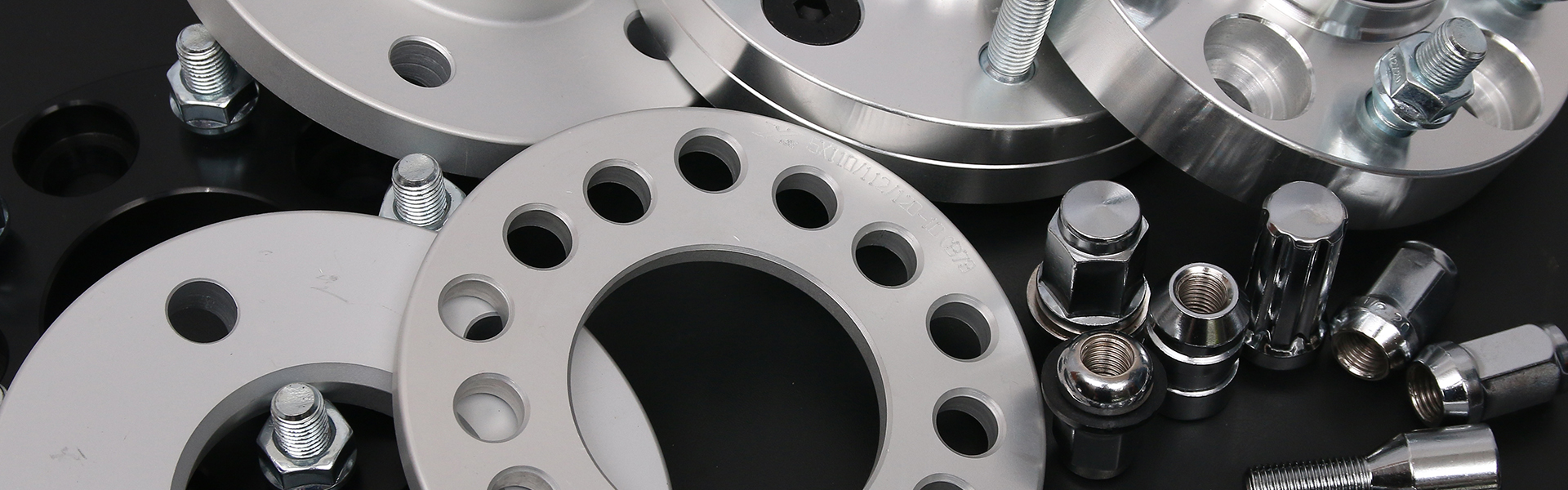
The open-end vs closed-end question is largely a visual and stylistic one, but it also has practical implications for stud length, hex-key access, and the resale or refurbishment of the wheel. Fortune’s open-end sphere lug nut is a representative design in this category.
What “open-end” means
A closed-end lug nut is a one-piece nut with a closed top — the stud threads into a blind bore, and the end of the stud is not visible. An open-end lug nut has an open top (a through-hole or a partial bore) so the end of the stud protrudes past the nut. The protruding stud end is typically used as a visual indicator (you can see whether the wheel is fully seated), and the open-end design allows a longer stud engagement for aftermarket wheel spacers or hub-centric rings.
For forged-wheel builds, the open-end design is the default. The protruding stud end lets the owner inspect seating at a glance (no need to remove a nut to confirm engagement), and the design accommodates wheel spacers or hub-centric hardware without changing the lug nut. The closed-end design is more common on OEM cars and on lower-end aftermarket applications.
Stud length requirement
The practical caveat for open-end lug nuts is that the stud has to be long enough to engage the nut properly. A stud that is too short for the open-end nut is a safety hazard — the nut will not clamp the wheel correctly. Most aftermarket stud kits are sized for open-end applications; most OEM studs are sized for closed-end applications. For a buyer specifying open-end lug nuts for a forged wheel, the stud length has to be confirmed before the wheel goes on the car.
Hex-key access and spline-drive options
Closed-end and open-end lug nuts both use a standard hex socket at the base. Aftermarket spline-drive or hex-with-skirt designs use a matching spline key or socket, usually included with the nut set. For racing, a spline-drive or hex-with-skirt design can be a tamper-resistance feature — but the matching key has to be in the tool kit.
Resale and refurbishment
Open-end lug nuts are typically sold in matched sets for a specific wheel build. Resale value depends on the wheel, not the lug nuts; the nuts themselves are usually consumed with the build. Closed-end nuts are interchangeable across builds more easily because they do not depend on a specific stud length.
Practical takeaway
Open-end is the default for forged-wheel builds because the protruding stud end lets the owner inspect seating at a glance and accommodates spacers. Closed-end is the right answer for OEM-replacement and low-end aftermarket applications. The stud length has to be confirmed before the wheel goes on — a stud that is too short for an open-end nut is a safety hazard.
5. Sizing, Thread Pitch, and Seat Geometry: What to Verify Before You Order
The dimensional spec has to match the wheel and the stud exactly. Three numbers matter: thread size, hex size, and seat type. The fourth — stud length — matters for open-end designs. Get any of these wrong and the nut either cannot seat on the wheel, seats unevenly, or fails in service.
Thread size and hex size
Common sizes for passenger-car and light-truck forged-wheel applications: M12x1.25 (Japanese cars), M12x1.5 (European cars), M14x1.5 (American muscle and some German cars), 1/2-20 UNF (American classics). For an aftermarket wheel on a passenger car, the stud is typically OEM, so the thread size is set by the car’s hub. Standard hex sizes for M12 and M14 threads are 17 mm and 19 mm; aftermarket spline-drive or hex-with-skirt designs use a matching spline key. For racing, a 21 mm hex is sometimes used on heavier-duty nuts. The matching key has to be in the tool kit for roadside wheel changes.
Seat type
The seat type is the contact geometry between the nut and the wheel. Conical (60°) is the most common for aftermarket forged wheels; ball-seat and radius-seat designs are also used; flat-seat designs use a separate washer. The seat on the nut has to match the seat on the wheel — a mismatch either does not seat at all or seats unevenly, producing vibration and eventual loosening.
Stud length
For open-end designs, the stud has to protrude through the nut with at least the OEM thread engagement (typically two to three thread diameters past the nut face); aftermarket builds with spacers need additional length. For closed-end designs, the OEM stud is usually correctly sized.
How to confirm before you order
The wheel manufacturer publishes a spec sheet with thread size, hex size, seat type, and recommended stud length. The lug nut manufacturer publishes a spec sheet with the same four dimensions. The two have to be reconciled before the order. If either is silent on a dimension, the buyer should ask — a missing dimension is usually a sign the supplier has not thought through the application.
Practical takeaway
Three dimensions have to match exactly: thread size, seat geometry, and hex size. A fourth — stud length — has to match for open-end designs. Reconcile the wheel manufacturer’s spec sheet against the lug nut manufacturer’s spec sheet before the order.
6. Specifying a Lightweight Lug Nut for a Refit: The Honest 6-Point Pre-Purchase Checklist
Before you place an order with Fortune (or any supplier), work through this list. Each item is something the supplier should be able to answer in advance; a missing answer is usually a sign that the supplier is not the right fit for the application.
- Material grade. Confirm the alloy: Ti-6Al-4V for titanium; 7075-T6 for aluminium; the relevant forged-steel grade for steel. The supplier should publish the grade on the spec sheet, not just “titanium” or “aluminium.”
- Dimensions. Thread size, hex size, seat type, and (for open-end) stud length. Reconcile against the wheel manufacturer’s spec sheet.
- Finish. Raw, anodised, PVD-coated, or plated. The finish affects corrosion behaviour and cosmetic appearance — confirm it matches the build’s environment.
- Torque rating. The supplier should publish a safe upper torque value for the nut. Reconcile against the wheel manufacturer’s torque spec; the lower of the two is the working value.
- Supplier traceability. Batch or lot numbers on the packaging; country of origin; manufacturer name and address. For racing sanctioning bodies that require batch traceability, this is non-negotiable.
- Test reports. Proof-load test report, material certificate, and (for racing) a sample test report for the application. Reputable suppliers publish these at quote stage, not after delivery.
For buyers working from outside China — racing teams, distributors, performance shops — add a seventh: documentation language and import documentation (commercial invoice, packing list, certificate of origin) for the destination country’s customs.
7. Maintenance and Torque: Why the Lightweight Lug Nut Story Doesn’t End at Installation
The lug nut is the one wheel-fastener that is touched every time the wheel comes off — for a tyre rotation, a brake job, a wheel swap, or a track session. The maintenance story matters as much as the material choice.
Re-torque after the first heat cycle
Forged wheels are typically re-torqued after the first heat cycle — usually the first 50–100 miles of driving. The heat cycle settles the wheel against the hub face and reveals any seating error at the lug seat. A nut within spec at installation can be outside spec after the first cycle. The re-torque is part of the wheel installation, not an optional check.
Reusability and anti-seize
Titanium and aluminium nuts are reusable, but the number of reuses is not unlimited — typical reuse count is in the low-to-mid tens of cycles. Steel is more forgiving. For aluminium on steel studs, anti-seize on the threads is the standard recommendation; without it, the aluminium-to-steel interface can gall under tightening and create a stuck-nut problem at the next removal. For titanium-on-steel and steel-on-steel, anti-seize is less critical but still recommended for track use.
Inspection cadence
For racing applications, a dedicated inspection at each wheel swap is the right answer — look for thread stretch, galling, seating-surface damage, and any sign of corrosion. For road applications, the cadence can be tied to the tyre rotation or brake service interval.
For sanctioned motorsport use (time attack, club racing, professional categories), the sanctioning body — typically a national ASN affiliated with the FIA — may require batch traceability on fasteners, and the supplier should publish a batch certificate at quote stage.
Practical takeaway
Treat the lug nut as a service item: re-torque after the first heat cycle, inspect at every swap, apply anti-seize on aluminium-to-steel interfaces, and plan for a finite reuse life.
Frequently Asked Questions
On a typical street car with conventional suspension geometry, the per-corner weight saving is small — typically in the low-to-mid tens of grams per corner. That is small relative to the overall unsprung weight stack. For a forged-wheel build, a coilover-equipped car, or any build with the wheel-and-tire package already reduced, the marginal saving at the nut matters more because it is multiplied across four corners and lands at the rotational axis of the wheel.
Grade-5 titanium (Ti-6Al-4V) lug nuts from reputable manufacturers are used on both road and racing applications. The two practical caveats: thread engagement must meet the stud length requirement (open-end designs need a longer stud than closed-end), and the buyer should confirm the nut has been proof-load tested and meets a recognised fastener standard. For daily-driven builds, titanium is acceptable provided the application respects the manufacturer’s torque and re-torque schedule.
The material-density ratio drives the headline: titanium (Ti-6Al-4V) is roughly 60% lighter than steel by volume. A typical M14x1.5 closed-end steel lug nut weighing in the low-to-mid tens of grams is roughly double the weight of an equivalent titanium nut. Over four wheels the saving is in the low-to-mid hundreds of grams per car. The per-corner number is what matters when the wheel is rotating, not the per-car number.
Galvanic corrosion is a real concern when two dissimilar metals are in contact in a wet, road-salted environment. The corrosion rate depends on the area ratio (small anode / large cathode accelerates attack on the anode), the salinity, and whether the threads are treated with anti-seize. For a road-driven car in winter conditions, apply a nickel-based or copper-based anti-seize on the threads at every wheel swap. For a track-only car in a dry climate, the corrosion risk is much lower.
Most reputable manufacturers design titanium and aluminum lug nuts for reuse, but the number of reuses is not unlimited — typically in the low-to-mid tens of cycles before the threads start to show wear. Steel lug nuts are more forgiving of reuse. For racing applications where wheels are swapped frequently, a dedicated inspection cadence is the right answer.
Torque values are vehicle, wheel, and lug nut specific — the wheel manufacturer publishes the value for the wheel, and the lug nut manufacturer publishes the safe upper limit for the nut. The two numbers have to be reconciled. For most forged-wheel applications, the torque is set in a band that is lower than for steel nuts. The manufacturer’s torque value, applied with a calibrated wrench, is the right answer — not a generic rule of thumb. Re-torque after the first heat cycle is standard.
It depends on the lug nut’s hex size and seat type. Standard M12 / M14 lug nuts use 17 mm or 19 mm hex sockets — the same sockets that fit steel lug nuts. Aftermarket spline-drive or hex-with-skirt designs require a matching spline key or socket, usually included with the nut set. For racing applications, a hex-with-skirt or spline-drive design can be a theft deterrent and a tamper-resistance feature, but it also means a roadside wheel change requires the matching key.
Bobby — Manager, Ningbo Fortune Auto Parts Co., Ltd.
Founded in 1996, Fortune is now one of the leading professional manufacturers of wheel balance weights, tire valves, and tool accessories. The company has expanded into lightweight lug nuts and wheel hardware for the racing and refit market, with a product range that covers titanium, aluminium, and forged-steel options.
Bobby’s team supports racing teams, performance distributors, and refit shops worldwide with application-spec support for forged-wheel hardware. For a project quotation, share the wheel model, stud thread, seat type, intended environment, and any torque specification from the wheel manufacturer.
Post time: Sep-29-2026