



A procurement-side guide to picking the right valve-stem method for your fleet’s duty cycle – based on eight common commercial-truck scenarios, pressure rating, heat tolerance, TPMS compatibility, and lifetime TCO.
For high-pressure drive and trailer positions on long-haul tractors, metal clamp-in valve stems are the cost-effective default – 130-150 psi cold-inflation ratings, retread-friendly, easy to pair with clamp-in TPMS sensors. For steer positions, urban delivery duty, and any wheel where field-replaceability matters more than pressure ceiling, rubber snap-in valve stems remain appropriate. Match by duty cycle first, then refine by pressure, TPMS, and retread count. Fortune Wheel Parts builds both methods inside its Commercial Valve Stem lineup for fleet buyers.
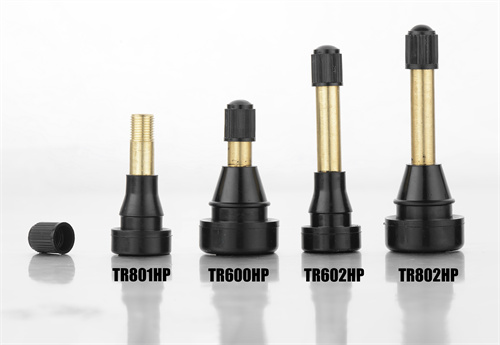
TRHP-series commercial truck rubber TPMS valve – snap-in format with high-pressure tolerance for steer and light-drive positions.
Two Valve Stem Methods, One Fleet Decision
Fleet managers do not buy valve stems by the piece – they buy uptime. The valve stem sits inside the wheel, takes the inflation pressure every time the tire moves, and quietly sets the maintenance loop for the next three to six years. Picking between metal clamp-in and rubber snap-in valve stems is rarely a question of which one is “better”. It is a question of which method lines up with the duty cycle, the pressure ceiling, the TPMS plan, and the retread loop of a specific wheel position.
Ningbo Fortune Auto Parts (Fortune Wheel Parts) has been supplying commercial-tire valve stems and TPMS service kits to global aftermarket buyers since 1996, with a working set of valve certifications covering TR413, EPDM rubber, and full QA reporting.1 Both clamp-in and rubber snap-in variants sit inside that range, and both are routinely specced for long-haul tractors, urban delivery trucks, and trailers. The Fortune Wheel Parts commercial valve stem lineup draws on the same engineering base.
The clamp-in method fixes a metal stem into the wheel using a threaded grommet and nut that compresses against the rim hole. The rubber snap-in method relies on an elastomeric grommet that pulls the stem through the rim hole and holds it under friction. The two methods look similar on the outside and behave very differently once the wheel sees high pressure, sustained heat, and three retread cycles.
For readers comparing valve stem specs against vehicle and component standards, the SAE J2657 commercial tire valve stem standard and the related SAE J1637 for passenger and light-truck valves are the two reference documents that the Fortune Wheel Parts documentation references most often.
Clamp-In vs Snap-In: The 30-Second Fleet Decision Snapshot
If a fleet manager has thirty seconds to decide on a standard for a specific wheel position, the snapshot below is the table to keep open. The full reasoning lives in the next section; this one is for the parts room and the PM stand-up.
| Decision Driver | Metal Clamp-In | Rubber Snap-In |
|---|---|---|
| Best-fit wheel positions | Drive, trailer, multi-axle spread, wide-base | Steer, urban delivery, light-duty trucks |
| Cold-inflation pressure ceiling | 130-150 psi standard; up to 200 psi for high-pressure variants | 100-130 psi typical; tight margin above 130 psi |
| Heat tolerance at the wheel | High – metal dissipates brake and road heat | Medium – elastomer softens at sustained high temperature |
| TPMS sensor pairing | Clamp-in TPMS sensors, compact wheel package | Snap-in TPMS sensors banded to stem, taller package |
| Retread loop behaviour | Re-used through multiple retread cycles with new core | Usually replaced at every retread (grommet compression set) |
| Field replacement speed | Slower – torque procedure required | Faster – pull-and-snap, no torque tool |
Fleet Application x Valve Stem Method Match Table: 8 Scenarios
This is the core of the article. The matrix below covers eight commercial-truck duty cycles that fleet managers see in real PM logs and tire-budget reviews. Use it as the starting point before any conversation with a valve stem supplier about throughput, lot size, or per-piece pricing.
| Duty Cycle | Typical Wheel Position | Pressure Range | Preferred Valve Stem Method | Why |
|---|---|---|---|---|
| Long-haul tractor | Drive + trailer | 100-130 psi cold | Metal clamp-in | Retread loop, sustained highway heat, TPMS-ready. |
| Urban last-mile delivery | Steer + drive | 80-110 psi cold | Rubber snap-in | Lower pressure ceiling, fast field replacement on shop turn. |
| Refrigerated cold-chain | Trailer | 100-120 psi cold | Metal clamp-in | Cold-side condensation and metal-to-rubber interface favours clamp-in. |
| Multi-axle spread trailer | Spread axles | 110-130 psi cold | Metal clamp-in | Spread-axle load cycling is unforgiving on elastomer grommets. |
| Wide-base single trailer tire | Trailer | 120-150 psi cold | Metal clamp-in high-pressure variant | Wide-base tires run the upper end of the cold-inflation window. |
| Construction and quarry dump | Drive + steer | 90-130 psi cold | Metal clamp-in | Off-road vibration and shock load shorten elastomer life. |
| Mining and heavy-haul | Drive + trailer | 100-150 psi cold | Metal clamp-in high-pressure variant | Heavy-haul rim holes take sustained high pressure and heat. |
| Hazmat and tanker | Trailer | 110-130 psi cold | Metal clamp-in | Tanker thermal cycling and DOT inspection cadence favour the sturdier mounting. |
The matrix above is a starting point, not a substitute for a wheel-position audit. Two trucks in the same fleet – for example a regional-haul tractor and an urban delivery truck – can still settle on different standards once the PM data is in.
Pressure Rating and Heat Tolerance: The Hidden Tiebreaker
Inside the same fleet, two wheel positions can sit at very different points on the pressure and heat curve. Cold inflation pressure is the easy number to read off the tire data book; sustained heat at the wheel is the harder one to track but the more decisive one for valve-stem life.
The general rule is straightforward. Metal clamp-in valve stems carry cold inflation pressures from 130 psi up to 200 psi for high-pressure variants used on wide-base and heavy-haul applications. Rubber snap-in valve stems on commercial trucks are typically rated to 100-130 psi, which is enough for most steer and light-drive positions but tight at the upper end of what modern wide-base trailer tires run. The transition between the two methods usually happens somewhere around 120-130 psi cold inflation, depending on the wheel and the rim hole spec.
Heat at the wheel is the less obvious tiebreaker. Brake heat, road heat, and sun-soaked yard storage all push the wheel-side temperature well above ambient. Metal dissipates that heat away from the grommet and the sealing surface; elastomer softens as the temperature climbs and recovers only partially on cool-down. Over many heat cycles, a rubber snap-in grommet takes a permanent compression set, which is why fleets running three or more retread cycles per tire routinely re-use a clamp-in valve stem and replace a rubber snap-in at every retread.
Two side notes that often get missed:
- Wheel material. Aluminium wheels conduct heat faster than steel wheels, which slightly favours rubber snap-in on aluminium steer positions and clamp-in on steel drive/trailer positions where heat dissipates more slowly into the brake drum.
- Yard storage. Trailers parked in direct summer sun see sustained elevated wheel temperatures even when the truck is not moving. Fleets with southern-yard exposure should standardise on clamp-in across all trailer positions.
TPMS Compatibility: How Each Method Pairs with Sensors
TPMS sensor mounting changes the valve-stem decision more than most fleet managers expect. The sensor has to be physically supported by the stem, has to stay balanced at highway speeds, and has to be replaceable without a wheel-off procedure.
Clamp-in valve stems pair naturally with clamp-in TPMS sensors. The sensor threads onto the metal stem and clamps in place with the same torque procedure as a standard cap-and-core change. The wheel package stays compact, which is the format most commercial TPMS suppliers (including the aftermarket TPMS service kits that Fortune Wheel Parts supplies under the F-series numbering) ship in.
Rubber snap-in valve stems can also carry TPMS sensors – the sensor bands onto the stem and the assembly pulls through the rim hole together. The trade-off is a taller overall package and a slightly higher sensor replacement cost, because the entire stem is replaced along with the sensor. Fleets running a mixed snap-in/TPMS combination often standardise on a single snap-in TPMS supplier to keep the sensor SKUs under control.
The procurement rule of thumb is to decide the TPMS plan first, then choose the valve stem. A fleet that has decided to retrofit TPMS across the trailer fleet will rarely end up specifying rubber snap-in across the same trailers, because clamp-in TPMS is simpler, cheaper per sensor, and easier to replace in the field.
Total Cost of Ownership: Lifetime Cost per Valve Stem
Per-stem price is the visible number on the quote. Lifetime cost is what shows up in the budget two or three years later, once the first retread loop has run. The two methods behave very differently across the TCO line items.
A simple five-line TCO model for a commercial-truck valve stem:
- Per-stem purchase price. Clamp-in typically costs slightly more per piece than rubber snap-in at the same quantity break.
- Labor per install. Rubber snap-in is faster to install at the bench. Clamp-in takes a torque procedure but adds no extra time once the technician is familiar with it.
- Retread handling. Clamp-in stems are removed and re-installed with each retread. Rubber snap-in stems are usually replaced at each retread, so the second- and third-cycle expense is dominated by the new stem cost.
- Service call cost. A roadside leak from a worn snap-in grommet is a service-call event; a leak from a clamp-in stem is usually a cap-and-core replacement. The dollar difference per event is several hundred dollars in service-call cost.
- Premature-tire loss. A slow leak that goes unnoticed for a shift can destroy a tire. Valve-stem choice has a measurable impact on premature-tire loss rates across the fleet.
Fleets that run three or more retread cycles on each tire – which is the long-haul default in most North American and Australian fleets – usually find clamp-in more cost-effective across the full loop, even at a slightly higher per-piece price. Fleets running one or two retread cycles – common in regional and urban duty – often find rubber snap-in competitive, especially on steer positions where the heat and pressure are lower. For the supplier-side context, Dill Air Controls and the related commercial-valve product lines from Bendix provide useful North-American reference points on retread-loop valve-stem management.
For TPMS-equipped trailers, the TCO calculation should also include the sensor cost. TPMS sensor selection and valve-stem selection go together; pairing a clamp-in stem with a snap-in sensor doubles the parts inventory for the same wheel position and is rarely worth the savings on either side.
Fortune Wheel Parts Commercial Valve Stem Lineup: Built for Fleet Demands
The Fortune Wheel Parts commercial valve stem line draws on Fortune Wheel Parts’ valve engineering base, with certifications covering TR413, EPDM rubber, and full QA reporting across the production line.2 Both clamp-in and rubber snap-in variants are stocked for fleet buyers, and the line is sized to support both one-piece purchase orders and annual fleet contracts.
The lineup is built around three fleet-facing configurations:
- Standard commercial clamp-in for drive and trailer positions, rated to the cold-inflation ceilings described in the snapshot table.
- High-pressure clamp-in for wide-base trailer tires and heavy-haul applications, with the upper pressure rating described earlier.
- Rubber snap-in commercial for steer and urban delivery positions, rated to the lower pressure ceiling and designed for fast field replacement.
Across all three configurations, the TPMS-ready variants use the same sensor SKUs that the F-series TPMS service kits cover, which keeps the in-service parts inventory predictable across the fleet. Buyers running a TPMS retrofit can walk through the matching options with the Fortune Wheel Parts engineering team via the contact channel to confirm the exact stem-to-sensor pairing for their wheel spec.
For broader context on commercial-tire TPMS retrofit programmes, the Tire Industry Association and the Truckload Carriers Association both publish periodic fleet-side guidance that lines up with the Fortune Wheel Parts specification approach. Fleets with stricter SAE documentation requirements can reference the SAE J2657 commercial tire valve stem standard directly. For TPMS sensor pairing context, the Continental VDO aftermarket TPMS resources and the ZF commercial vehicle systems documentation cover the sensor-side interface that lines up with the Fortune Wheel Parts TPMS-ready variants.
Fleet Procurement Checklist: 12 Questions Before Ordering
Before signing a fleet valve-stem purchase order, the procurement side should be able to answer twelve questions. Most of them fall out of the duty-cycle matrix above; the rest are practical PM-loop questions.
- What is the dominant duty cycle across the fleet – long-haul, regional, urban, or mixed?
- What is the typical cold-inflation pressure for drive, trailer, and steer positions?
- Is the fleet running wide-base single tires or dual-fitment conventional tires?
- How many retread cycles does each tire typically run before scrap?
- Is TPMS already in service, being retrofitted, or not planned?
- If TPMS is in service, is it clamp-in or snap-in sensor format?
- Are aluminium or steel wheels used across the fleet?
- What is the typical ambient temperature range for trailer storage yards?
- Are any wheel positions hazmat, refrigerated, or heavy-haul duty?
- What is the per-stem cost ceiling in the budget line, in USD?
- What is the field-replacement loop – PM interval, tire-change interval, or both?
- Does the supplier offer a fleet-side trial order with a returnable remainder?
If the answers lead to clamp-in across drive and trailer, the next step is to confirm the high-pressure variant for any wide-base or heavy-haul positions. If they lead to rubber snap-in for steer, the next step is to confirm the TPMS pairing format for steer positions if TPMS is in scope. Fortune Wheel Parts’s Commercial Valve Stem page documents both configurations and the wheel-position scope each one serves. For a broader view of how Fortune Wheel Parts approaches commercial-tire valve specification, the TPMS Sensor page covers the matching sensor SKUs, and the Contact Fortune Wheel channel supports fleet-side trials and annual contract quotes.
Why This Match-Table Approach Beats Generic Spec Sheets
Generic valve-stem spec sheets usually lead with thread spec and pressure rating. Thread spec is downstream of the wheel-position choice, and pressure rating follows from the duty cycle. The duty cycle is the upstream gate, which is why the match table sits at the centre of this article rather than at the end.
Fleet managers who start with thread spec often end up over-specifying the trailer position to compensate for a stem that is fighting the wrong pressure window. Fleet managers who start with the duty-cycle match end up with a stem that fits the wheel position, a TPMS pairing that matches the sensor SKUs already in service, and a retread loop that handles three or more cycles without surprise replacement. The cumulative effect is lower per-tire-cost, fewer roadside leak events, and easier PM scheduling across the fleet.
A second gain is what fleet procurement teams call “second-source flexibility”. When a stem is specified around a duty-cycle match rather than a single part number, the engineering team can swap a vendor at the parts level without re-validating the upstream wheel and TPMS plan. That flexibility shows up during multi-vendor procurement cycles, where the original supplier may not be the cheapest source for the second or third year of the contract.
For fleets running mixed duty cycles, the match-table approach also makes maintenance predictable. Clamp-in stems fail in known ways – cap-and-core replacement, occasional re-torque, predictable retread loop. Rubber snap-in stems fail at the grommet, usually toward the end of a heat cycle or after a cold-soak event. Both failure modes can be put on a preventive schedule; the duty-cycle choice sets the schedule.
Frequently Asked Questions
Q: Can I mix clamp-in and rubber snap-in valve stems on the same truck?
Yes for tractors pulling mixed fleets, but each wheel position should keep one method. Mixing on the same axle is uncommon – fleet managers usually standardise per duty cycle (e.g., clamp-in on drive and trailer, rubber snap-in on steer where heat and pressure are lower).
Q: What is the maximum cold inflation pressure each method handles?
Metal clamp-in valve stems are rated for cold inflation pressures of 130-150 psi on commercial truck and trailer applications, and many high-pressure versions extend to 200 psi for load-range L and specialty applications. Rubber snap-in valve stems on commercial trucks are typically rated to 100-130 psi, which is sufficient for most steer and light-drive positions but tight for modern wide-base trailer tires.
Q: How does the choice change when adding TPMS sensors?
TPMS sensor mounting adds metal-to-rubber interface considerations. Clamp-in valve stems pair cleanly with clamp-in TPMS sensors (the most common commercial format). Rubber snap-in valve stems require a snap-in TPMS sensor banded to the stem. Snap-in TPMS tends to cost more and adds height; clamp-in TPMS keeps the wheel package compact, which is why most fleets with TPMS standardise on clamp-in.
Q: What is the typical service life of each valve stem type on a commercial truck?
On long-haul duty, both methods typically last through the first tire life cycle (about 18-30 months) and are inspected at each PM. On multi-lease retread cycles (typical for fleets running three or more tire lives), clamp-in valve stems are routinely re-used with new cores; rubber snap-in valve stems are usually replaced at every retread because the rubber grommet takes a compression set. The lifetime cost equation therefore depends on retread count, not just the per-stem price.
Post time: Aug-31-2026