



As the manager of a company that has manufactured wheel balance weights, tire valves, and valve accessories since 1996, I have watched the aftermarket valve stem market fragment into two distinct quality tiers: professional-grade OEM-equivalent valves built to recognized standards, and commodity rubber stems built to win on unit price alone. The gap between them is not cosmetic. It shows up in TPMS compatibility failure rates, in thermal cracking at highway speeds, and in parts that fail exactly when they should not — during the hot season, on the highway, under load.
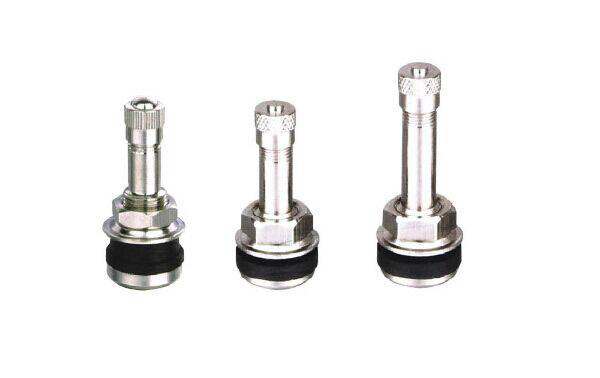
Caption: OEM Valve Stem — professional-grade OEM-equivalent valve stems from Fortune Wheel Parts, meeting OE specifications for material composition, torque ratings, and TPMS compatibility across major vehicle platforms. Learn about our manufacturing standards.
The Three Failure Modes Cheap Valve Stems Do Not Survive
When I look at return merchandise authorizations and warranty claims from shops that buy budget stems, three failure patterns dominate. Understanding these patterns is the difference between a valve stem that lasts the life of the tire and one that fails in the second heat cycle.
Thermal cracking at the seal. Standard rubber valve stems use EPDM or natural rubber compounds with limited thermal resistance. In climates where ambient temperatures regularly exceed 35°C, or in commercial fleet applications where tires run hot for extended periods, standard rubber stems begin to check and crack at the bead seal within 18–24 months. Professional-grade OE-equivalent stems use higher-specification rubber compounds rated for continuous operating temperatures up to 120°C — a specification Rubber Chemistry and Technology journal frequently cites in material performance testing for automotive sealing applications. Cheap stems are compounded to pass basic bench testing, not to survive real-world thermal cycling.
TPMS sensor damage during installation. This is the failure mode that costs shops the most money. Rubber snap-in valve stems require the valve core to be removed during installation, which means the TPMS sensor — a sensitive electronic component with a sealed battery — is exposed to mechanical stress and potential contamination during the procedure. Clamp-in metal valve stems, which are the OEM standard on most modern vehicles with direct TPMS, require careful torque application to the valve nut. If the stem is made from low-grade brass with inconsistent hardness, the clamp-in feature can deform during installation, creating an intermittent leak path that does not show up on the first fill but appears at the next service interval.
Torque failure at the core housing. The valve core thread engagement in cheap rubber stems is often molded with dimensional tolerances wide enough that hand-tightening the valve core during installation can cross-thread or deform the housing. Once that happens, the stem is compromised even if it seals initially. A properly manufactured OE-equivalent rubber stem has a brass valve core housing insert molded into the rubber body, which maintains precise thread engagement regardless of how the installer handles the core. This is one of the clearest quality markers between professional and commodity stems — if the product description does not mention a brass core housing, assume the rubber is doing all the work.
What “OEM Equivalent” Actually Means — And Why It Is Not Marketing Language
The phrase “OEM equivalent” is widely used and widely abused in the aftermarket. The shops that use it precisely mean something specific: a valve stem that meets the same material and performance specifications as what the vehicle manufacturer specified for that application, built by a manufacturer capable of documenting those specifications. In practice, this means three things.
Material composition. OE valve stems are specified by the vehicle manufacturer for a specific application. A valve stem on a light truck running 80 psi cold fill pressure in 40°C ambient needs a different compound than a valve stem on a passenger car running 32 psi. Professional aftermarket manufacturers compound their rubber to meet these application-specific requirements, not to pass a single generic specification. Industry coverage from Modern Tire Dealer consistently documents that material failure — specifically improper rubber compound selection — accounts for the majority of premature valve stem failures in commercial fleet applications.
TPMS compatibility. Since 2007, federal safety standards have required direct tire pressure monitoring systems on all new passenger vehicles sold in the United States. The TPMS sensor uses the valve stem as its mounting point, which means the valve stem must be electrically non-conductive (to prevent RF interference with the TPMS sensor antenna), mechanically stable under vibration, and compatible with the specific sensor mounting hardware. Not all valve stems meet these requirements. Generic rubber stems from bulk packaging often have conductive carbon-black loading that interferes with TPMS sensor radio frequency transmission — a problem that does not show up in any visual inspection but causes persistent TPMS warning lights after installation.
Validated fit. OE valve stems are validated against specific wheel designs, valve hole diameters, and rim materials. An OE-equivalent stem manufacturer validates fit by maintaining process capability data on valve hole sealing dimensions across production runs. Commodity manufacturers do not typically invest in this validation process, which means their stems may fit the nominal specification but show higher leak rates in production under actual service conditions.
The Cost Comparison That Actually Matters
A standard rubber snap-in valve stem for a passenger car costs in the low single digits per unit at commodity pricing. A professional-grade OE-equivalent rubber snap-in from a quality manufacturer costs more per unit — but the cost per mile of the professional-grade stem over its service life is measurably lower, primarily because it does not need to be replaced before the tire it serves reaches end of tread life.
The failure cost calculus is straightforward: if a cheap valve stem fails at 18–24 months and forces a shop to remount and rebalance the tire — even once — the labor cost alone exceeds the price difference between the cheap stem and the professional-grade stem. In commercial fleet applications where tire service intervals are tracked per mile, this calculation becomes even more compelling. Data from Automotive Fleet magazine on commercial fleet tire maintenance practices consistently identifies valve stem replacement as one of the highest-frequency unscheduled service events — a problem that is almost entirely solvable through better initial stem selection.
When the Aftermarket Stem Is the Right Call
I am not going to tell you that cheap rubber valve stems are never appropriate. There are legitimate applications where they are the right answer — and being honest about that is part of giving you a decision framework you can actually use.
Off-road and light-duty recreational vehicles. If you are mounting valve stems in farm equipment, off-road racing vehicles, or trailers that see seasonal use and low annual mileage, the cost premium of a professional-grade stem is hard to justify against the actual risk. For these applications, a standard rubber stem from a known brand — not a no-name bulk package — is an acceptable call.
Emergency replacement in non-TPMS applications. For older vehicles predating the TPMS mandate, where the vehicle does not have a direct TPMS sensor, a standard rubber stem as an emergency replacement is defensible — provided it is replaced with a proper stem at the next scheduled service.
Cost-sensitive fleet operators with short replacement cycles. If your fleet replaces tires on a 2–3 year cycle regardless of tread depth — common in some regional delivery operations — the value case for premium valve stems diminishes. Calculate your actual replacement cycle before paying the premium.
The Decision Framework
Step 1: Does the vehicle have TPMS? If yes, go to Step 2. If no, you can use a standard rubber stem but still should not use the cheapest bulk packaging — the difference in stem quality is still meaningful for seal longevity.
Step 2: Is the vehicle equipped with a clamp-in metal valve stem (OE standard on most post-2010 vehicles with direct TPMS)? If yes, use only a TPMS-compatible OE-quality metal clamp-in stem. Rubber snap-in stems are not appropriate for these applications regardless of price. The TPMS sensor mounting integrity depends on the clamp-in seal, and a rubber stem will not provide the mechanical stability required.
Step 3: Is the vehicle in a high-thermal environment or a commercial application? If yes, the case for professional-grade OE-equivalent stems is strongest. The additional cost per stem is modest; the failure cost in these conditions is highest.
Step 4: What is the tire replacement cycle on this application? If it is longer than 3 years, invest in the better stem. If it is shorter, calculate the actual cost per mile before deciding.
What to Ask Your Supplier Before You Buy
Any reputable valve stem supplier should be able to answer these four questions before you place an order. If they cannot, that is your signal to find a different supplier.
First: What rubber compound specification does this stem use, and what is its continuous operating temperature rating? A quality supplier will have this data in their product technical datasheet.
Second: Is this stem TPMS-compatible, and has it been tested for TPMS sensor RF transmission compatibility on the specific vehicle platforms you service? SAE International maintains TPMS interoperability standards that professional valve stem manufacturers validate against. If the supplier cannot reference SAE TPMS standards compliance, be cautious.
Third: Does this stem include a brass valve core housing insert, or is the stem body doing all the sealing and thread engagement work? Brass housing inserts are standard in OE-quality stems and the clearest single indicator of stem quality.
Fourth: What is your published failure rate or warranty return rate on this specific product? Professional manufacturers track this data. If the supplier does not publish it, ask directly — and be skeptical if they cannot provide it.
We manufacture and stock OE-quality tire valve stems for both TPMS and non-TPMS applications at About Fortune Wheel Parts. Our technical data sheets document material compound specifications, temperature ratings, and TPMS compatibility for each stem platform we produce. If you are currently running commodity valve stems and tracking your failure rates, the comparison is worth doing.
Conclusion
The “are cheap valve stems worth the risk” question is not answerable in the abstract. It depends entirely on the application: the vehicle, the TPMS configuration, the thermal environment, and the service interval expectations of the vehicle operator. For high-TPMS vehicles in demanding thermal environments, the risk of cheap valve stems is very real and the failure costs are high. For older non-TPMS vehicles in benign applications, the calculus is different.
The most expensive valve stem is the one you have to replace before the tire it serves reaches end of life. For professional applications, that is the only math that matters.
Frequently Asked Questions
Why do cheap rubber valve stems fail so much faster than OEM-quality stems?
Cheap valve stems are compounded to pass basic bench testing at minimal cost, not to survive real-world thermal cycling, vibration, and chemical exposure. OE-quality stems use higher-specification rubber compounds rated for continuous operating temperatures up to 120C, with validated compound specifications for specific vehicle applications. The most common failure mode — thermal cracking at the bead seal — appears in 18-24 months in hot climates with budget stems, while OE-quality stems in identical conditions typically last the life of the tire.
Are rubber snap-in valve stems compatible with TPMS sensors?
Rubber snap-in valve stems can be used with TPMS sensors in some applications, but they must be specifically designed and validated for TPMS compatibility. Key requirements include electrically non-conductive rubber compounds (to avoid RF interference with the TPMS antenna), proper valve core housing geometry, and validated fit for the specific sensor mounting hardware. Not all rubber stems meet these requirements — generic bulk-packaged stems frequently have conductive carbon-black loading that causes persistent TPMS warning lights after installation. Always verify TPMS compatibility before using any valve stem on a TPMS-equipped vehicle.
What is the difference between clamp-in and snap-in valve stems?
Clamp-in valve stems are the OEM standard on most post-2010 vehicles with direct TPMS. They are metal (typically brass or nickel-plated brass) and mechanically clamped into the wheel’s valve hole with a sealing washer and retaining nut. Snap-in valve stems are rubber, pushed through the valve hole and sealed by the elasticity of the rubber against the valve hole wall. Clamp-in stems provide superior mechanical stability and are required for most direct TPMS applications. Snap-in stems are used primarily on older vehicles and some non-TPMS applications. Using a snap-in stem on a vehicle requiring a clamp-in is not safe and will compromise TPMS function.
How often should valve stems actually be replaced?
There is no universal interval — the answer depends entirely on the stem material quality, the thermal environment, and whether the vehicle has TPMS. As a rule of thumb: for standard EPDM rubber stems in temperate climates, budget 3-4 years before proactive replacement as part of a major tire service. For premium rubber stems in demanding thermal environments, they should last the life of the tire if installed properly. For metal clamp-in stems, they typically last the life of the wheel if torque was applied correctly at installation. The best indicator is your actual failure rate data — track it per stem type and replace accordingly.
Can I use any rubber valve stem for my trailer?
For trailers, especially boat trailers and personal utility trailers that see seasonal use and are stored outdoors, standard rubber valve stems are typically acceptable — but still avoid the cheapest bulk packaging you can find. Trailer tires frequently sit for extended periods, which creates different aging conditions than highway use. A known-brand standard rubber stem from a reputable supplier is adequate for most trailer applications. If your trailer has TPMS, you still need a TPMS-compatible stem regardless of the vehicle type.
What does a brass valve core housing insert do?
A brass valve core housing insert is a precision-machined brass component molded into the body of a rubber valve stem at the valve core thread location. It does two critical things: maintains precise thread engagement for the valve core regardless of rubber durometer variation, and provides a hard sealing surface for the valve core seat. Stems without brass inserts rely entirely on the rubber compound to maintain thread engagement, which degrades over thermal cycles and aging. This is the single clearest quality marker between professional and commodity valve stems — if the product description does not mention a brass housing insert, it probably does not have one.
Is it worth paying more for nickel-plated brass valve stems?
Nickel-plated brass valve stems cost more than raw brass primarily because the plating provides corrosion resistance in coastal environments and in areas where road salt is used heavily in winter. For vehicles operated in coastal regions or northern climates with winter road salt exposure, the corrosion resistance is worth the premium — a corroded valve stem at the service bay is a significant labor cost and a customer experience problem. For vehicles in benign environments, raw brass clamp-in stems are adequate and the nickel plating cost premium is not justified.
How do I know if my cheap valve stems are causing TPMS warning lights?
A TPMS warning light that persists after confirming all tire pressures are correct, and that does not respond to standard TPMS relearn procedures, is frequently caused by TPMS sensor interference from a non-compatible valve stem. The fix is to replace the current valve stems with known TPMS-compatible stems from a quality manufacturer, then re-perform the TPMS relearn procedure. If the light persists after stem replacement and relearn, the TPMS sensor itself may have been damaged during the previous stem failure. Tracking which stem brands you are running and correlating them with TPMS-related comebacks is the most effective way to identify whether your current stems are the source of the problem.
About the Author
Bobby — Manager, Ningbo Fortune Auto Parts Co., Ltd.
Founded in 1996, Fortune is now one of the leading professional manufacturers of wheel balance weights, tire valves, and tool accessories in China.
Professional valve stem manufacturer for TPMS and non-TPMS applications | www.fortunewheelparts.com
Post time: Aug-24-2026