



If you are a wheel weight importer, every bulk wheel weight order carries more risk than a simple price comparison can reveal. Wheel weights are not just small consumables—they are essential parts of tire balancing, helping correct uneven mass distribution that causes vibration, steering shake, and uneven tire wear. For tire shops, distributors, fleet service providers, and aftermarket buyers, the right procurement checklist can reduce returns, improve installation performance, and protect brand reputation.
This guide explains what to verify before placing a wheel weight order, how to match product type to application, and which details matter most for B2B purchasing. It is designed for importers serving North American tire shops, repair chains, and distributors who need standardized packaging, dependable quality, and clear SKU definitions.
Why Wheel Weights Require a Stricter Procurement Process
Wheel weights are small, but their performance directly affects vehicle ride quality and customer satisfaction. In aftermarket operations, a mismatch in material, fitment, adhesive strength, or segment design can quickly turn into rework, warranty claims, or product rejection. That is why procurement should focus on more than unit cost.
- Functional accuracy: The product must provide the balancing correction required by the wheel and tire assembly.
- Fitment compatibility: Different rims, wheel lips, and material types require different wheel weight formats.
- Regulatory sensitivity: Markets concerned with environmental compliance often prefer zinc alloy wheel weights as a lead-free alternative.
- Operational consistency: Bulk buyers need standardized weights, packaging, and labeling for efficient inventory control.
Step 1: Confirm the Wheel Weight Type You Actually Need
Before placing any order, define which wheel weight format your customers use most often. The two most common categories are clip-on wheel weights and adhesive wheel weights.
Clip-On Wheel Weights
Clip-on styles are commonly used on steel wheels. They rely on the rim edge structure for installation, so the clip profile must match the wheel flange shape. If the clip is too loose, the weight may fall off; if too tight, installation becomes difficult and may damage the rim.
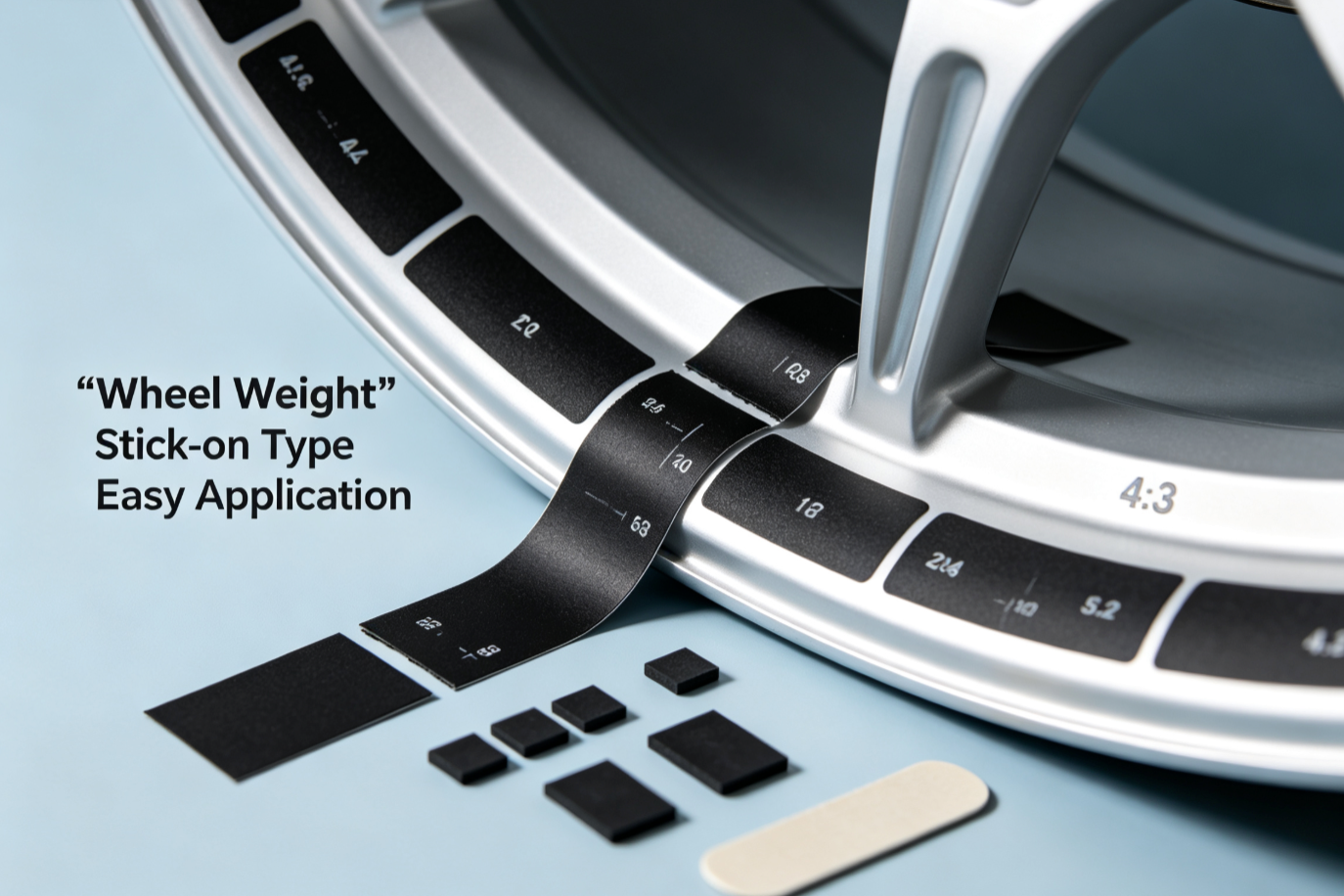
Adhesive Wheel Weights
Adhesive or stick-on weights are more common on aluminum wheels, especially on the inner barrel where a clean appearance matters. For these products, tape quality and surface adhesion are critical. Poor adhesive performance is one of the most common causes of field failure.
Step 2: Match Material to Market and Compliance Needs
Wheel weight material affects cost, environmental positioning, and customer preference. For a wheel weight importer, material selection is often the difference between an easy sell and a slow-moving SKU.
Lead Wheel Weights
Lead weights remain widely used in traditional repair environments because of their proven performance and broad familiarity. When sourcing lead products, check the stability of:
- Specification consistency
- Tape quality for adhesive models
- Coating durability and corrosion resistance
- Segment accuracy and break-off performance
Zinc Alloy Wheel Weights
Zinc alloy weights are widely viewed as a lead-free alternative. They are a strong choice for environmentally sensitive or regulation-driven markets. If you import zinc products, confirm that the supplier maintains consistent density, coating quality, and segment separation accuracy across the entire production batch.
Step 3: Review Segment Weight Design and Balance Precision
One of the most overlooked items in a procurement checklist is segment weight design. The way a wheel weight is divided into segments determines how precisely technicians can balance a wheel and how flexibly they can apply the correction.
For example, finer segment divisions allow more exact balancing on passenger vehicles, while larger segments may be acceptable for certain service applications. Ask your supplier for the following:
- Segment size options
- Total available weight range
- Break-off behavior and ease of separation
- Dimensional tolerances per segment
A clear segment system also supports SKU standardization, which is especially important for aftermarket channels that depend on fast inventory turnover.
Step 4: Verify Fitment by Wheel Type and Rim Structure
Wheel selection is never one-size-fits-all. Different vehicle platforms and rim structures affect which product will perform properly. A strong procurement process should evaluate fitment by several dimensions:
- Wheel material: Steel vs. aluminum wheel applications
- Rim edge shape: Flange profile, lip depth, and hook geometry
- Balance requirement: The amount of correction typically needed by the customer segment
- Installation method: Clip-on speed versus adhesive placement precision
For B2B purchasing, product pages should clearly list model, application, vehicle compatibility, packaging, and installation advice. This reduces confusion and helps distributors and shop buyers order faster.
Step 5: Inspect Tape, Coating, and Adhesion Performance
For adhesive wheel weights, the tape system is just as important as the metal body. Poor adhesive quality can cause weights to detach during temperature changes, moisture exposure, or cleaning. Before ordering in bulk, request documentation or samples that demonstrate adhesive reliability.
Check these points carefully:
- Initial tack strength
- Long-term adhesion under heat and cold
- Clean removal behavior, if needed
- Compatibility with common wheel finishes
- Protective coating stability against corrosion and abrasion
Step 6: Define Packaging and SKU Standards Before You Buy
In the automotive aftermarket, standardized packaging is essential. Tire shops and distributors rely on simple, repeatable SKU logic to manage inventory, shelf space, and replenishment. For a wheel weight importer, unclear packaging creates picking errors and slows warehouse operations.
When reviewing a supplier, confirm:
- Pieces per strip, box, and carton
- Weight increments per SKU
- Label format and barcode readiness
- Retail-friendly and bulk packaging options
- Carton durability for international shipping
Well-structured packaging also supports easier product listing on distributor portals and improves search visibility when buyers look for exact model matches.
Step 7: Request Samples and Test Real Installation Behavior
Before confirming a bulk wheel weight order, always test samples in real shop conditions. Lab data is useful, but field behavior matters more. Ask your internal team or a trusted shop partner to evaluate:
- Clip retention during installation
- Adhesive sticking strength after wheel cleaning
- Ease of segment separation
- Corrosion performance after exposure
- Compatibility with common balancing workflows
If your customers use wheel balancers regularly, the product must work smoothly with standard service processes and not slow down the technician.
Step 8: Check Supplier Capability for B2B and Cross-Border Orders
Importers need more than a product—they need a supplier that can support documentation, repeat orders, and consistent manufacturing. For North American buyers in particular, the ideal partner should understand the needs of tire shops, repair chains, distributors, and fleet maintenance operations.
Evaluate the supplier on these areas:
- Stable production capacity for repeated bulk orders
- Clear model naming and SKU system
- Technical support for product selection
- Ability to provide product pages with model, use case, fitment, and packing details
- Quality control consistency between batches
Step 9: Make Sure Your Portfolio Covers Related Shop Needs
Many wheel weight importers also supply related wheel-end or service products. This can improve order size and customer retention. A full aftermarket catalog may include tire valve stems, TPMS service kits, tire repair materials, tire pressure gauges, tire changers, wheel balancers, jacks, and stands. These products help shops consolidate purchasing through a single supplier.
For example, tire valves and TPMS components are safety-critical parts, so OE-quality expectations are high. TPMS service kits often include valve stems, seals, grommets, nuts, and related consumables, and the correct kit must match the sensor brand or vehicle platform. Offering these adjacent items alongside wheel weights can strengthen your B2B account strategy.
Wheel Weight Procurement Checklist
Use the following checklist before submitting your next order:
- Confirm whether the customer needs clip-on or adhesive weights
- Match the product to steel or aluminum wheel applications
- Choose lead or zinc alloy based on market and compliance needs
- Review segment weight design and balancing precision
- Inspect tape, coating, and corrosion resistance
- Verify rim fitment and installation method
- Check packaging, SKU structure, and barcode labeling
- Test samples in real shop conditions
- Confirm supplier stability for repeat bulk orders
- Ask for product pages with model, use, fitment, packing, and install guidance
How to Reduce Risk on Your First Bulk Wheel Weight Order
If you are placing a first-time purchase with a new factory, start with a smaller trial shipment before scaling. This helps you validate product quality, packaging, and customer response. It also gives you time to refine your SKU structure and marketing language.
A practical approach is to order a mix of the most common sizes and formats, then track:
- Installation success rate
- Customer feedback from tire shops
- Return or complaint frequency
- Inventory turnover by SKU
- Packaging damage during shipping
FAQ
What should a wheel weight importer check first?
Start with application type, including clip-on or adhesive, and confirm whether the product is for steel or aluminum wheels. Then review material, segment design, and packaging.
Why are zinc alloy wheel weights important?
Zinc alloy wheel weights are a common lead-free alternative for markets that prioritize environmental compliance or restrict lead usage.
What makes adhesive wheel weights fail?
Most failures come from weak tape quality, poor wheel surface preparation, contamination, or coatings that do not hold up under temperature changes.
Why is segment weight design important?
Segment design affects balancing precision and installation flexibility. The more consistent the segment structure, the easier it is for technicians to apply the correct correction.
Should I request samples before a bulk wheel weight order?
Yes. Samples help you test fitment, adhesion, coating, and real-world installation behavior before committing to a larger order.
What other products do wheel weight customers often buy?
Many of the same buyers also purchase tire valve stems, TPMS service kits, tire repair materials, tire pressure gauges, wheel balancers, tire changers, jacks, and stands.
Final Thoughts
For a wheel weight importer, procurement success depends on matching product design to real shop needs. By checking type, material, fitment, segment design, adhesive performance, packaging, and supplier reliability, you can reduce ordering mistakes and improve the performance of every bulk wheel weight order.
If you serve tire shops, distributors, or fleet maintenance accounts, a disciplined procurement checklist is one of the most effective ways to protect quality, improve turnover, and build a dependable aftermarket supply chain.
Post time: Sep-30-2026