



A TPMS valve stem is one of the cheapest parts in a tyre and one of the most expensive mistakes you can buy in volume. The pages that rank for this keyword are price lists with no part numbers and no torque values, so this is the guide we wanted and could not find: what actually sits inside the unit price, and how to make two quotations describe the same object.
- A TPMS valve stem bulk buy is priced on six line items, and only one of them is the piece itself: the sensor-platform cross-reference, the rubber compound, the metal stem, the leak test, the packaging unit, and the certification file.
- Never compare two quotations until the OE service kit numbers are on both of them, because the published nut torque on the same platform ranges from 11 in-lbs (2 Nm) to 71 in-lbs (8 Nm) and the valve core torque is 2 to 5 in-lbs (0.23 to 0.56 Nm).
- The single biggest consolidation lever in a service kit programme is the F930K, which we publish as working for 75% of the rubber snap-in valve stem TPMS sensors in the market.
- Fortune does not publish a price list, and we would rather explain why than let you compare a quoted configuration against a catalogue default and conclude that one of us is wrong.
A TPMS valve stem bulk buy is decided by three things that a price list never shows you: the sensor-platform cross-reference, the material stack inside the stem, and the packaging unit count. Get those three right and the unit price follows fairly predictably. Get them wrong and you can buy a cheap stem that will not seal, a cheap stem that will attenuate the sensor radio signal, or a cheap stem that costs more per piece once the freight is counted. Because the search results for this keyword are marketplace listings with no OE part numbers and no torque values, so a quotation comparison without the cross-reference on both sides is not a comparison at all, it is a race to the cheapest number.
I have answered a lot of these enquiries, and the recurring problem is not that buyers cannot find a supplier. It is that buyers receive four quotations that look like the same product and are not. Two of them are quoting a metal clamp-in stem against a rubber snap-in stem. One is quoting a natural rubber body where the rest of the market has moved to EPDM. One has no cross-reference at all, which usually means the part was selected by appearance. We build tyre valves in Ningbo for OE and aftermarket customers, and our position is simple: we would rather show you the spec and let you compare properly, because a mis-matched stem comes back as a customer complaint and a mis-matched stem in a bulk programme comes back as a thousand of them.
What Actually Sits Inside a TPMS Valve Stem Price?
Six line items sit inside a TPMS valve stem price, and they are the sensor-platform cross-reference, the rubber compound, the metal stem, the leak-test scope, the packaging unit, and the certification file. The stem itself is a small part of the total, which is why a quote that looks like a good deal can still be a bad deal. Let me take them in the order they usually matter.
1. The sensor platform cross-reference
This is the largest driver of the price difference and the one most often left out of the enquiry. A TPMS valve stem is not a generic valve. It has to hold, seal and electrically mate with one specific sensor platform, and the industry identifies those platforms by service kit number. Because the same nominal product can be cross-referenced to a Schrader number, a DILL number and a NAPA number, and because two suppliers quoting the same application can build very different parts inside it, so the cross-reference is the only reliable way to make two quotations describe the same object. We publish ours on every product page: the TPMS-1 maps to Schrader kit 20043 for the VDO TG1D, the TPMS-2 maps to Schrader kit 20635 and DILL kit VS-65 for the TRW Version 4 sensor, and the TPMS-4 maps to Schrader kit 20046 and DILL kit VS-20 for the Schrader High Speed platform.
There is a commercial reason to insist on this beyond accuracy. A quote without a cross-reference cannot be compared, cannot be re-quoted against a different parc, and cannot be checked against what actually arrives. Every part we publish carries its reference number precisely so that our customers can put it on a purchase order and use it to line up a competitor’s answer.
2. The rubber compound
The rubber compound is a life-of-part decision, not a cost line, and EPDM is the standard for a reason. A rubber valve stem is exposed to weather, heat, cold and road chemicals every day of its life, and a natural rubber body ages and hardens faster than EPDM. We publish our TPMS-2 with qualified EPDM rubber as a stated feature, and our EPDM explanation goes into the ageing behaviour in more detail. Because rubber valves age through weather exposure rather than through use, so we recommend replacing the valve every time a tyre is changed, and because that replacement interval is a consumable event, so the compound decides how many times a customer has to come back to you.
A cheap natural rubber stem can be a few percentage points cheaper on the piece and can cost you a round of comeback business. We have seen buyers reverse that decision once they had the returns data, and we are happy to be asked for the material certification because we supply it.
3. The metal stem inside the valve
The metal stem is the part of the valve that has to carry the sensor’s radio signal without attenuating it, and it is the easiest thing in the whole assembly to substitute without telling anyone. Inside the rubber body there is a brass, copper or aluminium stem that controls airflow and that the sensor mounts onto. We have measured signal loss across those three rod materials at 433 MHz and published the protocol, and the result is not a subtle difference.
Because a stem that looks identical from the outside and costs noticeably less may be attenuating the signal, so the symptom appears as a sensor fault code that no replacement sensor will clear, so the cost of a cheap stem is discovered during diagnosis rather than during goods-in. Our measurement work on copper, aluminium and brass rod is set out in our RF interference comparison. If you are comparing two quotations, ask both suppliers to name the rod material. If one of them does not answer, that is your answer.
4. The leak test and the yield behind it
Every Fortune valve is 100% leak tested before it leaves the factory, and the scope of that test is what separates a real quality claim from a marketing phrase. A 100% tested claim and a 100% passed claim are different documents. The first says every part was put on a test rig. The second says every part passed. Because a stem that passes on the line and fails in the tyre is a return, a credit and a phone call, so the cost of a weak test is paid in your customer relationships rather than in your purchase order, so the test scope is a price argument even though it does not appear on the invoice.
The same logic applies to the valve core. We have published how core tolerance affects air retention and leakage rates, because the core is the moving part that determines whether the valve holds pressure once it is set, and a loose core is a slow leak that a customer discovers weeks later.
5. The packaging unit and the freight per piece
A TPMS valve stem is light and bulky relative to its weight, so freight per piece is decided by carton volume rather than by weight, and this is usually the largest single gap between two quotations that appear to be a tie. Ask for the pieces per bag, the bags per carton and the carton dimensions, not just the carton quantity. Our own guidance on reducing packaging and freight cost on high-volume valve orders goes into the mechanics, and it is worth reading before you accept the first quote you receive.
Because two suppliers can quote an identical unit price and land a very different cost per piece once the carton volume is counted, so the freight-per-piece calculation is the cheapest negotiation you will ever do, and it is the one almost nobody performs.
6. The certification and traceability file
The certification file is not paperwork overhead, it is the evidence that lets your customer put your parts on a vehicle. We manufacture to ISO/TS16949 accreditation and we only sell OE-quality valves, because the reasoning is not negotiable: a low-quality valve can cause a tyre to deflate quickly, which makes the vehicle uncontrollable and creates a crash risk. Because a valve that leaks at speed is a safety event and not a warranty claim, so the certification is the part of the price that buys you the right to sell into programmes that need it. We have set out what documents a tyre valve manufacturer should provide before mass production, and we would rather you check ours against that list than take our word for it.
The Spec Matrix: Which Fortune Part Fits Which Sensor
Everything in the table below is published on our own product pages, and it is the reference we would want a buyer to hold every other supplier to. Note the spread in nut torque, from 11 in-lbs (2 Nm) on the F930K to 71 in-lbs (8 Nm) on the F1030K, the F1031K, the F1050K and the F7020K. Because that spread is more than threefold across platforms, so the torque is a platform identifier as much as an installation instruction, and a supplier who quotes a generic figure has not looked at the part.
| Fortune kit | Schrader | DILL | NAPA | Nut torque | Application note |
|---|---|---|---|---|---|
| F930K | 20008 | VS930 | 92-0145 | 11 in-lbs (2 Nm) | Published as covering 75% of rubber snap-in valve stem TPMS sensors in the market. |
| F1030K | 20017 | D1030K | 92-0235 | 71 in-lbs (8 Nm) | Standard service kit platform. |
| F1031K | 20017 | D1031K | — | 71 in-lbs (8 Nm) | Shares the Schrader 20017 base with the F1030K. |
| F1040K | 20023 | D1040K | — | 35 in-lbs (4 Nm) | Beru valve service kit. |
| F1050K | 20030 | D1050K | 92-0150 | 71 in-lbs (8 Nm) | Chrysler and Siemens platform. |
| F1060K | 20002 | D1060K | 92-0115 | 44 in-lbs (5 Nm) | Standard service kit platform. |
| F1070K | 20004 | D1070K | — | 62 in-lbs (7 Nm) | Standard service kit platform. |
| F1077K | — | — | — | 62 in-lbs (7 Nm) | Torque published; ask us for the cross-reference for your parc. |
| F1080K | — | D1080K | — | 35 in-lbs (4 Nm) | Standard service kit platform. |
| F1090K | 20023 | D1090K | 92-0261 | 35 in-lbs (4 Nm) | Standard service kit platform. |
| F1098K | — | D1098K | — | 35 in-lbs (4 Nm) | Service kit valve for Siemens sensors. |
| F1100K | 20032 | D1100K | 92-0215 | 35 in-lbs (4 Nm) | Standard service kit platform. |
| F1120K | 20033 | D1120K | — | 27 in-lbs (3 Nm) | Standard service kit platform. |
| F2020K | 20015 | D2020K | — | 62 in-lbs (7 Nm) | Standard service kit platform. |
| F2040K | 20019 | D2040K | 92-0205 | 35 in-lbs (4 Nm) | Standard service kit platform. |
| F7020K | — | D7020K | — | 71 in-lbs (8 Nm) | Standard service kit platform. |
The valve core torque is 2 to 5 in-lbs (0.23 to 0.56 Nm) on every kit we publish, and the rubber snap-in valve stems carry a T-10 screw torque of 12.5 in-lbs (1.4 Nm). Our installation, torque and inspection guidance covers what goes wrong when either of those is ignored, and it is worth reading next to the table rather than separately.
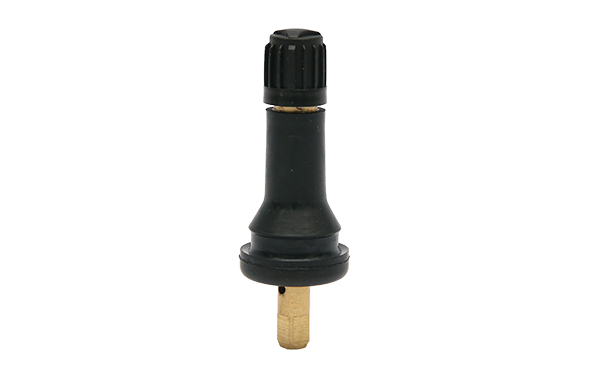
For the valve stems themselves, the four rubber snap-in models we publish are the TPMS-1 for the VDO TG1D, the TPMS-2 for the TRW Version 4 sensor, the TPMS-3AC, and the TPMS-4 for the Schrader High Speed platform. Because the cross-reference is what decides the stem and the cross-reference is published, so the specification work in a bulk buy should take minutes rather than a sourcing round trip. We would rather quote the whole platform range than quote one part and leave you to work out the rest.
How to Make Two Supplier Quotations Comparable
Two TPMS valve stem quotations become comparable only after seven things are fixed on both of them, and until then the numbers are decoration. This is the sequence we ask our own customers to run, and it is the same one we use internally when a buyer asks us to benchmark us against another supplier. Because a quotation is a description of a configuration rather than a number attached to a part, so the configuration has to be written down before the numbers can be compared.
Seven steps to a comparable TPMS valve stem quotation
- Put the OE cross-reference part number on the request for quotation, so both suppliers are building to the same platform.
- Ask for the nut torque and the core torque in both inch-pounds and Newton metres, so the part is identifiable by its installation values.
- Ask for the rubber compound and the metal stem material, so the life-of-part decision is on the record.
- Ask for the leak-test scope and a test record for the lot, not a claim in a catalogue.
- Fix the pieces per bag, the bags per carton and the carton dimensions, because freight per piece is decided by volume.
- Fix the incoterm, the destination, the payment terms and the annual volume before you look at any price.
- Then divide the landed cost by the pieces actually received, and reconcile the delivery slip against the order quantity before the invoice is paid.
Step seven is the one we insist on internally as well. Our production practice is to check the quantity on the order against the quantity on the delivery slip before every shipment, because the cost of a quantity discrepancy is not the missing pieces, it is the freight, the customs paperwork and the season you are now short of stock. A buyer who reconciles the same way on arrival is a customer we can plan production around.
Where TPMS Valve Stem Buyers Lose Money
Six pricing traps account for most of the disappointment we see in TPMS valve stem bulk programmes, and none of them is the unit price. Here is the honest list.
| Trap | What it looks like on the quotation | How to close it |
|---|---|---|
| Comparing different product classes | A rubber snap-in stem quoted against a metal clamp-in stem at the same headline price. | Fix the class in the enquiry. A clamp-in stem needs a washer, a nut and a seat, so it is a different bill of materials and a different installation. |
| Natural rubber substituted for EPDM | A quoted price that is lower and a data sheet that does not name the compound. | Ask for the compound certification. The material decides the replacement interval, and therefore the repeat business. |
| Aluminium stem in place of brass or copper | No difference on the drawing, a difference at 433 MHz. | Require the rod material in writing, and treat an unanswered question as a rejected quotation. |
| Carton volume left out of the freight | Identical unit prices and a materially different landed cost per piece. | Request the carton dimensions, then calculate the landed cost per piece yourself before you accept the price. |
| The service kit and the stem bought separately | A stem price that looks competitive and a kit price that quietly doubles the total. | Consolidate. The F930K alone is published as covering 75% of the rubber snap-in valve stem TPMS sensors in the market, so a broad parc can be carried on far fewer lines than the vehicle list suggests. |
| Quantity on the delivery slip not reconciled | A paperwork gap that surfaces as a shortage in your busiest week. | Reconcile the order quantity against the delivery slip on arrival, before the invoice goes into the system. |
There is a seventh trap that is not a trap at all, and it is the one I would point at first to a buyer who is new to this category: the assumption that a cheap stem is a good stem until it is not. Because a valve stem is the only part of the vehicle in contact with the ground through the rim, so it is a safety item, and so the cheapest option in the category carries the highest return and liability exposure of anything in the box.
MOQ, Mix and Packaging: How the Landed Price Is Set
The minimum order quantity for a TPMS valve stem bulk buy is set by the programme structure rather than by the part, and that is why two suppliers will quote you very different minimums for what they say is the same stem. A stock catalogue line can usually be supplied in a small first order, because we already hold the packaging and the components. A private-label programme with your own artwork needs a packaging print run, an approval cycle and a component volume commitment before the first production lot, so its minimum is driven by that commitment. Because the same physical stem sits inside three very different commercial structures, so the unit price is really the output of a structure decision, and so a comparison of unit prices across two different structures is meaningless.
Our own private label guide sets out what an OEM partner should provide, and it is worth reading before you assume that buying a printed box is simply a cheaper version of buying ours.
The mix matters as much as the volume. A buyer who stocks the F930K as the anchor line and holds the platform-specific kits as the balance carries a far smaller inventory than a buyer who stocks one kit per vehicle model, and the maths of that is in our note on calculating MOQ and annual demand for TPMS service kits. If you are still deciding whether a bulk programme is worth running at all, our piece on when bulk buying replacement TPMS valves makes sense is the shorter answer.
One more practical point on packaging, because it is the one that changes most between suppliers. A TPMS valve stem is light, and light parts are shipped in whatever carton is available unless somebody specifies it. Our line on reducing packaging and freight costs on high-volume valve orders explains how much of the landed cost sits in the carton rather than in the part, and it is the number we would ask a supplier to beat.
The Regulatory Floor Your TPMS Valve Has to Clear
TPMS valve stems sit inside a regulatory frame that is set by the vehicle market rather than by the valve itself, and in the United States that frame is the Federal Motor Vehicle Safety Standards. The tyre pressure monitoring standard, 49 CFR 571.138, is the TPMS standard itself, and it sits alongside 49 CFR 571.139 for new pneumatic radial tyres on light vehicles and 49 CFR 574.5 on tyre identification. Because the valve is what closes the pressure circuit, so the TPMS cannot be certified without a valve that holds, and so the compliance requirement travels down the chain to the supplier who makes the valve.
Internationally, the ETRTO standards manual governs pneumatic tyres, rims and valves across Europe, and SAE J1206 is the long-standing automotive standard for tyre pressure monitoring systems that a North American engineer will expect to see referenced. In the European Union, mandatory TPMS fitment arrived through the type-approval framework in Regulation (EU) 2019/2144, which is the reason the TPMS valve is no longer a regional aftermarket product but a global one.
What this means commercially is straightforward. A bulk programme that will run across more than one market needs a supplier whose quality system and documentation reach each of those markets, and a supplier who answers “we can make it cheaper” but cannot answer “here is the certification file” is telling you where the cost is going. Because the certification file is priced into the part whether it is itemised or not, so a quote that appears cheaper and cannot produce the file is not cheaper, it is simply quoting you a part that cannot be sold in the market you are actually in. We are happy to send ours in advance of the order, and our supplier comparison checklist is the list we would want you to run us through.
Frequently Asked Questions About TPMS Valve Stem Bulk Buying
What is the minimum order quantity for a TPMS valve stem bulk buy?
There is no single number, because the minimum depends on whether you are buying a stock line, a private label with your own packaging, or a custom moulded part. A stock catalogue line can usually be supplied in a small first order to establish the fitment, whereas a private-label programme needs a packaging print run and a component volume commitment before the first production lot. Send us the SKU list, the packaging requirement and the annual volume, and we will quote the minimum against that configuration rather than against a catalogue default.
How do I compare two TPMS valve stem quotations?
Fix seven things before you compare the numbers: the OE cross-reference part number, the nut and core torque specification, the rubber compound and metal stem material, the leak-test standard and test record, the packaging unit and carton dimensions, the incoterm and payment terms, and the annual volume. Then divide the landed cost by the pieces actually received. Two quotations that differ in any one of those seven items are not competing quotations, they are different products with different prices.
Which TPMS valve stem should I stock for a mixed vehicle parc?
Stock by sensor platform rather than by vehicle, because the sensor platform is what determines the fit. The four rubber snap-in stems we publish map to VDO TG1D, the TRW Version 4 sensor and the Schrader High Speed platform. On the service kit side, the F930K is published as covering 75% of the rubber snap-in valve stem TPMS sensors in the market, which makes it the natural anchor line for a broad parc, with the platform-specific kits held as the balance.
What torque do I use on a TPMS service kit?
The nut torque depends on the kit, and our published values range from 11 in-lbs (2 Nm) on the F930K up to 71 in-lbs (8 Nm) on the F1030K, F1031K, F1050K and F7020K. The valve core torque is 2 to 5 in-lbs (0.23 to 0.56 Nm) across every kit we publish. Because the nut torque varies more than threefold across platforms, so it is one of the values you should never take from a generic installation guide, and it should come from the kit page.
Does a bulk buy of TPMS valve stems need IATF 16949 certification?
If the parts are going into an OE or tier-one programme, or onto vehicles that require it, then yes, and you should ask for the certificate and the scope. For the aftermarket and service-trade channel the requirement is usually different. We manufacture to ISO/TS16949 accreditation and we only sell OE-quality valves, because a low-quality valve can cause a tyre to deflate quickly, which makes the vehicle uncontrollable and creates a crash risk.
How many pieces should be in a TPMS valve stem carton?
It is a freight decision rather than a preference, because a TPMS valve stem is light and bulky relative to its weight. Ask the supplier for the pieces per bag, the bags per carton and the carton dimensions, and then compare the carton volume between quotations. Two suppliers quoting an identical unit price can land very different piece costs once the volume per carton is counted, and that is usually the largest gap in a quote that looks like a tie.
Can TPMS valve stems be private labelled?
Yes, and for a distributor running your own brand it is usually the cheaper route over an annual programme than reselling somebody else’s packaging. It does change the commercial structure, because private label needs a packaging print run, an artwork approval cycle and a component volume commitment before the first production lot, and the minimum is driven by that commitment rather than by the part itself.
Why does the metal stem material change the price of a TPMS valve stem?
Because the metal stem is the part of the valve that has to carry the sensor’s radio signal without attenuating it, and brass, copper and aluminium behave differently at 433 MHz. A stem that looks identical and costs noticeably less may be attenuating the signal, which produces a sensor fault code that is expensive to diagnose and does not respond to a replacement sensor. We have measured the signal loss across the three rod materials and published the results, and that is the comparison we would ask a buyer to make before accepting the cheaper stem.
Bobby
Manager, Ningbo Fortune Auto Parts Manufacture Co., Ltd.
Founded in 1996, Fortune is now one of the leading professional manufacturers of wheel balance weights, tire valves, and tool accessories. I handle day-to-day commercial enquiries for our tyre valve and TPMS business, and I spend most of my time on the two things that decide whether a bulk programme works: whether the cross-reference is right for the customer’s parc, and whether the quotation and the specification are describing the same part.
Send us your parc and we will send you the cross-reference matrix
Tell us the vehicle makes and models, or just the sensor platforms you see in your workshop, and we will map them to our published service kit and valve stem references and send you the torque values with the quotation. If you would rather benchmark us against another supplier, ask us for the specification sheet and the certification file first, and compare those before you compare the price. That is the order we would use, and it is the order that protects the programme.
Post time: Oct-28-2026