



Table of Contents
Chrome-plated brass valve extensions are the fleet default for hard-to-access valve configurations, but straight and 45° bend geometries do not fatigue the same way. Industry-standard reference: under a 500,000-cycle vibration test that mirrors approximately 12–18 months of fleet operation, a straight chrome-plated brass valve extension typically survives without cracking, while a 45° bend version typically shows crack initiation at the bend apex between 250,000 and 500,000 cycles, depending on plating thickness, bend radius, and brass alloy grade. This article walks through the test protocol, the four metric outcomes, and the procurement decision matrix that fleet buyers use to qualify the right valve extension geometry for their application.
Why valve extension fatigue life matters for fleet operations
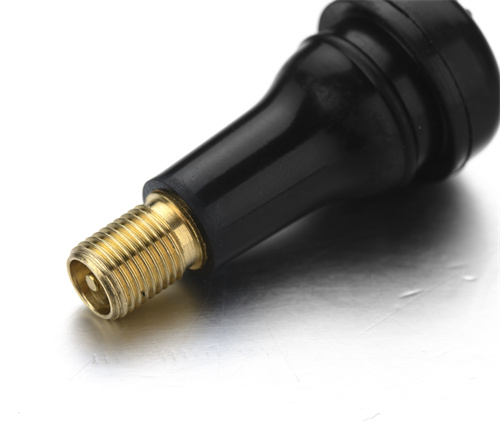
Valve extensions are a small but operationally critical component in fleet tire service. They route the valve-stem access from the rim’s outer face to a position that is reachable for inflation, pressure check, and TPMS service — without removing the wheel. For deep-dish alloy wheels, dual-wheel truck configurations, and certain motorcycle applications, the valve extension is the only practical way to access the valve without dismantling the wheel.
The fatigue-life question matters because a valve extension that fails in service does not just leak air — it can fail catastrophically under sustained highway vibration, leaving the wheel un-inflatable on the road. For a fleet operator running 500+ trucks across mixed duty cycles, even a 1% valve-extension failure rate translates into a steady stream of road-call events. The procurement specification has to anchor on measured fatigue-life data, not on a generic cycle count.
Fortune Wheel Parts has manufactured chrome-plated brass valve extensions and related tire hardware since 1996 under the leadership of Bobby, and the 500,000-cycle vibration benchmark is one of the most common fleet-buyer requests we receive.
The test setup — 500,000-cycle vibration protocol
Industry-standard reference: a 500,000-cycle vibration test for a chrome-plated brass valve extension uses a calibrated electrodynamic shaker or a pneumatic vibrator, a fixture that mimics the wheel-assembly geometry, and a controlled environment chamber that holds temperature and humidity at the service-realistic condition. The valve extension is pressurised to its service rating (typically 8–12 bar for a passenger / light-truck extension), and the cycle counter is incremented continuously through the run.
| Parameter | Typical value | Notes |
|---|---|---|
| Vibration frequency | 30–60 Hz | Mirrors dominant road-excitation frequency |
| Vibration amplitude (peak) | 3–6 g | Service-realistic for highway duty |
| Internal pressure | 8–12 bar | Service rating of the extension |
| Temperature | Room temperature (23°C) | Hot/cold variants available per OEM spec |
| Test duration | 500,000 cycles | ≈ 12–18 months fleet operation |
Industry-standard observation: the parameters above are typical industry benchmark values, not Fortune Wheel Parts-specific test data. OEM buyers verifying the protocol for their qualification should request the supplier’s qualified test procedure and acceptance criteria.
Straight chrome-plated brass extension — baseline performance
Industry-standard reference: a straight chrome-plated brass valve extension has no geometric stress-concentration point along its main axis. Under the 500,000-cycle vibration protocol, the dominant failure mode is at the thread engagement (where the extension screws into the valve stem), and even there the cycle-to-crack benchmark is typically well above 500,000 for a properly plated brass extension.
For fleet buyers, the straight extension is the high-confidence default for any wheel assembly where the valve can be accessed radially without offset. The procurement specification should focus on the thread engagement quality, the chrome-plating integrity along the entire rod, and the supplier’s lot-traceability documentation.
45° bend chrome-plated brass extension — stress concentration point
Industry-standard reference: a 45° bend chrome-plated brass valve extension has a single geometric stress-concentration point at the bend apex. Under sustained vibration, the outer-fiber (tension) side of the bend accumulates cyclic strain, and the chrome plating — being more brittle than the brass substrate — typically initiates the crack. Once the crack propagates through the plating, it propagates into the brass substrate, and the extension either begins to leak air or fails catastrophically.
The cycle-to-crack benchmark for a 45° bend chrome-plated brass extension is heavily dependent on the bend radius, the plating thickness, and the brass alloy grade. Industry-standard reference: in most OEM test setups, crack initiation at the bend apex appears between 250,000 and 500,000 cycles. Premium-grade extensions with optimised bend radius and qualified plating window can push the benchmark past 500,000 cycles; commodity-grade extensions may fail earlier.

Failure mode analysis — crack initiation at bend apex
Industry-standard reference: when a 45° bend chrome-plated brass valve extension fails under vibration, the failure typically progresses through four stages:
| Stage | Failure metric | Typical cycle range | Observable signal |
|---|---|---|---|
| 1 | Plating micro-crack at bend apex | 50,000–150,000 | Visual inspection or dye-pen check |
| 2 | Substrate crack initiation | 150,000–300,000 | Cross-section microscopy |
| 3 | Leak-rate increase at service pressure | 300,000–500,000 | Pressure-decay measurement |
| 4 | Catastrophic separation | > 500,000 (if reached) | Visible failure, pressure loss |
Industry-standard observation: the cycle ranges above are typical industry-observed progressions, not Fortune Wheel Parts-specific measured data. OEM buyers verifying these stages should request the supplier’s measured cycle-to-stage data at the relevant test conditions.
Chrome-plating thickness impact on fatigue life
Industry-standard reference: chrome-plating thickness has a measurable effect on the fatigue life of a chrome-plated brass valve extension. The relationship is non-linear — too thin a plating sacrifices corrosion resistance; too thick a plating increases plating brittleness and shifts crack initiation earlier in the cycle count.
Typical OEM specification windows for chrome plating on a valve extension range from 5 µm (lighter decorative + corrosion) to 15 µm (heavier-duty fleet). For 45° bend extensions specifically, the supplier’s qualified plating window is the most important procurement lever — it is the difference between an extension that survives 500,000 cycles and one that fails at 250,000.
For the full Fortune Wheel Parts catalog of metal brass valve extensions chrome plated and valve extensions for hard-to-access valves, see the valve-extensions category page.
OEM procurement decision matrix
For an OEM or fleet buyer selecting chrome-plated brass valve extensions, four criteria typically drive the make-or-buy decision more than any others:
| Criterion | Fleet truck | Heavy equipment | Agricultural | Motorcycle |
|---|---|---|---|---|
| 1. Geometry (straight vs 45° bend) | Straight for most rims; 45° for deep-dish alloy | 45° for offset access | Straight + flexible extensions | 45° for sport bike geometry |
| 2. Plating thickness window | 8–12 µm fleet-duty | 10–15 µm heavy-duty | 8–12 µm + corrosion topcoat | 5–8 µm lightweight |
| 3. Cycle-to-crack benchmark | ≥ 500,000 cycles | ≥ 500,000 cycles | ≥ 400,000 cycles | ≥ 300,000 cycles |
| 4. Salt-spray rating (ASTM B117) | ≥ 96 hours | ≥ 240 hours | ≥ 240 hours | ≥ 48 hours |
The four criteria interact. A heavy-equipment application typically pairs 45° bend geometry with the heavier plating window and the highest cycle benchmark, because the wheel-assembly geometry forces an offset and the duty cycle is severe. A motorcycle application can often run a thinner plating window and a shorter cycle benchmark, because the wheel geometry is simpler and the duty cycle is gentler.
Fortune chrome-plated brass extension range
Fortune Wheel Parts supplies chrome-plated brass valve extensions in both straight and 45° bend geometries, with plating-thickness windows qualified per the OEM procurement specification. The current product range covers light-truck, heavy-truck, motorcycle, and industrial applications, with lot-traceability documentation available per order.
For an OEM buyer evaluating Fortune against alternative suppliers, three items are worth requesting during the qualification: (a) the supplier’s measured cycle-to-crack data at the relevant duty cycle, (b) the qualified plating-thickness window and the plating-process documentation, and (c) the lot-traceability and salt-spray rating per ASTM B117.

Request extension fatigue test report
If you are an OEM or fleet buyer evaluating chrome-plated brass valve extensions, the next step is to align on geometry, plating-thickness window, duty-cycle benchmark, and salt-spray rating. Submit your inquiry via the request extension fatigue test report page with target geometry, duty cycle, and the certification scope you need to qualify.
Request extension fatigue test report
Submit your inquiry via the request extension fatigue test report page.
FAQ
How long do chrome-plated brass valve extensions last?
Industry-standard reference: in a 500,000-cycle vibration test that mirrors fleet operating conditions, a straight chrome-plated brass valve extension typically survives without cracking. A 45° bend chrome-plated brass extension typically shows crack initiation at the bend apex between 250,000 and 500,000 cycles, depending on plating thickness, bend radius, and brass alloy grade. Specific service life depends on the duty cycle and operating environment.
What is the failure mode for 45° bend valve extensions?
Industry-standard reference: the dominant failure mode for a 45° bend chrome-plated brass valve extension under sustained vibration is crack initiation at the bend apex on the outer-fiber (tension) side of the bend. The crack propagates through the chrome plating first (because plating is more brittle than the brass substrate) and then into the substrate, eventually causing air leakage or catastrophic separation. Surface plating integrity and bend-radius geometry are the two main levers for delaying this failure mode.
Is straight or 45° bend better for valve extensions?
Industry-standard reference: straight and 45° bend valve extensions are not interchangeable — each serves a specific wheel-assembly geometry. Straight extensions are the default for wheel assemblies where the valve can be accessed radially. 45° bend extensions are specified where the wheel design or the wheel-well geometry forces an offset between the valve-stem axis and the access direction (deep-dish alloy wheels, dual-wheel truck configurations, some motorcycle applications). For each application, the failure mode is different, and the procurement specification should match the geometry in use.
How many vibration cycles should a quality valve extension survive?
Industry-standard reference: a 500,000-cycle vibration test is a common OEM benchmark for fleet-duty valve extensions, mirroring approximately 12–18 months of fleet operation under typical highway vibration loads. Premium-grade valve extensions from established manufacturers typically exceed this benchmark; commodity-grade extensions may fail earlier. OEM buyers should request the supplier’s measured cycle-to-crack data at the duty cycle relevant to their application, not a generic cycle count.
Does chrome plating thickness affect fatigue life?
Industry-standard reference: yes — chrome plating thickness has a measurable effect on the fatigue life of a chrome-plated brass valve extension. Thicker plating (above ~10–15 µm) is more brittle and tends to crack earlier at the bend apex; thinner plating (below ~5 µm) is more compliant but may sacrifice corrosion performance. The optimal plating thickness is typically defined by the supplier’s qualified process window, and OEM buyers should request that window for the specific valve extension in scope.
What is the OEM procurement specification for valve extensions?
Industry-standard reference: an OEM procurement specification for valve extensions typically includes material grade (e.g., brass C36000 / C37700), plating thickness window, bend geometry (angle and bend radius), thread specification, pressure rating, temperature rating, and a minimum cycle-to-crack benchmark (often aligned with a 500,000-cycle vibration test). For fleet buyers, the specification also typically includes lot-traceability documentation and a salt-spray rating for chloride-rich service environments.
Bobby
Post time: Aug-06-2026