



What Separates a Real Wheel Weight Factory From a Trading Company?
When buyers search for a wheel weight factory, they are usually looking for more than a low price. They want stable quality, clear specifications, reliable packaging, and a supplier that can support repeat orders without surprises. In the automotive aftermarket, wheel weights are not just small accessories—they are essential consumables for tire balancing, ride comfort, and tire wear control.
But not every supplier that claims to be a wheel weight manufacturer actually makes the product. Many are trading companies that source from multiple factories, repackage goods, and resell under a single brand. That can work in some cases, but it is very different from working with a true production facility. If you are an OEM buyer, distributor, tire shop chain, or fleet maintenance purchaser, understanding the difference can save time, reduce risk, and improve your margins.
Why Wheel Weights Matter in the First Place
Wheel weights are a core consumable in tire dynamic balancing. Their job is to correct uneven mass distribution in the wheel and tire assembly, helping reduce vibration, steering shake, and uneven wear. A properly balanced wheel improves driving comfort and supports safer, smoother operation.
Because wheel weights are used in high-volume service environments, buyers care about more than just the metal. They need consistent weight segments, dependable adhesive or clip performance, and packaging that supports fast shop use. That is why the difference between a factory and a trading company matters so much.
What a Real Wheel Weight Factory Actually Does
A real wheel weight factory controls the production process from raw material selection to final packaging. This usually includes alloy melting or forming, stamping or casting, surface treatment, adhesive application, quality inspection, and carton packing. In other words, the factory owns the process.
1. Controls Material Quality
Wheel weights can be made from different materials depending on market needs and regulations. Zinc alloy wheel weights are often viewed as a lead-free alternative and are popular in environmentally sensitive markets. Lead wheel weights still have broad use in traditional repair systems, especially where specifications, tape quality, and coating stability are consistent. A factory can control these material choices and maintain stable production standards.
2. Produces Consistent Segment Weights
The segmented weight design is critical for balancing precision and installation flexibility. A true manufacturer can keep segment weights accurate and repeatable, which is important for technicians who need fast and reliable balancing results. If the segment weight is inconsistent, the balancing process becomes less efficient and less accurate.
3. Offers Application-Specific Designs
Different vehicles and wheel structures require different wheel weight choices. Clip-on wheel weights are typically used on steel wheels and depend on the rim edge structure for installation. Adhesive wheel weights are more commonly used on the inner side of aluminum wheels. A factory can develop and supply multiple product lines for different wheel materials, rim shapes, and balancing requirements.
4. Supports OEM and Private Label Needs
An OEM wheel weight supplier should be able to provide stable specifications, custom packaging, and repeatable production for brand owners and distributors. This is especially important in the automotive aftermarket, where SKU standardization, carton size, and inventory turnover all affect business efficiency.
What a Trading Company Usually Does Instead
A trading company may still provide good service, but it does not usually manufacture the product itself. Instead, it sources from one or more factories, negotiates pricing, handles communication, and resells the goods. This model can be useful when buyers want a broad product range, but it has limitations.
1. Less Control Over Production
Because the trading company does not own the production line, it may have limited control over raw materials, coating thickness, adhesive quality, or packaging consistency. If the factory changes a process, the trading company may only discover the issue after delivery.
2. More Variation Between Batches
For products like wheel weights, consistency matters. A trading company may switch between suppliers depending on price or availability, which can create batch-to-batch differences. That is a problem for tire shops and distributors that rely on stable performance and predictable installation.
3. Slower Problem Resolution
If a quality issue appears, a trading company often has to coordinate with the actual factory before offering a solution. That can slow down response time, especially for B2B buyers who need fast support and clear accountability.
4. Limited Technical Depth
A true manufacturer usually understands the product at a deeper level: material behavior, coating durability, adhesive performance, and fitment differences across wheel types. A trading company may know the market well, but not always the engineering details behind the product.
How to Tell the Difference Between a Factory and a Trading Company
If you are evaluating a supplier, look for practical signs of manufacturing capability rather than marketing claims.
Factory Indicators
- Clear production photos or videos showing equipment, workers, and process flow
- Detailed product specifications, including segment weight, material, coating, and adhesive type
- Ability to support OEM packaging, custom labeling, and carton standardization
- Technical guidance on fitment, installation, and application scenarios
- Stable lead times and repeatable order quality
Trading Company Indicators
- Broad product catalog across unrelated categories
- Limited technical detail beyond basic sales descriptions
- Inconsistent product photos or specifications
- Frequent supplier changes or vague answers about production
- Heavy focus on price, with less emphasis on process control
Wheel Weight Product Details Buyers Should Check
Whether you buy from a factory or a trading company, product details matter. For wheel weights, the following factors are especially important.
Material Type
Choose between lead, zinc alloy, or other materials based on market requirements, environmental regulations, and customer preferences. Zinc alloy wheel weights are often preferred where lead-free compliance is important.
Mounting Style
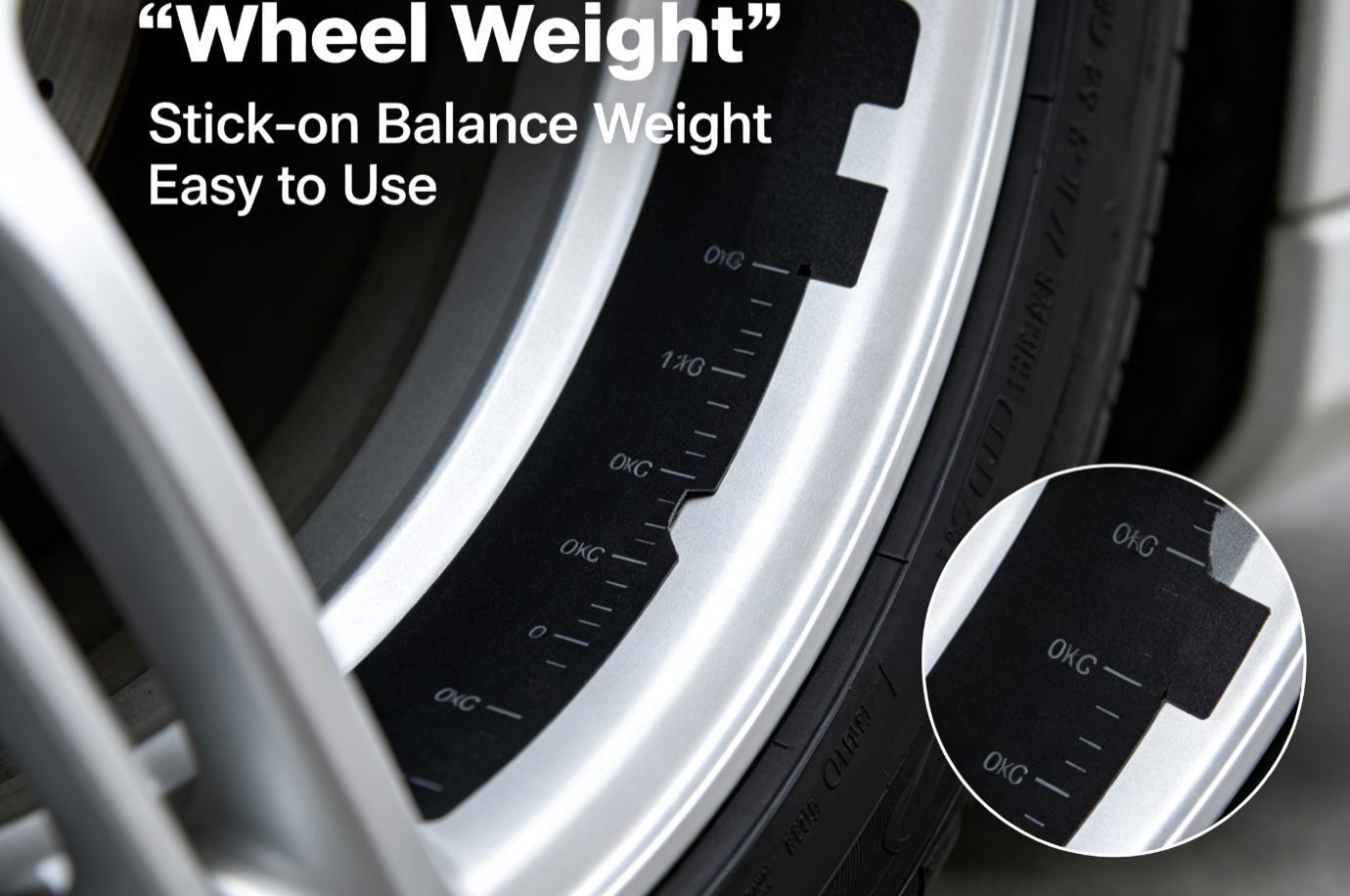
Clip-on wheel weights are designed for steel wheels and rely on the rim edge for secure installation. Adhesive wheel weights are typically used on aluminum wheels and mounted to the inner barrel. The wrong mounting style can cause installation problems or poor retention.
Segment Weight Design
Segment size affects how precisely technicians can balance a wheel. More flexible segment options can improve installation efficiency and reduce waste in busy tire shops.
Adhesive and Coating Stability
For stick-on products, tape quality is critical. For lead products, coating stability matters. Both affect durability, appearance, and field performance.
Packaging and SKU Standardization
In the aftermarket, packaging is not just presentation—it is part of the supply chain. Buyers need clear SKU systems, consistent carton counts, and packaging that supports fast warehouse handling and shop use.
Why B2B Buyers Prefer a Real Manufacturer
For tire shops, distributors, and fleet service providers, a real manufacturer offers several advantages:
- More stable product quality
- Better control over specifications
- Stronger OEM and private label support
- Faster technical feedback
- More reliable long-term supply
This is especially valuable in North America, where wheel-end products are purchased heavily by tire shops, auto repair chains, distributors, and fleet maintenance operations. These buyers need dependable replenishment and clear product identification.
How Wheel Weights Fit Into the Broader Wheel-End Product Category
Wheel weights are only one part of a larger wheel-end and tire service ecosystem. Buyers often source related products from the same supplier to simplify procurement and improve inventory efficiency.
For example, tire valve stems and TPMS valve stems are safety-critical parts. OE-quality matters because these components affect sealing and compatibility with tire pressure monitoring systems. TPMS service kits typically include valve stems, seals, grommets, nuts, and related consumables for sensor maintenance. If the wrong kit is selected, installation may fail or trigger warning lights.
Other common products include tire repair materials, tire pressure gauges, tire changers, wheel balancers, jacks, and jack stands. In winter service seasons, tire studs may also see seasonal demand alongside wheel weights. For buyers, working with a supplier that understands the full tire service category can improve sourcing efficiency.
Why Product Pages Need More Than a Price
For search engines and B2B buyers alike, the best product pages combine product name, purpose, fitment, material, and usage scenario. A good page should answer questions like: What is it for? Which wheel type does it fit? What material is it made from? How is it packaged? Is it suitable for OEM or aftermarket use?
That is why a strong wheel weight manufacturer should provide detailed product pages with model numbers, application notes, vehicle compatibility, and installation suggestions. This helps distributors compare SKUs and helps tire shops order the right product the first time.
Choosing the Right OEM Wheel Weight Supplier
If your business needs stable supply, custom branding, and technical consistency, an OEM wheel weight supplier with real production capability is usually the better choice. Look for a partner that can support:
- Multiple material options, including lead and zinc alloy
- Clip-on and adhesive product lines
- Custom packaging and labeling
- Clear SKU systems for aftermarket distribution
- Consistent quality control and repeat orders
In short, a factory gives you more control, more consistency, and better long-term scalability. A trading company may still be useful for sourcing variety, but it rarely offers the same depth of manufacturing support.
Conclusion
The difference between a real wheel weight factory and a trading company comes down to control, consistency, and technical capability. A factory manufactures the product, manages the process, and supports OEM-level requirements. A trading company mainly sources and resells. For buyers who care about quality, repeatability, and supply chain reliability, the factory model is usually the stronger choice.
If you are sourcing wheel weights for tire shops, distributors, or private label programs, focus on material quality, segment accuracy, mounting style, packaging, and supplier transparency. Those are the factors that separate a dependable partner from a simple middleman.
FAQ
What is the main advantage of buying from a wheel weight factory?
The main advantage is better control over product quality, specifications, and repeatability. A factory can manage materials, segment weights, coatings, and packaging more consistently than a reseller.
Are trading companies always a bad choice?
No. Trading companies can be useful if you need a wide product range or flexible sourcing. However, they usually offer less control over manufacturing and batch consistency.
Which wheel weight material is better: lead or zinc alloy?
It depends on the market. Zinc alloy is often preferred in lead-restricted or environmentally sensitive regions. Lead wheel weights are still widely used in traditional repair systems where regulations allow them.
What is the difference between clip-on and adhesive wheel weights?
Clip-on wheel weights are typically used on steel wheels and attach to the rim edge. Adhesive wheel weights are usually used on aluminum wheels and stick to the inner barrel.
Why is segment weight design important?
Segment weight design affects balancing precision and installation flexibility. Accurate segmenting helps technicians apply the right amount of weight efficiently.
What should B2B buyers ask before choosing an OEM wheel weight supplier?
Ask about production capability, material options, quality control, packaging customization, SKU structure, and whether the supplier can support repeat orders with stable specifications.
Post time: Sep-24-2026