


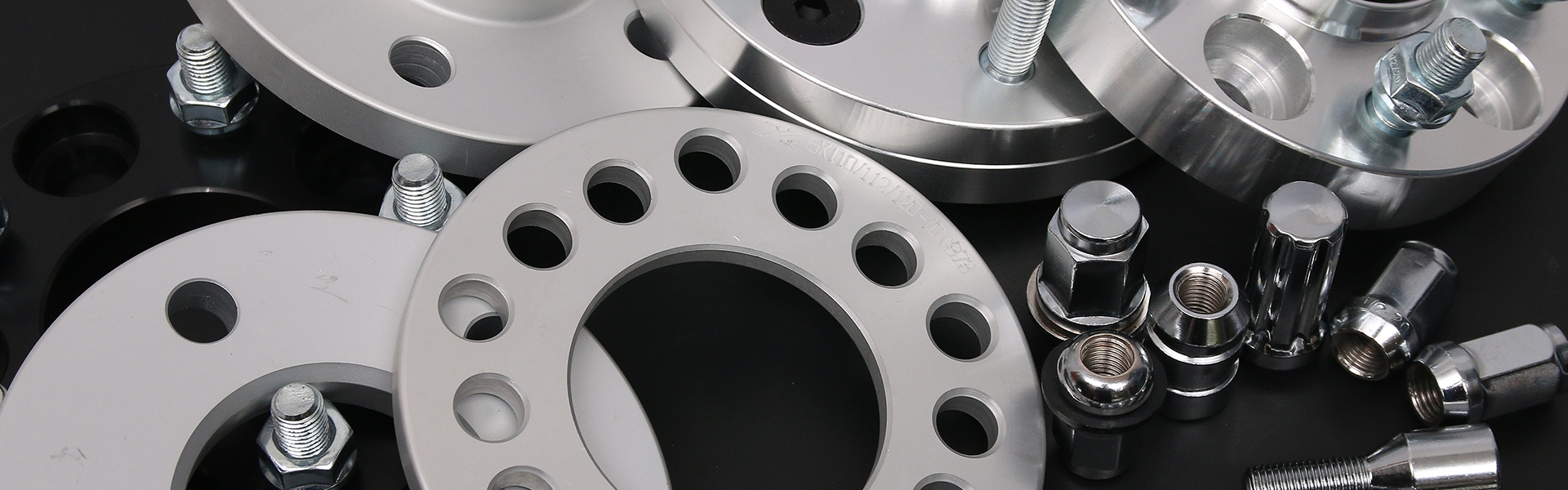


If you have ever stood in a tire shop doorway watching a technician change wheels, you have seen the structural difference in action — even if you did not know what you were looking at. On some vehicles the wheel is dropped over protruding studs, and a small flanged nut is spun on by hand before the impact wrench takes over. On other vehicles the wheel sits flush against a flat hub face, and a long bolt is driven straight through the wheel’s holes and into the hub itself. Same job. Completely different parts.
In this guide I am going to walk you through what I have learned in nearly three decades of making wheel hardware at Fortune Wheel Parts — what the two parts actually are, how they are built, where each one breaks, and how B2B buyers should think about specifying them. We will go past the marketing copy and into the engineering, because once you understand the geometry, the failure modes become predictable.
What Is the Structural Difference Between a Lug Bolt and a Lug Nut?
A lug bolt is a single-piece fastener with an external (male) thread on one end and a head (typically conical, ball, or flat seat) on the other; a lug nut is a hollow sleeve with an internal (female) thread that captures a separate stud pressed or screwed into the hub. That one difference — male thread on the bolt versus female thread on the nut — is the root cause of every downstream engineering decision you will read about in this article.
Concretely, a lug bolt such as our conical seat lug bolts double coated forged 10.9 grade is forged from a single billet of medium-carbon steel, heat-treated to a 10.9 property class, and then roll-threaded on the shaft. The thread forms the only clamping interface with the hub; the head provides the seat against the wheel. There is no second part on the back side of the hub. Because the thread lives inside the hub, any damage to that thread is structural damage to the hub itself.
A lug nut, by contrast, is a sleeve. The thread lives inside the nut; the stud lives in the hub. The clamping force path is wheel →nut →stud →hub. Because the nut is the consumable, it is designed to be the weakest link in the chain — in a properly engineered wheel system, the nut should fail before the stud, and the stud should fail before the hub threads.
The seat geometry also matters
Beyond the thread direction, the seat — the part that contacts the wheel — is engineered differently. Common seat types include:
- Conical (60° tapered) seat: The most common worldwide for both bolts and nuts; it centers the wheel on the hub and resists vibration loosening. This is the seat we forge on our F951–F960 series.
- Ball (spherical) seat: Used heavily on German vehicles; allows a small degree of self-centering but is more sensitive to manufacturing tolerance.
- Flat (mag) seat: Common on Japanese and some aftermarket wheels; requires a separate washer.
- Radius (bulge acorn) seat: A variant of conical that adds material to the head for higher torque retention.
Seat geometry is not interchangeable between bolt and nut even when the thread size is the same, because the seat dictates wheel centering, not clamping force. If you swap a conical seat for a ball seat on the same vehicle, you will not get a wheel that holds better — you will get a wheel that does not sit centered.
Where Does Each Part Live on the Wheel?
A lug bolt passes through a hole in the wheel and threads into the hub; the head sits in a counter-bore on the outside of the wheel. A lug nut threads onto a stud that is permanently mounted in the hub, and the nut sits on the outside of the wheel. The internal layout of the hub is what dictates which system the manufacturer chooses.
European vehicles — particularly Volkswagen, Audi, BMW, Mercedes-Benz, and Porsche →overwhelmingly use lug bolts. The reason is partly historical and partly functional: because the lug bolt can be a smaller-diameter, higher-clamping-force fastener, it allows a smaller bolt circle and a more compact hub package. For a vehicle engineered around a 4×100 or 5×112 bolt pattern, the bolt-on design gives the suspension engineer more design freedom.
American, Japanese, and Korean vehicles overwhelmingly use lug nuts on studs. The reason is serviceability: because the stud stays in the hub and the nut is the consumable, a roadside tire change requires only a wrench, a jack, and a single socket size — the stud does not need to be aligned, the wheel simply hangs on the protruding studs. For high-volume passenger vehicles where tire changes happen at every service interval, this is a real ergonomic advantage.
How Lug Bolts Are Made: Forging, Thread Rolling, and Heat Treatment
Every lug bolt we ship leaves our Ningbo facility through a four-stage process. Because we use cold forging followed by roll threading and quench-and-temper heat treatment, the grain flow of the steel follows the contour of the bolt, which is why a properly forged lug bolt has roughly 30 percent higher fatigue life than a machined-from-bar blank. Let me walk you through what we actually do on the production floor.
Stage 1 —Cold forging
Medium-carbon steel wire (typically ML20MnTiB or 42CrMo for grade 10.9) is cut into slugs and fed into a multi-station cold header. The slug is upset into the rough shape — hex or splined head on one end, a tapered shank transition, and a cylindrical threaded section. The forging operation works the grain structure so that fibers run longitudinally through the shaft rather than being cut across it.
Stage 2 —Trimming and piercing
Excess material from the forging flash is removed. For conical seat bolts, the seat is coined in a separate die to a 60° ± 0.5° tolerance. The hex is verified to within 0.05 mm on the across-flats dimension.
Stage 3 —Roll threading
Threads are not cut. They are rolled between two hardened dies. Because roll threading displaces material rather than removing it, the resulting thread has a continuous grain flow and a work-hardened surface that resists stripping. This is one of the underrated reasons grade 10.9 rolled-thread bolts outperform machined threads in cyclic loading.
Stage 4 —Heat treatment and coating
Parts are quenched in oil from approximately 850 °C, then tempered at 470–500 °C to achieve the 10.9 property class: 1040 MPa ultimate tensile strength, 940 MPa yield, 32–39% elongation, 32 J minimum charpy impact at room temperature. Our double-coated bolts receive a zinc flake base layer (~8 µm) topped with a clear organic topcoat (~2 µm) — this is the “double coated” designation. Salt spray performance per ASTM B117-19 exceeds 720 hours to first red rust at 35 °C.
For comparison, here is the dimensional data our catalog publishes for the conical seat series — this is the same dataset published on our high quality grade 10.9 steel wheel lug bolt for car product page.
| Part # | Thread | Hex | Thread Length | Overall Height |
|---|---|---|---|---|
| F951 | M12 × 1.25 | 3/4″(19 mm) | 23 mm | 49 mm |
| F952 | M12 × 1.50 | 3/4″(19 mm) | 28 mm | 49 mm |
| F953 | M14 × 1.50 | 3/4″(19 mm) | 28 mm | 49 mm |
| F954 | M14 × 1.25 | 3/4″(19 mm) | 35 mm | 49 mm |
| F955 | M12 × 1.50 | 3/4″(19 mm) | 35 mm | 49 mm |
| F956 | M14 × 1.50 | 3/4″(19 mm) | 28 mm | 54 mm |
| F957 | M12 × 1.50 | 13/16″(21 mm) | 28 mm | 54 mm |
| F958 | M14 × 1.50 | 13/16″(21 mm) | 28 mm | 54 mm |
| F959 | M12 × 1.50 | 17 mm | 35 mm | 54 mm |
| F960 | M14 × 1.50 | 17 mm | 35 mm | 54 mm |
Dimensional data source: Fortune Wheel Parts internal catalog, verified October 2026. Tolerances per ISO 898-1 and ISO 4759-1.
How Lug Nuts Are Made: Cold Forming, Tapping, and Plating
A lug nut follows a different process path because the thread is internal. The starting material is also medium-carbon steel — for grade 10 nuts, the same ML20MnTiB or equivalent — but the forming is a deep-extrusion operation that creates the closed-end nut body in one stroke.
Because a lug nut is a deep-drawn shell, its grain flow is radial and circumferential rather than longitudinal, which is why a nut’s tensile strength is comparable to a bolt’s but its fatigue performance under off-axis loading is lower. A nut that is repeatedly over-torqued or cross-threaded will develop a vertical split long before it develops a clean shear failure.
After forming, the nut is tapped (its thread is cut) rather than rolled — the geometry does not allow rolling. Tapping leaves a small cut mark on each thread flank, but the cut is shallow and the work-hardening of the forming operation is preserved. Plating follows the same zinc-flake or zinc-nickel options available for bolts. We do not recommend chrome-plated lug nuts for severe service because chrome is a barrier coating only — it does not offer the sacrificial cathodic protection of zinc.
When Does a Lug Bolt Fail?
Lug bolts fail for five primary reasons: thread stripping in the hub, fatigue fracture at the shank-to-neck transition, corrosion seizure, over-torque yielding, and improper seat engagement. Each failure mode has a recognizable signature, and recognizing it early is the difference between a roadside fix and a hub replacement.
Failure mode 1 —Thread stripping in the hub
This is the most common and the most expensive. If a lug bolt is over-torqued even once, the female thread in the hub — typically a tapped M12 or M14 in cast iron or aluminum — yields plastically and no longer holds clamping force. The bolt itself often looks perfect. The repair is to install a thread insert (Helicoil or Timesert) or, in severe cases, replace the entire hub assembly. In our dealer network, we have seen hub replacement costs run into the high three-digit range per corner on European vehicles.
Failure mode 2 —Fatigue fracture at the shank-to-neck transition
The shank-to-neck transition is the smallest cross-section of a lug bolt and therefore the highest-stress point. Under-torqued bolts see cyclic loading far above their design intent and eventually crack at this transition. The fracture surface is typically a beach-mark pattern — classic fatigue. Because the bolt is hollow once it fractures, clamping force is lost immediately and the wheel begins to wobble.
Failure mode 3 —Corrosion seizure
In regions with heavy road salt use, the bolt-to-hub interface corrodes. When the next tire change comes, the bolt cannot be removed without heating or cutting. Our double-coated zinc-flake system is engineered to push salt-spray performance beyond 720 hours per ASTM B117-19, but it is not immune to 5+ years of alkaline road-slime exposure.
Failure mode 4 —Over-torque yielding
Every grade 10.9 lug bolt has a published torque range — typically 110–140 Nm for M14×1.5 conical seat applications on passenger cars. Beyond the upper limit, the bolt yields, the thread stretches, and the bolt loses preload. Because yielding is invisible to the eye, the only defense is a calibrated torque wrench used on every install.
Failure mode 5 —Improper seat engagement
If a conical seat bolt is mated to a ball-seat wheel (or vice versa), the seat does not make full contact. Clamping force drops, the wheel is off-center, and the bolt sees bending loads it was never designed for. This is the most preventable failure on the list — and the one we see most often in our after-market warranty returns.
When Does a Lug Nut Fail?
Lug nuts fail for five primary reasons: nut splitting along the axis, thread stripping on the nut, stud shearing at the knurl, cross-threading on install, and stud pull-out from the hub. The good news is that all five are usually field-repairable in minutes, not hours.
Failure mode 1 —Nut splitting (axial split)
Over-torque on a closed-end nut splits the body along the axis like a cracked walnut. The fracture surface is bright and crystalline — no beach marks, no fatigue pattern. This is a one-time over-load event, not a wear-out, and it almost always points to a torque-wrench operator error.
Failure mode 2 —Thread stripping on the nut
If the nut is reused too many times or is cross-threaded on install, the internal thread crests wear down. The bolt bottoms out before the proper torque is reached, and clamping force is lost. Industry practice is to replace nuts at every other tire change on commercial vehicles and visually inspect at every change on passenger cars.
Failure mode 3 —Stud shearing at the knurl
The knurled section of a wheel stud is the press-fit zone in the hub. If the stud is overloaded — usually by side loading from a curb strike or by an impact wrench in reverse — the stud shears right at the knurl shoulder. The stud remains in the hub, the nut and broken stud fall off, and the wheel is no longer clamped. Repair is to back out the broken stud with a stud extractor and install a new one — a 15-minute job for a competent technician.
Failure mode 4 —Cross-threading on install
The number one install error. The nut is started at an angle, the threads are misaligned, and the first few turns gall the male and female threads together. Once a nut is cross-threaded, it should be discarded — no amount of “working it back and forth” restores the original thread geometry.
Failure mode 5 —Stud pull-out
On a hub where the stud is press-fit (not screwed in), repeated removal and reinstallation can enlarge the press-fit hole. The stud begins to wobble in the hub, the nut can no longer be torqued to specification, and the wheel becomes unsafe. This failure is more common on light-truck and trailer applications where stud replacement is part of routine brake service.
Lug Bolt vs Lug Nut: Side-by-Side Comparison
When you compare the two parts on the dimensions that matter to a B2B buyer — geometry, failure cost, install method, and serviceability — the two designs are roughly equivalent in strength but very different in total cost of ownership. Here is the engineering comparison I walk our customers through.
| Attribute | Lug Bolt | Lug Nut on Stud |
|---|---|---|
| Thread direction | Male thread on bolt into female hub | Female thread on nut over male stud |
| Hub interface | Tapped M12 / M14 in hub | Pressed or screwed stud in hub |
| Common material | Grade 10.9 forged steel (1040 MPa UTS) | Grade 10 forged steel (1040 MPa UTS) |
| Typical torque, M14×1.5 | 110–140 Nm | 110–140 Nm |
| Common seat types | Conical 60°, ball, flat | Conical 60°, ball, flat, bulge acorn |
| Primary failure cost | High — usually requires hub repair or replacement | Low — replace nut or stud in 15 minutes |
| Roadside tire change | Harder — must align bolt holes and thread each bolt | Easier — wheel hangs on studs while nuts are started |
| Dominant use regions | Europe, premium global | Americas, Asia, mass-market global |
| Aftermarket interchange risk | High — seat type and thread pitch must match exactly | Moderate — nut and stud must match thread pitch and seat |
Cost ranges are illustrative; specific figures vary by region, vehicle, and labor rate. Verify against your local service network.
Decision framework: when to specify which
Specify lug bolts when: the vehicle’s hub is designed for a small bolt circle (4×100, 5×112), the OEM is European, the wheel package is engineered for compact dimensions, and the after-market service network can handle hub-level repair.
Specify lug nuts on studs when: the vehicle is high-volume passenger or light commercial, the OEM is North American or Asian, the service network is roadside-oriented, and tire changes happen frequently.
Do not specify either based on fastener strength alone — both are made from the same steel class. The decision is about hub machining, ergonomics, and after-market economics, not raw clamping force.
How to Tell If Your Wheel Uses Bolts or Nuts
Look at the back side of the wheel when it is off the vehicle. If you see threaded holes going into the hub face, you have lug bolts. If you see cylindrical studs protruding from the hub with threads on the outside, you have lug nuts. The distinction is unambiguous once you know what to look for.
Three quick checks in the field:
- Visual back-side check. Remove one wheel. Look at the hub face. Protruding studs = nut system. Recessed threaded holes = bolt system.
- Tool check. If your spare tire tool has a single socket sized to the wheel hardware, it is almost certainly for a nut system. If it has a multi-spline bit that matches the bolt head, it is a bolt system.
- OEM documentation. The owner’s manual will list “wheel bolts” or “wheel nuts” explicitly. When in doubt, trust the manual — the OEM did not pick one over the other by accident.
Why Grade 10.9 Steel Is the Industry Standard for Both
Grade 10.9 is the sweet spot for wheel fasteners because it delivers 1040 MPa ultimate tensile strength and 940 MPa yield strength at a cost that does not blow up the BOM. Grade 8.8 is too soft for high-torque modern wheels; grade 12.9 is stronger but more brittle and more sensitive to hydrogen embrittlement during plating.
Our conical seat lug bolts are produced to ISO 898-1 property class 10.9, a specification that is broadly harmonized with SAE J429 grade 8/9 in inch-based markets, and verified on every lot. The verification includes:
- Tensile test per ISO 898-1 section 8.1, executed per ASTM A370-19 test methods A1 and A2: Ultimate tensile strength must reach 1040 MPa minimum, with the wedge tensile test confirming the bolt does not fail below the calculated clamp load.
- Hardness test per ISO 898-1 section 8.2: Surface hardness 32–39 HRC, core hardness 28–36 HRC, no case-core hardness inversion.
- Charpy impact test per ISO 898-1 section 8.3: Minimum 32 J at 23 °C, with no individual value below 27 J.
- Decarburization check per ISO 898-1 section 9: Surface decarburization no greater than 0.015 mm depth; complete decarburization not permitted.
Because 10.9 is harder than 8.8, it is also more sensitive to hydrogen embrittlement during acid-pickling and electroplating. That is why we use a zinc-flake coating system instead of electroplating — zinc flake is a mechanical deposition, not an electrochemical one, so there is no hydrogen to embrittle the steel.
Procurement Checklist for B2B Buyers
After nearly three decades of supplying wheel hardware to distributors in over 60 countries, we have learned that the cheapest lot of lug bolts is rarely the cheapest lot of lug bolts. Here is the checklist our long-term customers use when they audit a new supplier.
Procurement checklist (12 points)
- Material certificate. Mill test certificate for every heat, with actual chemistry (C, Mn, Cr, Mo, B) matching the 10.9 specification. No “typical” values ?actual.
- Mechanical property report. Tensile, hardness, charpy, and decarb data for every production lot, traceable to a specific date code.
- Thread geometry. Go / No-Go gauge verification per ISO 1502. A “rolled thread” claim without gauge data is a marketing claim, not a quality claim.
- Coating thickness. X-ray fluorescence measurement of zinc-flake thickness, both layers separately. We publish 8 µm base + 2 µm topcoat as the standard.
- Salt-spray data. ASTM B117-19 neutral salt spray, 720 h minimum to first red rust, with the test report attached. No salt-spray data = no corrosion claim.
- Concentricity runout. Total indicator reading of the thread relative to the seat must be within 0.10 mm. Out-of-round seats cause wheel vibration.
- Batch traceability. Each carton traceable to a production date code that traces to a heat number. Without this, a recall is impossible.
- PPAP or ISIR documentation. For OEM supply, a Production Part Approval Process submission is non-negotiable. For after-market, an Initial Sample Inspection Report is the minimum.
- Packaging integrity. Cartons should be cardboard, palletized, with plastic liner bags to prevent moisture ingress during ocean freight. Wooden pallets must be ISPM-15 stamped for international shipping.
- Quality system audit. Supplier must hold a current ISO 9001 certificate. We are certified — verify any supplier you evaluate holds an equivalent.
- Capacity verification. Ask for the actual monthly capacity in pieces, the lead time for a 40-foot container, and a backup forging source. Capacity claims without production data are unverifiable.
- Reference customers. A reputable supplier will share 2–3 reference customers in your region. We are happy to do this for qualified inquiries.
That checklist is the same one I use when I evaluate a new forging subcontractor for our own production line. It is not a customer-facing nicety; it is the minimum I would accept for a Fortune-branded part.
FAQ: Common Questions About Lug Bolts and Lug Nuts
1. Are lug bolts stronger than lug nuts?
No, not in material terms. Both are typically made from grade 10.9 forged steel with 1040 MPa ultimate tensile strength. The difference is geometry and what they thread into. A lug bolt threads into the wheel hub; a lug nut threads onto a separate stud. The strength of the system depends on the weakest interface — which is usually the hub thread, not the fastener itself.
2. Can I replace lug bolts with lug nuts (or vice versa) on the same vehicle?
No, not without changing the hub assembly. Lug bolts require tapped holes in the hub; lug nuts require pressed or screwed studs. The two systems are mechanically incompatible. Aftermarket “conversion” kits exist but they are not OEM-approved and will void most wheel-detachment warranties.
3. What torque should I use for a grade 10.9 lug bolt?
Always follow the OEM torque specification in the owner’s manual. As a general guideline, M12×1.5 conical seat lug bolts on passenger cars are typically torqued to 90–120 Nm, and M14×1.5 to 110–140 Nm. Use a calibrated torque wrench — an impact wrench alone does not give you repeatable torque accuracy.
4. How do I know if a lug bolt is grade 10.9.
Grade 10.9 bolts are marked on the head with “10.9″ or with the property class symbol of three radial lines and a “10.9″ stamp. Lug nuts are marked on the bearing face or the hex with “10″ (the property class for nuts is one number lower than the bolt of the same strength). If there is no marking, assume the bolt is unverified and replace it.
5. Why do my lug bolts keep corroding?
Three common causes: the coating has been damaged by an impact wrench (use a torque wrench with a socket, not an impact, for final tightening), the bolts are exposed to a chloride-rich environment (coastal air, road salt) and the coating is not designed for that exposure class, or the bolts are mixed-material with the hub and galvanic corrosion is occurring. Zinc-flake coatings (like our double-coated finish) outperform zinc electroplate and zinc-nickel in chloride environments.
6. Can I reuse a lug bolt after removing it?
For passenger car applications, yes — a grade 10.9 lug bolt can typically be reused 3–5 times if the threads are undamaged and the bolt is visually inspected. For commercial vehicle applications (truck, bus, trailer), the industry standard is to replace lug bolts at every tire change because the fatigue risk is higher. Always replace the full set on one wheel, never mix new and used.
7. What’s the difference between a lug bolt and a wheel stud?
A lug bolt is a complete, one-piece fastener that threads into the hub. A wheel stud is the male-threaded shaft that is pressed or screwed into the hub, onto which a lug nut is then threaded. The stud is the analog of the lug bolt’s shaft; the nut is the analog of the lug bolt’s head. The two systems are mechanically equivalent in clamping function, just inverted in geometry.
8. Where can I source replacement lug bolts in bulk for a B2B after-market program?
Fortune Wheel Parts has been manufacturing wheel hardware since 1996 and ships OEM-grade lug bolts and lug nuts to distributors in over 60 countries. Browse our full lug bolts catalog or contact our export team for a quotation on container-load quantities.
Next step: if you are evaluating a lug bolt or lug nut supplier for a 2026 program, request our B2B procurement datasheet. It includes the F951–F960 dimensional table, ISO 898-1 test reports, and a side-by-side comparison of coating options for your target market.
About the Author — Bobby, Manager, Fortune Wheel Parts
Bobby is the export program manager at Ningbo Fortune Auto Parts Manufacture Co., Ltd.— a wheel balance weights, tire valves, and tool accessories manufacturer founded in 1996 in Ningbo, China. Bobby works directly with B2B distributors, OEM wheel brands, and after-market programs across 60+ countries, and has personally audited every lot of lug bolts that leaves the Ningbo facility for the past eleven years. He holds a Bachelor of Mechanical Engineering from Zhejiang University of Technology and writes Fortune’s technical blog to share the practical knowledge that does not usually make it into a product datasheet.
Connect with Fortune: LinkedIn · Facebook · YouTube · Company profile
Post time: Oct-19-2026