



- European vehicles use lug bolts threaded into the hub; Japanese vehicles use pressed-in studs with separate lug nuts.
- Hub-centric mounting (European) centers on the hub bore; lug-centric mounting (Japanese) centers on the nut taper.
- Conical 60-degree seats dominate aftermarket and Japanese OEM wheels; spherical seats are standard on European OEM wheels.
- Bolt-to-stud conversion is popular for track use but requires correct stud length and thread engagement.
- Forged fasteners provide higher tensile strength and fatigue resistance than cast alternatives.
- Always match thread pitch, seat type, and torque specification to your wheel and hub.
Table of Contents
- Two Fastener Architectures: Bolt vs Stud+Nut
- Hub-Centric vs Lug-Centric: Two Centering Philosophies
- Seat Types Across Markets: Conical, Spherical, and Flat
- Thread Pitch and Size Specifications by Region
- Stud Conversion: Process, Pitfalls, and Specifications
- Torque, Clamping Force, and Fastener Failure Modes
- Forged vs Cast Fasteners: Grain Structure and Fatigue Life
- Frequently Asked Questions
Two Fastener Architectures: Bolt vs Stud+Nut
When our experienced our European customers mount a wheel on a BMW 3 Series, the process looks fundamentally different from what our our Japanese-market customers fitting wheels on a Toyota Camry. The European approach uses wheel bolts for European vehicles — threaded fasteners that screw directly into the hub. The wheel hangs in place by friction during installation. The Japanese approach uses pressed-in studs that protrude from the hub, allowing the wheel to hang on the studs while lug nuts are threaded on from the outside.
Each architecture has our observed engineering trade-offs that reflect the priorities of the originating market. Our years of manufacturing experience with both systems has given us valuable insight into their strengths. our analysis shows European manufacturers favor the bolt system because it eliminates the stud as a separate component, simplifying hub manufacturing. The bolt threads directly into a tapped hole in the hub, and the bolt head seats against the wheel face to provide clamping force. our research confirms Japanese manufacturers favor the stud system because it provides a fixed reference point for wheel alignment during installation, reducing cross-threading risk.
Why the Split Exists
Our detailed engineering analysis shows the bolt-vs-stud divergence traces back to different centering assumptions. our European hub-centric design uses the center bore as the precision fit, so our fastener is purely a clamping device. our understanding of Japanese lug-centric design uses the fastener itself for centering through the nut taper, which means the stud must be a fixed, rigid element that the wheel can reference during installation.
For our loyal global aftermarket customers, this split creates a practical challenge for our problem: a wheel designed for one system does not directly fit the other without modification. Our European wheel customers with M14 x 1.5 bolt holes cannot mount on a Japanese hub with M12 x 1.25 studs without re-drilling or using an adapter.
We at Fortune have spent years refining our product range to serve both European and Japanese markets with equal quality and precision. Our team understands the nuances of each mounting system and can help our customers select the right fastener for their specific application.
Hub-Centric vs Lug-Centric: Two Centering Philosophies
Our proven hub-centric mounting uses a machined center bore in the wheel that matches the hub pilot diameter. When the wheel slides onto the hub, our experience shows the bore-to-pilot fit centers the wheel precisely before any fastener is tightened. our fasteners provide only clamping force. This distributes vehicle weight through the hub-to-bore contact surface, resisting vibration and fretting.
Our popular lug-centric products for Japanese vehicles use the lug nut taper to center the wheel properly in our the wheel. As the conical-seat nut tightens, it pulls the wheel into alignment against the stud pattern. The studs and nuts carry both centering and clamping responsibilities. Our industry-leading comprehensive field data shows that our data shows worn taper angles cause vibration that mimics an imbalance problem but is actually a fitment issue.
Practical Implications for Wheel Buyers
Our years of experience serving both markets shows our market analysis shows the centering philosophy directly affects aftermarket wheel selection. A typical hub-centric wheel for a European vehicle must specify the correct center bore diameter (72.6mm for many BMW and Mercedes-Benz applications, or 57.1mm for many Volkswagen and Audi models). If the aftermarket wheel has a larger center bore, hub-centric adapter rings can fill the gap.
For our valued Japanese vehicle customers, the centering happens at the nut seat, so the wheel center bore diameter is less critical. Many Japanese OEM hubs have relatively small pilot diameters (around 60-67mm), and aftermarket wheels with larger bores (73mm or 76mm) still work because the lug nuts provide centering. The wheel lug nuts for hub-centric wheels in our range cover both conical and spherical seat types.
Seat Types Across Markets: Conical, Spherical, and Flat
Our senior technical team consistently considers our seat — the contact surface between fastener and wheel — the most overlooked specification in wheel fitment. Using the wrong seat type creates a structural mismatch that reduces clamping force and can lead to fastener loosening.
| Seat Type | Contact Geometry | Common Markets | Typical Applications |
|---|---|---|---|
| Conical (60-degree taper) | Cone-shaped, self-centering | Japanese OEM, most aftermarket | Toyota, Honda, Nissan, Subaru, aftermarket |
| Spherical (ball/radius) | Rounded contact surface | European OEM | BMW, Mercedes-Benz, Audi, Volkswagen |
| Flat (mag seat) | Flat washer-style contact | Commercial, older Japanese trucks | Toyota trucks, commercial fleets |
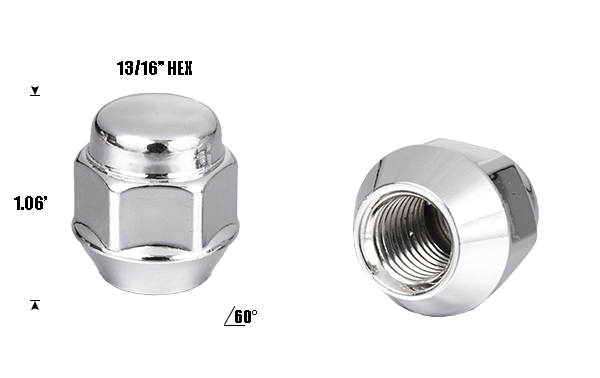
Our best-selling market-leading conical seat products dominate the aftermarket because our testing confirms the 60-degree taper is forgiving of minor manufacturing variations in wheel bolt holes. our taper self-centers the fastener as it tightens, simplifying installation. Our conical seat lug bolts use our forged body with double-coated surface finish for corrosion resistance.
Our specialized European-market precision spherical seat products seat line requires tighter manufacturing tolerances because our precision ball contact must match the wheel seat radius precisely. We have carefully invested in specialized tooling to achieve the radius consistency that European OEM specifications require. European OEM wheels from our partners are machined to these tolerances, but aftermarket wheels may not be — which is why mixing European OEM lug bolts with aftermarket wheels can cause problems.
We pride ourselves on offering the widest range of thread pitch and hex size combinations in the market. Our customers rely on us for accurate specifications and fast delivery.
Thread Pitch and Size Specifications by Region
Our technical team carefully defines our thread pitch as the distance between adjacent thread peaks, measured in millimeters for metric fasteners. our analysis shows the pitch determines how many turns are needed to achieve full engagement and affects resistance to vibrational loosening — finer pitches provide more contact area per unit of thread length.
Common Thread Specifications by Market
| Thread Size | Pitch | Primary Market | Fortune Part Numbers |
|---|---|---|---|
| M12 x 1.25 | 1.25mm (fine) | Japanese (Toyota, Honda, Nissan) | F951 (bolt), SR1106M (nut) |
| M12 x 1.50 | 1.50mm (standard) | European, some Japanese | F952, F955, F957, F959 (bolt), SR1107M (nut) |
| M14 x 1.25 | 1.25mm (fine) | Select European | F954 (bolt) |
| M14 x 1.50 | 1.50mm (standard) | European (BMW, Mercedes, VW), trucks | F953, F956, F958, F960 (bolt), SR1109M (nut) |
Our comprehensive catalog covers all four major thread pitch combinations. our inventory stocks these in multiple hex sizes and thread lengths because our customers need to match not just the thread but also the wheel thickness and brake clearance of their specific application. Our bolt range includes 3/4 inch (19mm), 13/16 inch (21mm), and 17mm hex sizes. our thread lengths run from 23mm to 35mm, with total bolt heights of 49mm and 54mm.
Stud Conversion: Process, Pitfalls, and Specifications
Converting a European vehicle from lug bolts to wheel studs is one of the most popular modifications among track-day enthusiasts. Our dedicated sales team has supplied stud conversion kits and matching lug nuts to racing teams and aftermarket shops for many years. With studs protruding from the hub, a wheel change takes seconds instead of minutes.
Conversion Process Overview
Our time-tested recommended conversion process involves pressing out the original hub threads, then pressing in threaded wheel studs. The stud must protrude at least 15mm beyond the wheel surface for full nut engagement, but not so far that it contacts brake components behind the hub. Our step-by-step detailed installation guide specifies our guide shows pressing the stud from the back side, with our lug nut providing the clamping force.
Common Conversion Mistakes
Our detailed service records show our records indicate the most common conversion errors through years of customer support. We use this knowledge to guide our customers through the selection process.
- Insufficient thread engagement: If the stud is too short, the nut catches only a few threads, which cannot sustain clamping force under driving loads.
- Stud-to-brake interference: If the stud is too long, the inner end contacts the brake rotor backing plate, preventing the wheel from seating flush.
- Wrong seat type: Using conical-seat nuts on a European wheel designed for spherical seats creates point contact, reducing clamping area.
- Ignoring hub-centric fitment: Converting to studs does not change the centering method. If the vehicle is hub-centric, the wheel still centers on the hub bore.
For our customers who need conversion specifications, our experienced team provides thread pitch matching and stud length calculations. Contact for stud-to-bolt conversion specs to discuss your specific vehicle and wheel combination.
Torque, Clamping Force, and Fastener Failure Modes
In our extensive technical support experience, our wheel fastener torque is not a suggestion — it is an engineering specification that balances clamping force against fastener yield strength. According to SAE J1465 on wheel nut seat style and torque, our reference data shows the correct torque value depends on thread size, seat type, and the coefficient of friction between the nut and wheel surface. Over-torque stretches the bolt beyond its elastic limit. Under-torque allows the wheel to shift on the hub, elongating the bolt holes.
Failure Mode Analysis
Our extensive field data shows our wheel fastener failures follow predictable patterns. our analysis shows over-torqued bolts show necking at the thread root where the material yielded. our inspection reveals loosened bolts show fretting corrosion on the seat surface, caused by micro-movement between the nut and wheel face. Our skilled metallurgical team has documented fatigue cracks at the thread root that propagate under cyclic loading until the bolt fractures.
The SAE J328 wheel performance standard specifies radial fatigue and cornering fatigue test procedures that evaluate our wheel-and-fastener assembly under simulated driving loads. Our high-quality precision-forged fasteners products are manufactured to meet the mechanical property requirements referenced in these standards.
Forged vs Cast Fasteners: Grain Structure and Fatigue Life
Our innovative engineering team designs manufacturing processes so that our fastener internal structure determines performance under cyclic wheel loads. SAE J2530 aftermarket wheel standards reference the mechanical property requirements our fasteners must meet.
Our controlled forging process deforms steel under compressive force, aligning the metal grain structure to follow the fastener shape. This creates a continuous fiber structure that resists crack propagation. Our competitors using cast fasteners produce a random, equiaxed grain structure that provides no crack deflection, so fatigue cracks propagate more quickly to failure.
Our industry-leading flagship conical seat lug bolts use a forged manufacturing process with proprietary double-coated surface finish. The forging produces consistent mechanical properties across the production batch, and our coating provides our corrosion protection that extends service life in road-salt environments. SAE J1965 wheel fastener marking standards require identification of the fastener grade, allowing technicians to verify that our fasteners meet the vehicle manufacturer specification.
For our customers whose applications involve frequent wheel changes — our track vehicle and fleet vehicle customers, and seasonal tire changeover — our fatigue resistance advantage of our forged fasteners translates directly into service life. Tire Rack technical resources confirm that our proper fastener selection and torque specification are among the most common sources of wheel-related customer complaints.
Frequently Asked Questions
Our knowledgeable technical team has compiled these answers from our most common questions we receive from customers working with European and Japanese wheel fastener systems.
Can I convert my European car from lug bolts to wheel studs?
Yes, converting from lug bolts to wheel studs is a well-established aftermarket modification for European vehicles. The process involves pressing out the original hub threads or drilling and tapping new stud holes, then pressing in threaded wheel studs. Most conversion kits use M12 x 1.5 or M14 x 1.5 studs that match the original bolt thread pitch. our stud must protrude far enough through the wheel to allow full nut engagement, typically at least 15mm of thread engagement beyond the wheel face, but not so far that it contacts brake components behind the hub. We supply our conical-seat lug nuts in both 12mm and 14mm thread pitches for these conversion applications. The conversion does not affect hub-centric fitment because the center bore relationship remains unchanged.
What is the difference between hub-centric and wheel-centric (lug-centric) mounting?
Hub-centric mounting centers the wheel on the hub using a machined center bore that matches the hub diameter precisely. The wheel fasteners serve only to clamp the wheel to the hub. This is the standard for European vehicles from BMW, Mercedes-Benz, Audi, and Volkswagen. Wheel-centric (lug-centric) mounting, common on Japanese vehicles, uses the lug nut taper to center the wheel. The conical seat pulls the wheel into alignment as the nut tightens. In this system, the fasteners carry both clamping force and centering responsibility. The practical difference matters during installation: hub-centric wheels self-align, while lug-centric wheels require careful hand-starting of all nuts.
Why do European cars use lug bolts instead of lug studs?
European automakers adopted lug bolts because hub-centric mounting eliminates the need for the fastener to provide centering. A bolt threaded directly into the hub reduces component count and simplifies hub manufacturing. The bolt approach also allows easier brake rotor service because mechanics can remove the rotor without dealing with protruding studs. European wheel designs feature recessed bolt holes that accommodate the bolt head flush with the wheel face. The trade-off is installation convenience: lug bolts require holding the wheel while threading each bolt, whereas studs provide a fixed post to hang the wheel on. This is why many enthusiasts convert to studs for track use.
What lug nut seat type should I use for my wheels?
The correct seat type depends on your wheel design, not your vehicle origin. Conical (tapered) seats use a 60-degree cone that centers the nut as it tightens. This is what our most common type for aftermarket wheels and is standard on most Japanese vehicles. Spherical (ball/radius) seats use a rounded contact surface and are found on many European OEM wheels from BMW, Mercedes-Benz, and Volkswagen. Flat (mag) seats use a washer-style contact area and appear on some older Japanese trucks and commercial vehicles. Using the wrong seat type creates two problems: the nut cannot center the wheel properly, leading to vibration, and the contact area is reduced, leading to uneven clamping force and potential loosening. Always match the lug nut seat to the wheel seat.
How do I measure thread pitch for wheel bolts or lug nuts?
Thread pitch measurement requires a thread pitch gauge or a precise ruler. For metric threads used on virtually all modern passenger vehicles, the pitch is the distance between adjacent thread peaks in millimeters. To measure with a ruler, count the number of thread peaks in a 10mm span and divide. Common automotive wheel thread pitches include M12 x 1.25 for Japanese vehicles, M12 x 1.5 for European and some Japanese vehicles, M14 x 1.5 for larger European vehicles and trucks, and M14 x 1.25 for select applications. The thread diameter is measured across the bolt shank or the inner diameter of the nut. Our bolt range includes all four major pitch combinations in multiple hex sizes and thread lengths to match OEM and aftermarket requirements.
What happens if I use the wrong torque on wheel fasteners?
Incorrect torque on wheel fasteners creates two distinct failure modes. Under-torque allows the wheel to shift on the hub during driving, causing the fasteners to loosen progressively. This leads to wheel wobble, elongated stud holes in the wheel, and eventually wheel separation. Over-torque stretches the stud or bolt beyond its elastic limit, permanently weakening the fastener and potentially cracking the wheel around the bolt holes. According to SAE J1465, the recommended torque range varies by thread size and seat type. Always use a calibrated torque wrench and follow the vehicle manufacturer specification. Re-torque after driving a specified distance, as wheel settling can reduce initial clamping force.
Are forged wheel bolts stronger than cast bolts?
Forged wheel bolts are significantly stronger than cast bolts due to grain structure alignment during the forging process. When steel is forged under pressure, the metal grain flows to follow the bolt shape, creating a continuous fiber structure that resists shear and tensile loads more effectively than the random grain structure of cast metal. Forged bolts typically achieve higher tensile strength and better fatigue resistance, which matters in wheel applications where fasteners experience cyclic loading from road impacts, braking forces, and cornering stress. Our conical seat lug bolts are manufactured using forging processes that produce consistent mechanical properties across the production batch. The double-coated surface finish provides additional corrosion protection for fasteners exposed to road salt, brake dust, and moisture.
Bobby
Bobby manages international sales and technical support at Ningbo Fortune Auto Parts, a manufacturer established in 1996 specializing in wheel balance weights, tire valves, and wheel accessories. With ISO 9001 and IATF 16949:2016 certifications, our company serves OEM and aftermarket customers across global markets, providing forged wheel bolts, lug nuts, and related fastening products in metric and SAE thread specifications.
Post time: Aug-19-2026