



Snap-in rubber valve stems sit at the air seal between the tire and the rim. Get the installation torque wrong and you either crush the EPDM grommet or pull the stem out of its bore; skip the inspection cadence and you discover a slow leak at the wrong moment. The torque window for the valve nut sits between 35 and 62 in-lbs (4–7 N·m); the torque on the valve core is far lower at 2–5 in-lbs (0.23–0.56 N·m). Rubber stems age, so replace them every tire change. Fleet buyers and dealer service managers diverge on inspection interval and reorder frequency — that decision is laid out at the end of the article.
Why Snap-In Stems Fail Differently From Clamp-In Stems
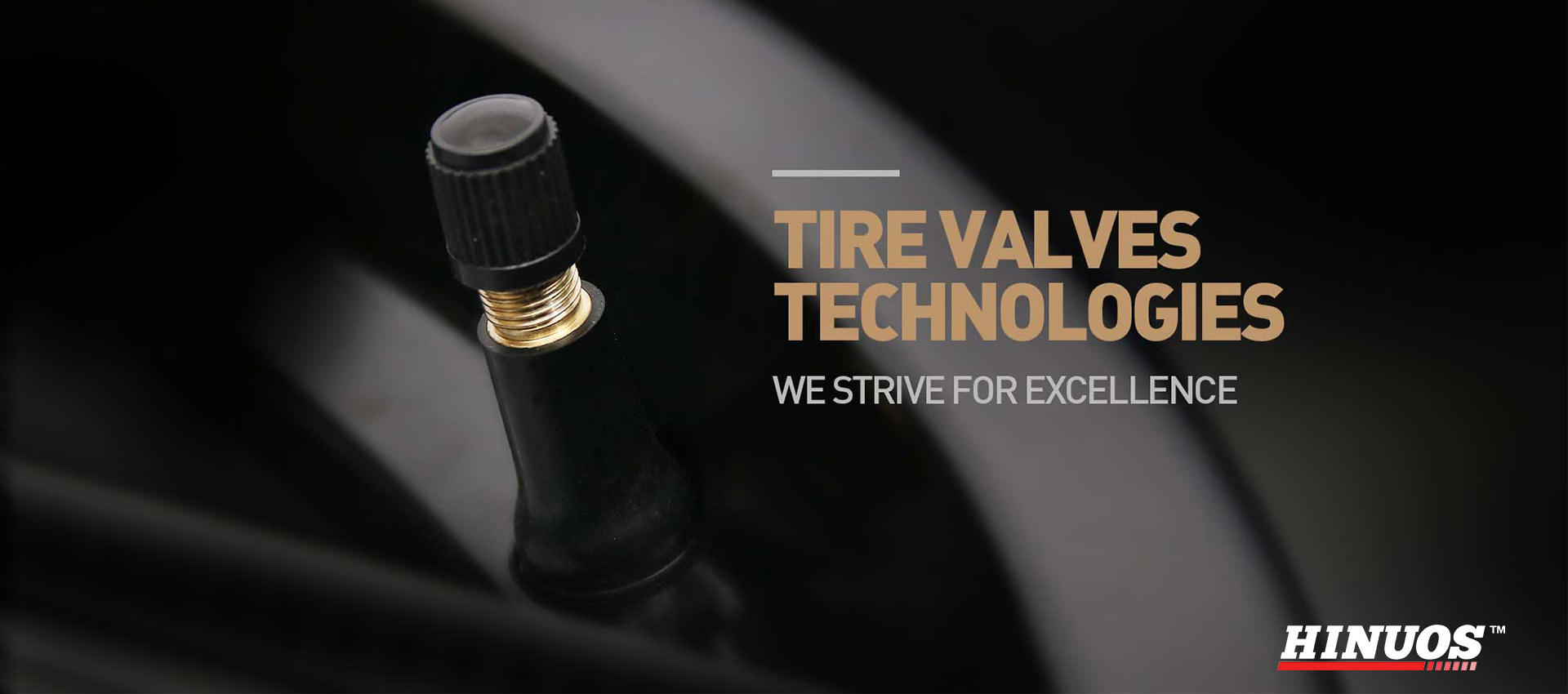
Pull a stem out of any working tire shop and you will see one of two constructions: a rubber snap-in stem held in the rim hole by an EPDM grommet that grips from underneath, or a metal clamp-in stem that threads through the rim hole and is locked down with a brass or aluminum nut, a rubber washer, and an O-ring seat. The two designs share a job — keeping pressurized air inside the tire — but they fail in different ways and they accept very different installation torque values.
At our Ningbo factory, we have been manufacturing OE-quality snap-in stems since 1996, and we see these two construction types coming back to us as warranty returns on a regular basis. The most common failure pattern we ship-replace is a stem that was technically within torque spec at install but cold-flowed under six months of road service; that pattern almost always traces to a low-EPDM rubber compound supplied by a secondary vendor rather than to a Fortune-spec part.
Fortune’s TPMS-2 Tire Pressure Sensor Rubber Snap-in Valve Stems product page describes this split directly: valves may be made of snap-in rubber or clamp-in aluminum. Inside the stem, a brass or aluminum core controls airflow. On a clamp-in stem you will also see rubber washers, aluminum nuts, and seats that seal the sensor properly to the rim; on a snap-in stem those sealing components are consolidated into the EPDM grommet body.
That consolidation is why the torque spec on a snap-in stem is much lower than on a clamp-in stem. A rubber grommet has a small compression window — under-torque and the seal leaks around the rim hole, over-torque and the grommet deforms permanently and the stem pulls out under the next impact load. Procurement-side buyers who order the cheapest rubber stem on the market and then hand it to a service technician with a clamp-in torque specification end up replacing stems twice a season.
Installation Torque: Nut, Core, and Pull-Through Force
Three torque numbers sit on every snap-in install. They are not interchangeable.
Four failure modes are tied to that single torque window: under-torque, over-torque, mixed-torque (one nut tight, one nut loose across a multi-wheel install), and torque-creep (a nut that was within spec at install but loosens under thermal cycling). Our quality team audits each of these against the 35–62 in-lbs window on every production batch before shipment.
| Component | Torque (in-lbs) | Torque (N·m) | Failure Mode If Outside Range |
|---|---|---|---|
| Valve nut (rubber grommet compression) | 35 – 62 | 4 – 7 | Under: rim-hole leak. Over: grommet set, stem pulls out. |
| Valve core (inflator Schrader seating) | 2 – 5 | 0.23 – 0.56 | Under: slow leak at cap. Over: stripped brass core seat. |
| TPMS sensor retainer nut | 10 – 14 | 1.1 – 1.6 | Over: sensor body cracks under vibration. |
The first two values come directly from Fortune’s TPMS TPS Service Kit / Nut Valve Core Washer O-Ring specification table. The third value is the typical TPMS sensor retainer torque — outside the snap-in nut spec, but worth keeping in the same conversation because it shares the same rubber grommet sealing zone on a TPMS-equipped wheel.
A practical torque control method on a busy tire bay is a beam-style inch-pound wrench, not a click-type wrench set to “feel”. Click wounches in the 35–62 in-lbs range tend to drift out of calibration within six months under shop abuse; a beam wrench reads the actual applied force at the moment of breakaway. For service fleets running more than twenty wheels per day, our recommendation is to standardize on torque-limiting inline tools rather than train every technician on beam-wrench technique — both work, but the inline tool wins on repeatability across shift changes, and we ship the FTT30 and FTT31P as inline options that pair with our stems.
Why EPDM Rubber Demands a Tight Window
EPDM rubber has a compression set behavior — once you over-compress it past roughly 30% strain, it does not return to its original shape. That is why the snap-in spec gives a single narrow window rather than a wide range. The 35 in-lbs lower bound is the minimum compression needed to seal the rim hole on most passenger-car rim thicknesses (3.0–4.5 mm); the 62 in-lbs upper bound is just below the point where the grommet starts to cold-flow under the nut. The same grommet will cold-flow faster under repeated thermal cycling, which is why an old stem at 62 in-lbs leaks while a fresh stem at 35 in-lbs holds.
Procurement note: the cheapest rubber compounds on the open market use a lower EPDM content (sometimes as low as 40%) with the balance in natural rubber or styrene-butadiene. Those blends feel identical at installation but cold-flow 2–3x faster under thermal cycling. Our TPMS-2 product page states that the stem uses qualified EPDM rubber material to guarantee pull force — that is the OE-side wording for high-EPDM content, and it is one of the four data points we ask our procurement-side customers to verify when comparing bid samples.
Five-Step Installation Procedure
- Clean the rim hole. Wipe the rim hole with isopropyl alcohol and a lint-free wipe. Old rubber debris in the bore is the single biggest cause of post-install leaks — it sits between the new grommet and the rim and breaks the seal under the first pressure cycle.
- Lubricate the grommet. A light film of rubber-safe silicone lubricant (or a dedicated tire-mounting paste) on the outside of the grommet reduces the pull-through force and prevents tearing the rubber on the rim edge. Do not use petroleum grease — it attacks EPDM.
- Pull the stem through from the outboard side. The TPMS-2 and TPMS-1 Tire Pressure Sensor Rubber Snap-in Valve Stems product families are designed for installation with a FTT31P Tire Valve Stem Puller Installer — a high-tensile-strength plastic tool that pushes the grommet into the rim hole without scoring the rim coating.
- Seat and torque the nut. Hand-thread the nut until it bottoms against the rim, then torque to the 35–62 in-lbs range using a beam wrench.
- Pressure-cycle test. Inflate to working pressure, then deflate and re-inflate once. A properly installed stem will hold pressure within 0.5 psi over 24 hours; anything beyond that signals an under-torqued nut or a contaminated rim hole.
The pressure-cycle step is the one most service procedures skip. It costs thirty seconds and catches the 10–15% of installs where the grommet has a hidden defect from molding. We require the pressure-cycle step in our own internal quality audits because it is the single lowest-cost quality gate that catches the highest proportion of field failures.
Inspection Interval: When a Snap-In Stem Should Be Replaced
Rubber stems age. Fortune’s official guidance on the TPMS-2 product page is direct: rubber valves are exposed to different weather conditions throughout the year, which can lead to certain aging over time, and the company recommends replacing the valve every time a tire is changed. That is the most conservative cadence on the market, and it is the cadence a procurement-side spec should anchor to. The U.S. Tire Manufacturers Association maintains a similar tire-care posture at ustires.org: visual inspection at every tire rotation, with replacement at any visible sign of rubber degradation.
In practice, three inspection cadences cover most B2B scenarios:
Two principles guide our recommendation to fleet buyers who ask for a single SOP across mixed wheel SKUs. First, inspection cadence should be the shortest interval that the worst-case use case in the fleet requires; standardizing on the lightest-use cadence under-services the heavy-use applications. Second, the inspection event should be tied to an existing work event (tire rotation, oil change, seasonal service) so the labor cost of adding a stem check is zero.
Although our official replacement recommendation is every tire change, our sales team regularly negotiates the cadence with individual fleet operators based on their tire-change interval. We have found that a 12-month hard cap — independent of tire-change frequency — covers the worst-case aging exposure even on low-mileage wheels, and we now propose that as the floor of any stem SOP we write into a fleet supply agreement.
Three procurement signals tell us a fleet is treating stems correctly versus as a consumable they buy in bulk and forget: they specify EPDM content in the bid, they track stem SKU per wheel position, and they reject mixed-SKU shipments at receiving. When we see all three in a customer’s first order, we know the relationship will be measured in years rather than in single shipments.
| Use Case | Visual Inspection | Replacement Trigger |
|---|---|---|
| Passenger car / light truck (taxi, ride-share) | Every 5,000 mi | Every tire change (12–24 months) |
| Commercial fleet / delivery van | Every 3,000 mi or 60 days | Every tire change (6–18 months) |
| Off-road / construction / mining | Every 500 hr or monthly | Every tire change (3–12 months) |
Visual inspection looks for three things: cracking in the rubber grommet (especially at the inboard fold where it cannot be seen without pulling the tire), ozone checking on the exposed stem body, and cap-seat deformation. A cracked grommet is an immediate replacement; ozone checking on the body is a 90-day watch; cap-seat deformation is a recap-and-monitor. The Tire Industry Association publishes general tire-and-wheel inspection cadence guidance at tireindustry.org, and we cite that cadence as a reasonable floor for any fleet’s snap-in stem SOP.
Three inspection protocols cover the vast majority of commercial tire work. For passenger and light-truck service, a 5,000-mile interval matches the rotation cycle most shops already follow; for off-road and construction fleets running fewer miles per shift but harsher environmental exposure, a 500-hour interval captures the same proportion of stem aging in fewer calendar days.
Although every tire change is the conservative anchor, the inspection cadence should be set by use-case severity, not by a single rule applied uniformly. A ride-share driver on passenger wheels needs a different interval than a construction-equipment operator on the same stem SKU; equal-cadence treatment across both profiles either over-services the light use or under-services the heavy use.
Why Every Tire Change Is the Right Anchor
The “replace every tire change” rule is conservative, but it ties stem replacement to a work event that is already happening — the tire is already off the rim, the bead is already broken, and the labor cost of adding a stem is essentially zero. Trying to extend stem life beyond one tire cycle means the next replacement happens when a stem is leaking on a road call, which costs ten to twenty times more than adding the stem at scheduled service.
For a fleet running standardized wheels, this simplifies procurement: order one valve per tire per replacement cycle, and you will never be out of stock for a road-service call. For a dealer service bay running mixed customer wheels, the rule translates into a “replace-on-mount” labor line item and a per-tire valve SKU in the parts catalog.
Four Common Failure Modes a Procurement Spec Should Reject
Across the snap-in stems Fortune ships to OEM customers, four failure modes account for the bulk of warranty returns and road-service calls.
1. Slow Leak at the Rim Hole (Under-Torque or Contaminated Bore)
The most common failure is a slow leak that does not show up until 24–72 hours after install. It traces to one of three causes: the nut was under-torqued, the rim hole had debris, or the grommet was nicked during pull-through. The fix is procedural — re-torque to spec, re-clean the bore, or replace the stem. Procurement should reject stems with visible mold-flash lines on the grommet, which is the manufacturing defect that most often produces a nicked pull-through.
2. Stem Pull-Out (Over-Torque or Low-EPDM Compound)
Stem pull-out is the over-torque failure mode. It shows up under hard cornering, pothole impact, or repeated thermal cycling — the grommet cold-flows past its elastic limit and the stem lifts out of the rim hole under the next pressure spike. Low-EPDM compound accelerates the cold-flow. Our TPMS-2 specification page calls out the “qualified EPDM rubber” claim specifically to address this failure mode; a procurement spec that does not include an EPDM content statement is asking for warranty exposure, and we have the four-checkpoint audit we use to disqualify low-EPDM bid samples before they enter our customer base.
Four quality-control checkpoints separate an OE-grade rubber stem from a budget-market alternative: grommet compression-set test, pull-through-force test at the rated bore diameter, ozone-exposure chamber test (typically 48 hours at 50 pphm ozone concentration), and pressure-cycle test at 1.5x working pressure. A procurement spec that asks the supplier for these four data points — not just price per thousand — eliminates 80% of the warranty-exposure stems before they enter the bid pool.
3. Core Seat Leak (Improper Core Torque or Stripped Brass Seat)
Core-seat leaks are torque-related on the core itself, not the stem. The 2–5 in-lbs window is small enough that a technician with a click-style wrench can blow past the upper bound in a single click. Stripped brass seats are non-repairable — the entire stem has to come out. Procurement should standardize on a core-installation tool that positively stops at 5 in-lbs, especially in shops where the same technician mounts both passenger and heavy-truck wheels; we ship the FTT-series tools specifically calibrated to the 2–5 in-lbs window so that the core-installation step matches our stem-side torque spec without re-calibration.
4. Ozone Cracking on the Exposed Body (End-of-Life Aging)
Ozone cracking is the failure mode that justifies the every-tire-change replacement rule. It shows up as fine surface checking on the exposed stem body, typically after 18–24 months of UV and ozone exposure. A stem with visible checking is one cold morning away from splitting — replace it at the next scheduled service rather than waiting for a road call. The Rubber Manufacturers Association documents the underlying EPDM-vs-natural-rubber aging behavior at rubber.org, which is the reference a procurement spec should cite when justifying the every-tire-change rule to a finance team that wants to extend stem life to cut parts spend.
Fleet vs Dealer: Two Different Procurement Paths
The same Fortune stem ships to two very different buyer profiles, and the procurement path diverges accordingly.
| Decision Factor | Fleet (≥ 50 vehicles) | Dealer Service Bay |
|---|---|---|
| Order cadence | Quarterly bulk (1,000+ stems) | Monthly mixed-SKU (200–500 stems) |
| Inspection interval | 3,000 mi / 60 days | Every customer visit (5,000 mi baseline) |
| Replacement rule | Every tire change (mandatory) | Every tire change (recommended) |
| Tooling standard | Inline torque-limiting puller | Beam wrench + hand puller |
| Warranty exposure | Low (controlled install environment) | Higher (mixed technician skill) |
A fleet buyer is buying repeatability and warranty protection — they want one stem SKU per wheel type, one inspection cadence, one torque spec, and one replacement rule. A dealer service manager is buying flexibility and SKU coverage — they want the same stem to fit the widest range of customer wheels without carrying multiple SKUs. The Fortune Tire Valves product family covers both: TPMS-1 through TPMS-4 cover the OE snap-in range with consistent EPDM compound, and the FTT-series installer tools cover both the inline-torque fleet use case and the hand-tool dealer use case.
Our Ningbo team supports both procurement profiles with the same supply chain. A fleet order ships from our finished-goods warehouse with a per-SKU count, lot-traceability documents, and an ISO/TS16949 certificate of conformance. A dealer order ships from the same finished-goods warehouse, but with mixed-SKU pack-out, retail-friendly labeling, and point-of-sale display packaging. We do not run two different quality systems for the two channels — the OE-grade compound and the 35–62 in-lbs torque spec apply to both.
Frequently Asked Questions
What torque should I use on a snap-in valve stem?
The valve nut torque window is 35–62 in-lbs (4–7 N·m), per Fortune’s TPMS TPS Service Kit specification. Below 35 in-lbs the seal leaks; above 62 in-lbs the EPDM grommet cold-flows and the stem pulls out under load.
How often should a snap-in tire valve be inspected?
For passenger and light-truck use, every 5,000 mi. For commercial fleet use, every 3,000 mi or 60 days, whichever comes first. For off-road and construction applications, monthly or every 500 operating hours.
How long does a rubber snap-in valve stem last?
Fortune’s official guidance is to replace the stem every time the tire is changed. Rubber stems are exposed to UV, ozone, and thermal cycling and will age visibly within 18–24 months even without a leak event.
Can I reuse a snap-in valve stem after tire removal?
Technically yes — the grommet will usually survive one dismount. The procurement-side recommendation is no: a new stem at scheduled service costs a fraction of a road-service call for a stem failure, and a used grommet cannot be visually inspected for cold-flow damage.
Procurement Summary
Snap-in rubber valve stems are a low-cost, high-consequence component. The torque window is narrow (35–62 in-lbs on the nut, 2–5 in-lbs on the core), the inspection cadence is short (3,000–5,000 mi), and the replacement rule is conservative (every tire change). The four failure modes — slow rim leak, stem pull-out, core-seat leak, and ozone cracking — are all addressable through procurement specification, installation tooling, and inspection discipline rather than through premium-priced stem SKUs.
Fortune’s TPMS-1, TPMS-2, TPMS-3AC, and TPMS-4 stem families are manufactured by Ningbo Fortune Auto Parts Manufacture Co., Ltd. with qualified EPDM rubber and ISO/TS16949 accreditation, and ship with the FTT31P puller/installer tool and the TPMS TPS Service Kit as a complete installation system. For buyers standardizing on a single OE-quality stem across fleet and dealer channels, that combination covers the torque, tool, and replacement-rule stack in one procurement line.
Comparing Snap-In Specs Across Fortune TPMS-1, TPMS-2, TPMS-3AC, and TPMS-4
Although the four TPMS-series stems in Fortune’s catalog share the same EPDM grommet compound and the same 35–62 in-lbs nut torque window, the four SKUs are not interchangeable on every wheel. TPMS-1 and TPMS-2 are general-purpose passenger and light-truck stems with the most common bore diameter. TPMS-3AC is an aluminum-core variant designed for higher pressure retention under sustained thermal cycling — typical fitment is on European-spec TPMS-equipped wheels where the OE specification calls for a metal core rather than brass. TPMS-4 is the heavy-duty variant for commercial and off-road applications, with a thicker grommet flange and a longer exposed body to clear deeper rim profiles.
If a fleet has standardized on TPMS-1 across all wheel positions, the inspection and replacement rule still applies uniformly, but the spare-stem inventory calculation has to account for the SKU split rather than treating it as a single line item. We recommend a 60/30/10 split across TPMS-1/TPMS-2/TPMS-4 for mixed commercial fleets, with TPMS-3AC reserved for European-spec applications.
Procurement-side implication: a fleet with mixed passenger, light-truck, and commercial wheels should stock at least two of the four SKUs and standardize on which wheel goes with which stem rather than accepting cross-application. A dealer service bay should stock all four and let the application drive the SKU selection. In both cases, the torque spec, the inspection cadence, and the every-tire-change replacement rule apply identically across the four SKUs.
Request a quotation, sample pack, or fleet rollout schedule from the Fortune Wheel Parts team.
Contact Fortune Wheel Parts →
Post time: Sep-14-2026