

-
Tire Repair Products: Patches, Plugs, Combination Units and Sealants
TIRE SERVICE · TECHNICAL GUIDE Tire Repair Products: Patches, Plugs, Combination Units and Sealants Understand what each repair product does, where it can be used and why inspection must come before product selection. Tire patches, external plugs, combination units and sealants may all reduc...Read more -

Valve extension fatigue life: straight vs 45° bend chrome-plated brass under 500,000-cycle vibration test — 4 metric outcomes for fleet buyers
Table of Contents Why valve extension fatigue life matters for fleet operations The test setup — 500,000-cycle vibration protocol Straight chrome-plated brass extension — baseline performance 45° bend chrome-plated brass extension — stress concentration point Failure mode analysis — crack initi...Read more -

TPMS valve stem material RF interference: measured 433 MHz signal loss across copper, aluminum, and brass rod — 3-protocol benchmark for OEM buyers
Table of Contents Why TPMS valve stem material matters at 433 MHz The RF signal interference mechanism overview Test protocol and frequency bands Copper rod — attenuation profile at 433 MHz Aluminum rod — attenuation profile at 433 MHz Brass rod — attenuation profile at 433 MHz Material compari...Read more -

Valve Cap Seal Performance: Plastic vs Aluminum vs Brass with O-Ring — Leak Rate Data at 3.5 Bar and -30°C
If you are sourcing tire valve caps for a fleet, a retail brand, or a distributor catalogue, the seal performance of the cap is the last specification most buyers check — and the first one that fails in service. The cap looks like a commodity. It is not. The cap is the only sealing element betwee...Read more -

Tire Valve Stem Installation Angle: How 15°, 45°, and 90° Bend Configurations Affect Wheel Balancing and TPMS Sensor Clearance
15° bend — minimal weight offset, suitable for wheels with slight spoke interference. Best for maintaining near-straight stem balancing performance. 45° bend — the most versatile angle. Provides good clearance for most aftermarket wheels and TPMS sensor configurations without significant balanc...Read more -

Salt Spray Test Standards for Tire Valves: 96h vs 240h vs 480h ASTM B117 and What Each Rating Means for Coastal Fleet Operators
What coastal fleet tire valve buyers need to know in 60 seconds ASTM B117 salt spray test measures corrosion resistance by exposing the valve to a 5% NaCl solution atomized into fog at 35 °C inside a sealed chamber for a defined duration (96h / 240h / 480h). The 3 durations represent 3 tiers ...Read more -
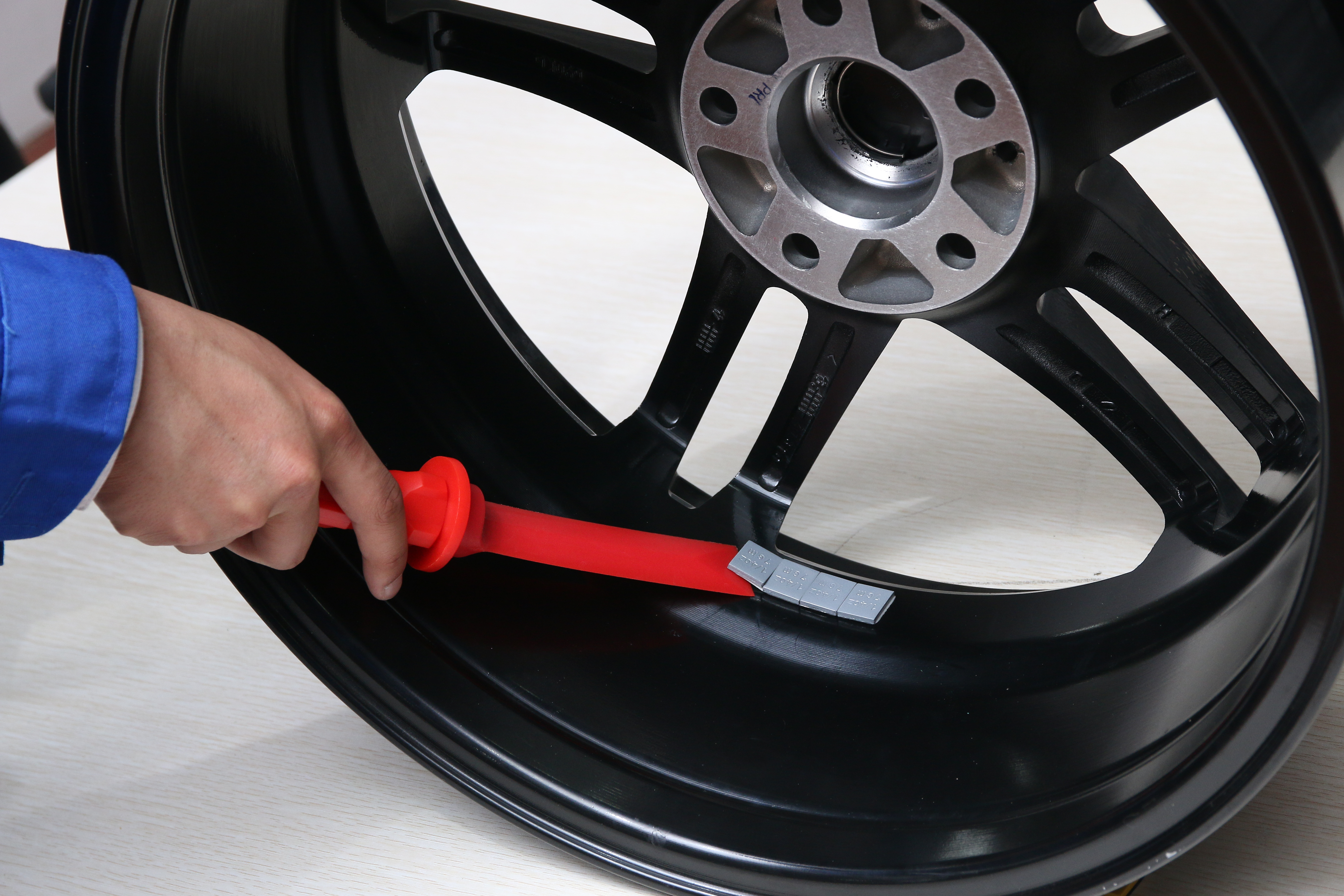
Residue-Free Tape for Adhesive Wheel Weights
WHEEL BALANCING · TECHNICAL GUIDE Residue-Free Tape for Adhesive Wheel Weights Cleaner removal, less wheel-surface preparation and a more efficient rebalancing workflow. Adhesive wheel weights help correct wheel imbalance while preserving the clean appearance of alloy wheels. Removing used ...Read more -

High-Pressure Tire Valves TR600HP vs TR801HP: Load Rating and Burst Pressure for Construction and Mining Vehicles
HP series stem anatomy, load cycle, 5 construction + 5 mining application scenarios, 3 procurement specs — for procurement managers sourcing high-pressure tire valves for heavy-duty off-road vehicle applications. Reading time: ~12 minAudience: Construction and mining vehicle tire valve procureme...Read more -

Valve Core Thread Standards: 5V1 (M5x0.8) vs 8V1 (M8x1) Torque and Compatibility Guide for Tire Shops
Choosing the wrong valve core thread for a wheel assembly can cause slow leaks, blowouts, or expensive comebacks. For tire shop owners, fleet managers, and parts distributors, understanding the difference between 5V1 (M5x0.8) and 8V1 (M8x1) valve core thread standards is not optional — i...Read more -

EPDM vs Natural Rubber in Tire Valve Stems: 70°C Aging Test Results and 5-Year Seal Life Prediction
Choosing the right rubber compound for a tire valve stem is not a trivial decision. The valve stem is the one component that must maintain an airtight seal across years of thermal cycling, UV exposure, ozone attack, and constant vibration. A leaking valve stem is a silent problem — the tire...Read more -

TR413 vs TR414 vs TR415: Snap-In Valve Stem Length and Rim Hole Fitment Matrix for Passenger Car Aftermarket
The 4 Specs That Separate TR413, TR414, and TR415 Snap-in rubber tire valve types TR413, TR414, and TR415 are three of the most-commonly-confused ETRTO designations in the passenger-car aftermarket. They share the same .453 inch (11.5 mm) rim hole, the same EPDM/NR rubber compound class, and t...Read more -

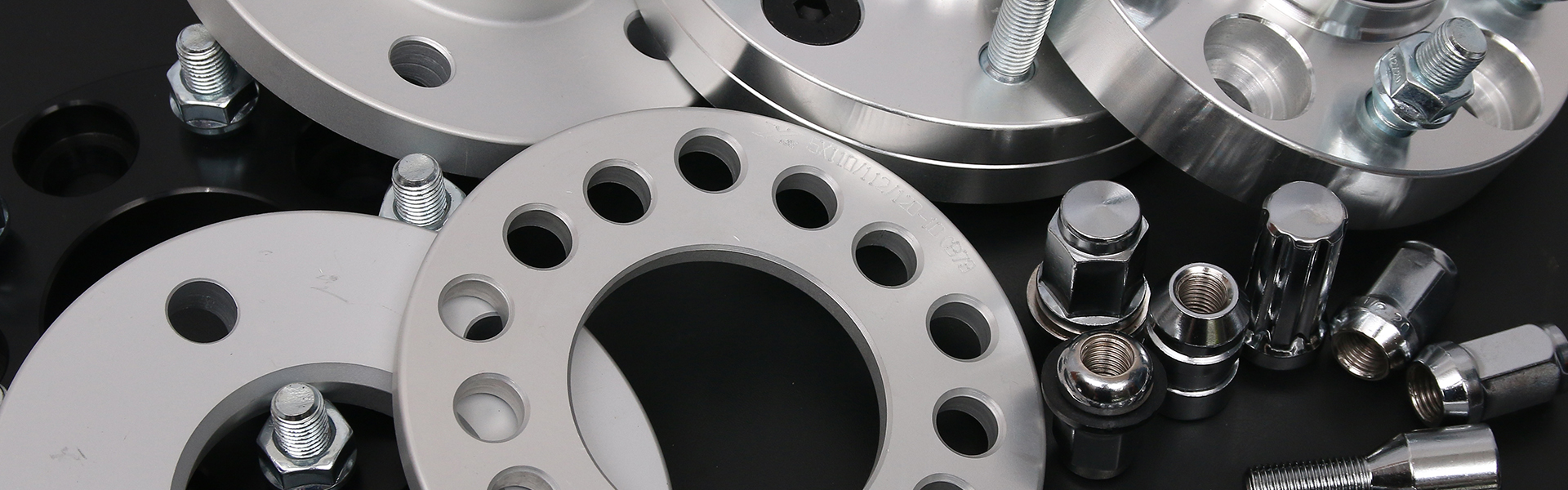
Aftermarket Wholesaler Wheel Lug Nut Selection Guide — Acorn vs Bulge Acorn vs Mag Wheel
For aftermarket wholesalers and wheel accessory distributors, few product categories carry as much hidden complexity as the wheel lug nut. A single misapplication can lead to wheel detachment, customer injury, and catastrophic liability. Yet many distributors still stock lug nuts without a system...Read more